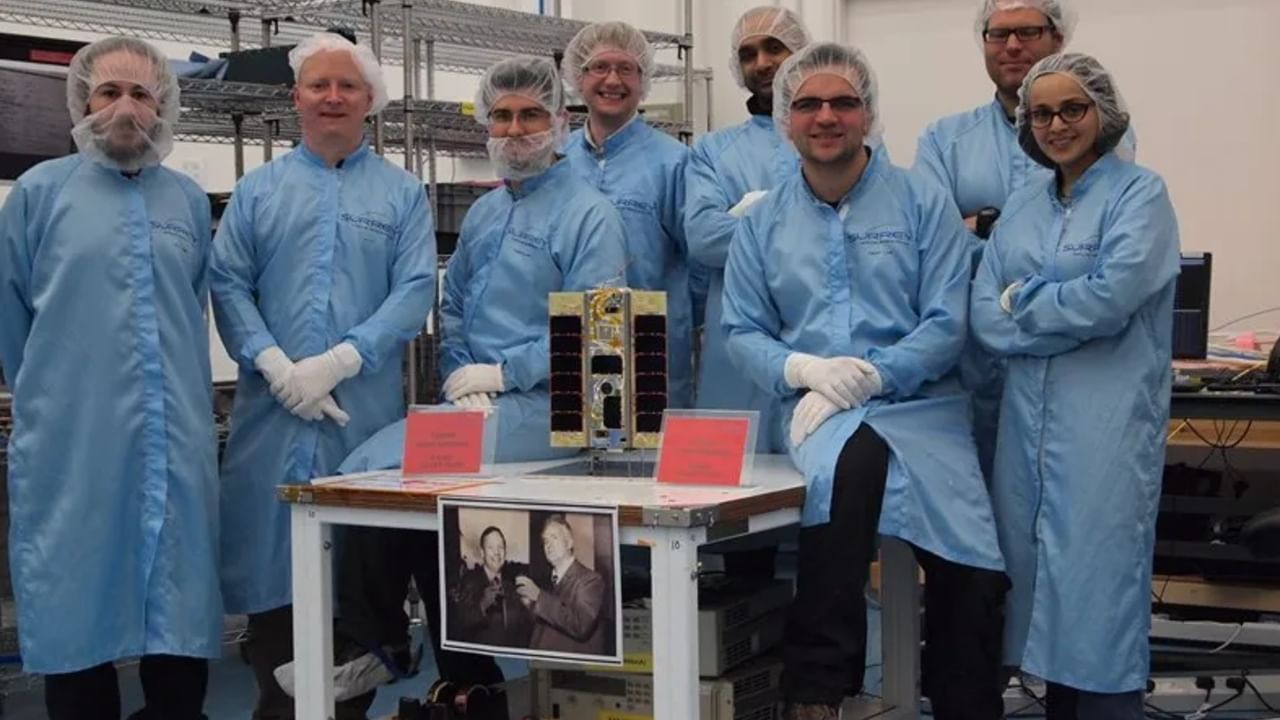

The world of space exploration has seen numerous feats, but few are as unique as sending a smartphone into orbit. The Google Nexus One, a phone designed for everyday use, was the star of this extraordinary endeavor. In 2013, the University of Surrey (UK) conducted an experiment to investigate whether a regular smartphone could be used to control a satellite. The Nexus One was chosen for this purpose and installed in the small Strand-1 satellite. This satellite was only 30 centimeters long and was launched to an altitude of approximately 784 kilometers. The entire onboard technology consisted of the Nexus One, connected via a USB cable. The phone ran custom software and an app that tested if sound, specifically a scream, could be detected in space. The Nexus One smartphone, intended for general consumer use, was equipped with a 3.7-inch display, 512MB RAM, a 1400mAh battery, a 5-megapixel rear camera, and ran Android 2.1 OS. It was priced around ₹10,000 in 2012. The phone was placed in the satellite without any changes, experiencing the journey of a rocket launch. The final resting place of Google’s space-traveling phone is unknown, maybe still orbiting Earth, perhaps now space debris. Nevertheless, it created a new chapter in technology and research.