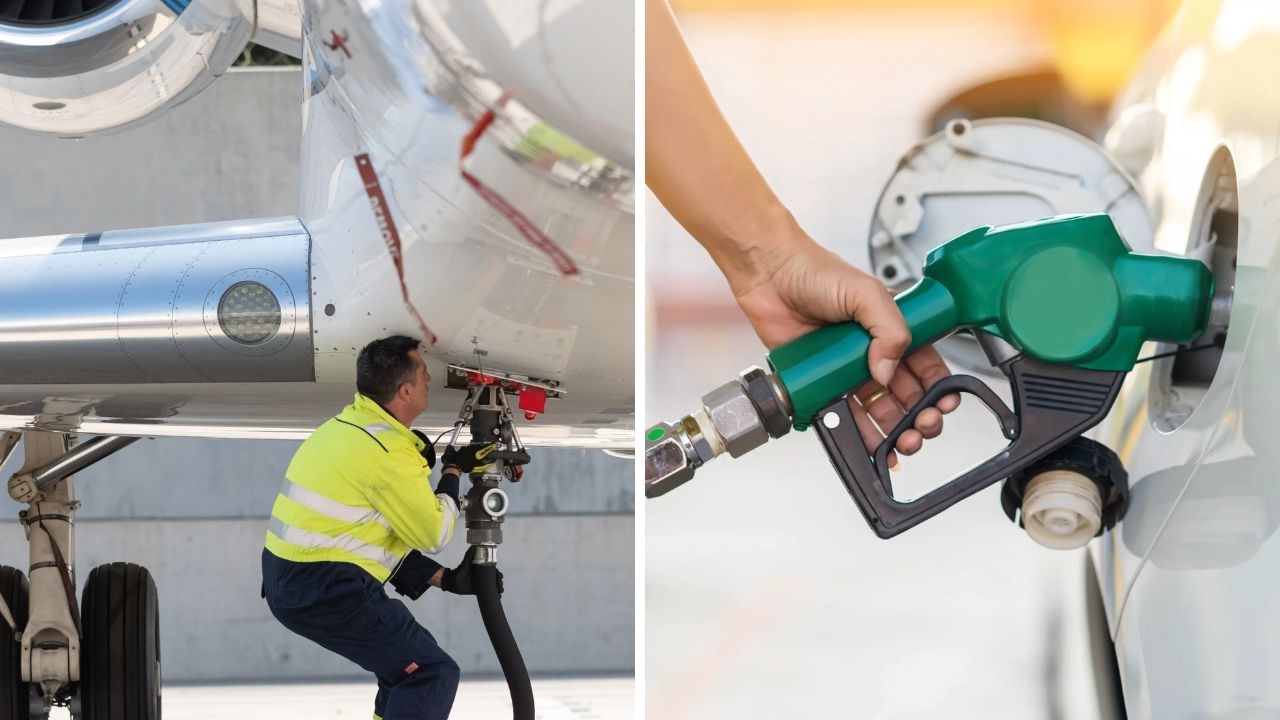

The increasing cost of petrol has made many consider the expense of car ownership. While the impression might be that flying an airplane is equally expensive, the substantial fuel consumption in aviation leads to considerable costs. Yet, a notable aspect is that aviation fuel, specifically Aviation Turbine Fuel (ATF), is often priced lower than the petrol used in vehicles.
ATF is the fuel used for powering jet-engine aircraft and helicopters. It might resemble petrol or diesel visually, even appearing colorless in some cases. However, its chemical composition and characteristics differ greatly. ATF is mainly a kerosene-based fuel that is refined to meet the unique requirements of jet engines. It contains additives that prevent freezing at high altitudes and low temperatures, ensuring reliable engine performance.
In terms of pricing, jet fuel is currently more affordable than petrol. For example, Indian Oil’s jet fuel costs about Rs 92 per liter in Delhi, about Rs 95.16 per liter in Kolkata, and Rs 86 per liter in Mumbai. On the other hand, petrol costs Rs 94.77 per liter in Delhi, Rs 103.50 per liter in Mumbai, and Rs 105.41 per liter in Kolkata.
The reason for this price gap is primarily due to the taxation methods used for each fuel type. Like petrol and diesel, ATF is subject to central and state government taxes. However, varying VAT rates across different states lead to price variations. While the central government levies excise duty on ATF, state governments impose VAT. Despite the fact that prices can vary across states, lower taxes on ATF compared to petrol make it a more cost-effective option for airlines. These lower taxes are in place to help airlines manage their operational costs.