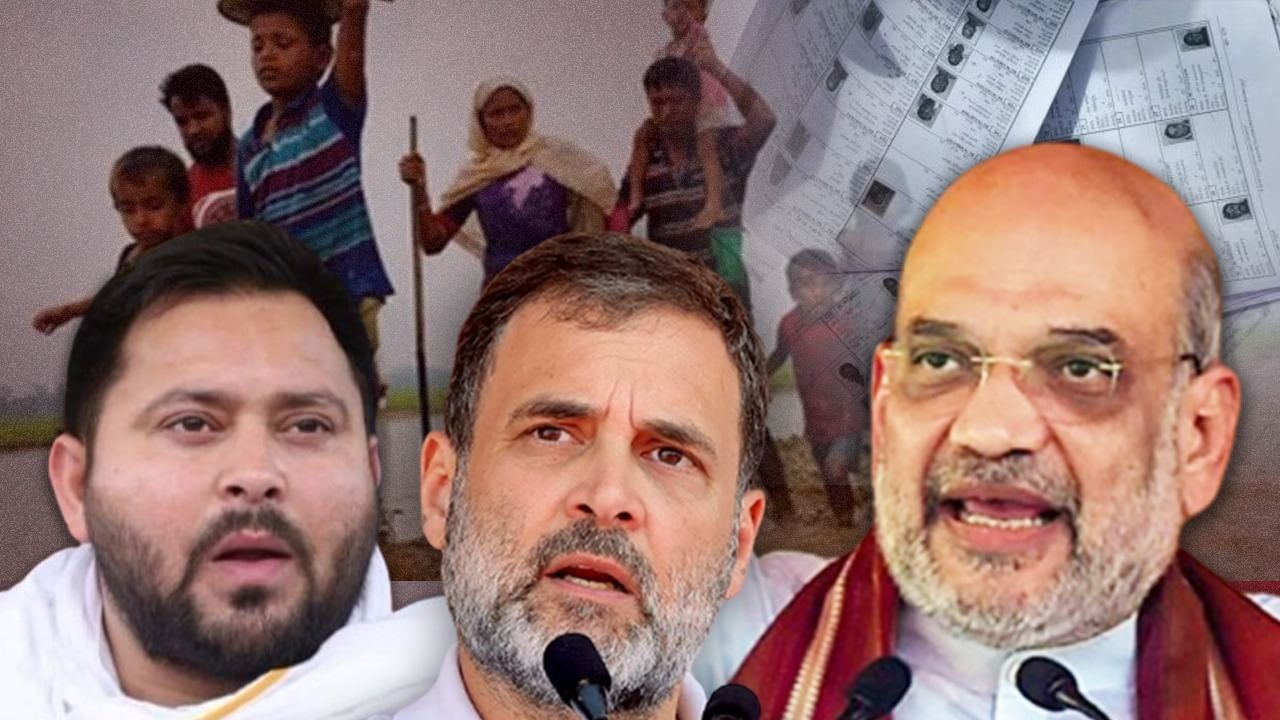

The upcoming Bihar elections are taking shape, with a clear focus emerging even before official dates are set. The India coalition, including the Congress and RJD, is accusing the Election Commission and the BJP of vote theft. Their allegations center around the Special Intensive Revision (SIR) of voter lists and alleged irregularities from the Lok Sabha elections. In turn, the BJP is countering these accusations by accusing the opposition of shielding infiltrators. The BJP is also highlighting purported discrepancies in the electoral rolls and targeting prominent opposition figures, including Sonia Gandhi and Rahul Gandhi.
Since elections in Haryana and Madhya Pradesh, Rahul Gandhi and the Congress party have been strongly critical of the Election Commission, claiming the commission is colluding with the BJP to manipulate election results. Specifically, the Congress has raised concerns about Electronic Voting Machine (EVM) tampering.
The India coalition has jointly opposed the SIR process in Bihar, organizing a large march from Parliament to the Election Commission. During a press conference, Rahul Gandhi accused the Election Commission of fraudulent practices in the Mahadevpura Lok Sabha constituency in Karnataka. This is the first time that the Election Commission has been directly accused of vote theft, resulting in a strong response from the commission.
Vote theft is now a central issue for the opposition, with Tejashwi Yadav accusing BJP leaders of spreading misinformation to further their political agenda. He has challenged the BJP to provide evidence of any infiltrators removed or identified through the SIR.
The Congress party has launched an extensive social media campaign against vote theft on Facebook, Twitter, and Instagram, targeting the Election Commission, the BJP, and the Modi government.
Rahul Gandhi is scheduled to commence a 16-day ‘Voter Rights Yatra’ in Bihar on August 17, covering approximately 1300 kilometers. This yatra will include key opposition figures, with the Congress framing the yatra as a defense of democracy and constitutional rights, making it a major issue in the upcoming elections.
The BJP is responding to the allegations of vote theft with a strong counter-attack. Home Minister Amit Shah has accused Rahul Gandhi of attempting to protect Bangladeshi infiltrators by opposing the SIR of voter lists. He has asserted that those not born in India do not have a constitutional right to vote.
During the Independence Day speech, Prime Minister Narendra Modi addressed the issue of infiltration and announced a demographic mission. He claimed that infiltrators are undermining the livelihoods of the youth, targeting women and exploiting tribal populations. The Prime Minister stated that such actions would not be tolerated.
The BJP is also scrutinizing the records of opposition leaders, making similar allegations. The party aims to defend the Election Commission while accusing the Congress and its allies of being involved in ‘vote theft’.
The BJP’s response has intensified. Senior BJP ministers have directly targeted Rahul Gandhi, accusing him of misrepresenting Election Commission data, pointing to discrepancies in the Maharashtra voter list. The BJP alleges that the Congress regularly tries to discredit the system after losses.
The BJP’s focus also includes the Gandhi family, with the IT cell head highlighting historical data, claiming that Sonia Gandhi was registered as a voter before becoming an Indian citizen.
BJP leaders have accused the Congress of focusing on vote bank politics and attempting to manipulate voter rolls to include infiltrators. They claim that the opposition seeks to undermine the Election Commission when facing unfavorable outcomes.
Former Union Minister Anurag Thakur has claimed irregularities in voter registration in several high-profile constituencies represented by opposition figures, alleging that these constituencies were won through ‘vote theft’ and fraudulent practices. The accusations of irregularities are casting a shadow on the integrity of the electoral process, potentially affecting voter confidence and behavior.