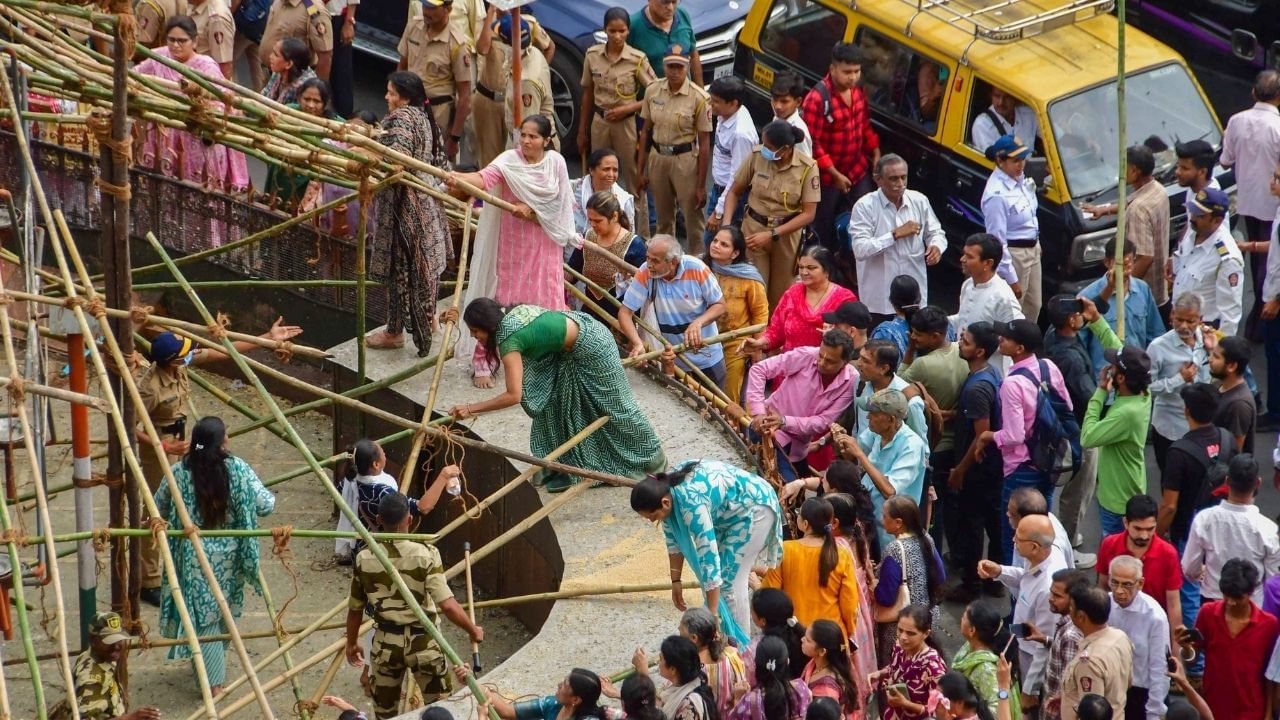

The Mumbai political landscape is currently roiled by the Jain community’s push to shut down slaughterhouses during the Paryushan Parva, their most important religious festival. The Jain community cites religious tenets of non-violence and compassion for animals to support their demand, emphasizing the significance of abstaining from killing during the festival’s nine days. This request, however, has triggered opposition from the Khatik community and other political organizations, who view it as an infringement on the rights to food and livelihood.
Following the Jain community’s request, the Mumbai High Court upheld a two-day closure (August 24th and 27th) but denied the nine-day closure request. The Jain community has appealed the High Court’s decision, with a hearing scheduled for the upcoming weeks. The court stated that it could not issue orders due to the lack of legal precedent for a nine-day closure.
The Jain community’s argument focuses on the substantial Jain population in Mumbai and Maharashtra, which surpasses that of Gujarat. They reference a Supreme Court ruling in a Gujarat case that justified a brief closure and seek similar treatment in Mumbai. The Seth Moti Shaw Lalbag Jain Trust, the Seth Bherulal Ji Kothari Trust, and other similar groups are involved.
The Jain community also cites the prevalence of vegetarianism in Mumbai and historical precedents, like the six-month slaughterhouse closures under Akbar’s reign. Conversely, the Mumbai Municipal Corporation and the Maharashtra government note Mumbai’s significant non-vegetarian population. They underscore the Deonar slaughterhouse’s vital role in supplying the Mumbai Metropolitan Region (MMR), warning of economic repercussions and supply chain issues should a nine-day closure be enforced.
The controversy has drawn opposition from different groups. The Khatik community, Sakal Marathi Samaj, and meat industry groups see it as a religious imposition affecting the employment of thousands and impacting millions of consumers. Political parties such as Congress, MNS, UBT Shiv Sena, and AIMIM stand against the demand, citing that dietary choices should not be mandated by the court or the government. They point out that the same demand was made on August 15th and faced similar opposition.
The BJP has remained silent on the matter because the Jain community typically supports the party. Meanwhile, opposition parties condemn the Jain community’s demand as a form of religious enforcement.
Approximately 2 million Jain individuals live in Mumbai. The slaughterhouse closure request has become a politically charged issue. Furthermore, over 4 million Jain followers live outside Mumbai, including Thane, Navi Mumbai, Palghar, Kalyan, Dombivli, Bhiwandi, Vasai-Virar, and Mira-Bhayandar.
The issue has triggered a debate between religious beliefs, economic concerns, and political interests. The upcoming local elections in Mumbai and Maharashtra have added to the political tension. The BJP is striving to avoid offending the Jain community, while opposition parties are focused on garnering support from various voter demographics. Despite the court’s decision for a two-day closure, the controversy has ignited a political and social dispute, reflecting religious beliefs, economic considerations, and political strategies.