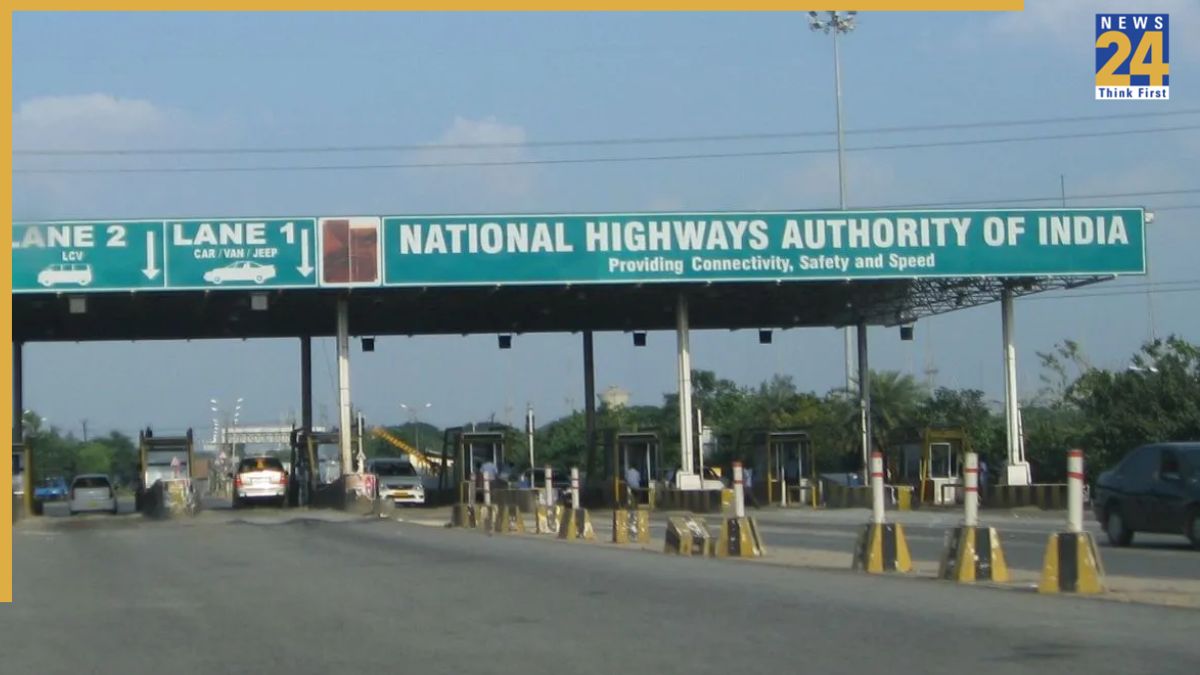

The Indian Highways Management Company Limited (IHMCL), a company backed by the National Highways Authority of India (NHAI), has finalized a pivotal agreement with ICICI Bank. This partnership aims to introduce the first comprehensive Multi-Lane Free Flow (MLFF) tolling system across India, starting with the Choryasi Fee Plaza on NH-48 in Gujarat. The agreement was officially formalized on August 30 at the NHAI Headquarters in Delhi, with key figures such as NHAI Chairman Santosh Kumar Yadav and other high-ranking officials from NHAI, IHMCL, and ICICI Bank present. The primary goal of this initiative is to enhance the experience for National Highway users by providing a seamless, obstruction-free tolling process. The implementation of MLFF will facilitate electronic toll collection through FASTag, eliminating the need for vehicles to halt at toll booths. This will make the Choryasi Fee Plaza in Gujarat the first barrier-free toll plaza in the country. In addition, another agreement has been secured with ICICI Bank for the deployment of MLFF at the Gharaunda Fee Plaza in Haryana, situated on NH-44. Furthermore, NHAI is actively planning to deploy MLFF-based tolling at roughly 25 National Highway fee plazas during the ongoing fiscal year (2025-26), with the identification of suitable locations currently in progress. NHAI Chairman Santosh Kumar Yadav commented that the agreement is a significant achievement in the advancement and modernization of tolling in India. By leveraging technology, it sets the groundwork for a more efficient, transparent, and user-focused tolling system, aligning with NHAI’s vision of technology-driven transformation in National Highway operations, thereby setting the stage for nationwide adoption.
**What is the Multi-Lane Free-Flow Tolling System?**
The Multi-Lane Free-Flow (MLFF) system provides a barrier-free tolling solution by reading FASTag and Vehicle Registration Numbers (VRN) using high-performance RFID readers and ANPR (Automatic Number Plate Recognition) cameras. This allows for uninterrupted toll collection, as vehicles can bypass toll plazas without stopping, thus reducing traffic congestion and travel time. Additionally, the system aims to improve fuel efficiency and reduce emissions from vehicles.