
The recent earthquake in eastern Afghanistan, near the Pakistan border, has resulted in a devastating loss of life and widespread destruction. Early reports suggest that over 800 people have died and more than 2,500 have been injured. Rescue operations are ongoing, but the situation remains dire, and the casualty figures are expected to rise. Local residents are desperately searching through the wreckage for missing loved ones.
The earthquake struck late on Sunday, with significant tremors felt in several towns within Kunar province, near the city of Jalalabad in Nangarhar province. The United States Geological Survey confirmed that the quake’s epicenter was located 27 kilometers east-northeast of Jalalabad, at a shallow depth of 8 kilometers. Shallow earthquakes often inflict the most damage. Numerous aftershocks followed the initial event.
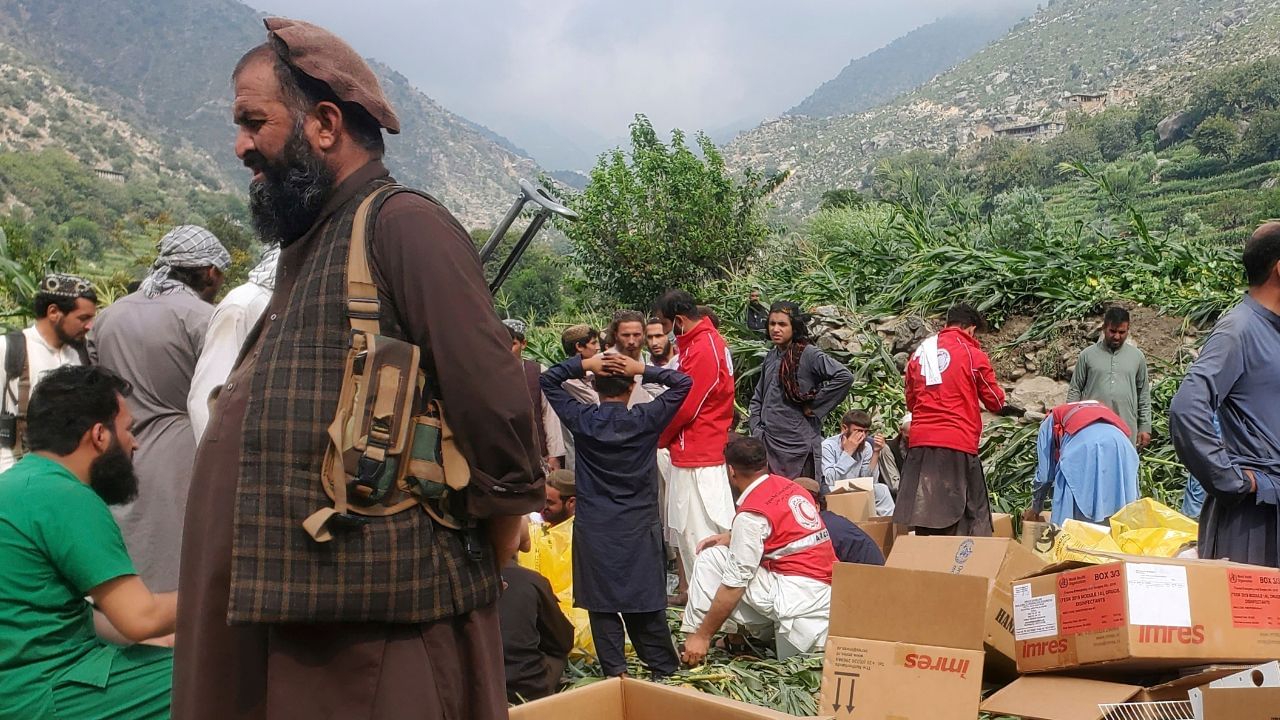
Footage shows rescue workers transporting injured individuals via helicopter and civilians frantically digging through the debris in search of missing relatives.
Taliban government spokesperson Zabiullah Mujahid stated on Monday that the death toll had climbed to 800, with more than 2,500 people injured, the majority in Kunar province.
Many buildings in Afghanistan are of poor construction, typically made of materials like concrete, bricks, and mud bricks, particularly in rural regions. The quality of these structures often contributes to the extent of damage in earthquakes.
One of the worst-affected areas, Nurgal district in Kunar province, suffered near-complete devastation, according to a resident. One survivor recounted the tragic scene: “Children are under the rubble… the elderly are under the rubble… the youth are under the rubble.” The individual pleaded for assistance: “We need help here… Let’s get the buried people out. There is no one to remove the bodies.”
Another survivor described the collapse of homes and the ensuing cries for help. Eastern Afghanistan’s mountainous terrain and remoteness have exacerbated the challenges of rescue and communication. Another witness described homes collapsing and hearing cries for aid.
Sadiqullah, a resident of the Maja Dara area in Nargal, recalled being jolted awake by a powerful explosion. He immediately rushed to his children and managed to save three. However, as he prepared to return and rescue the rest of his family, the building collapsed on him.
From Nangarhar Hospital, he stated, “I was half-buried and could not get out. My wife and two sons are dead… My father is injured… We were trapped for 3-4 hours.” He described the experience as if the entire mountain was shifting.
Sharafat Zaman, a spokesperson for the Ministry of Health, confirmed that rescue operations are ongoing, with medical teams deployed from various regions. He acknowledged that the final casualty count will likely fluctuate as more information is gathered.
Zabiullah Mujahid, the Taliban government’s chief spokesperson, confirmed that all available resources are being deployed to save lives. Jalalabad’s strategic location near Pakistan, coupled with the major border crossing, makes it a significant commercial center. Although the official population is approximately 300,000, the metropolitan area is considerably larger. The region is also important for agriculture, including citrus fruits and rice, and is traversed by the Kabul River.
Earlier, on October 7, 2023, a 6.3-magnitude earthquake caused thousands of fatalities. The Taliban estimated a death toll of roughly 4,000, whereas the United Nations estimated about 1,500. This was the most devastating natural disaster to strike Afghanistan in recent years.