
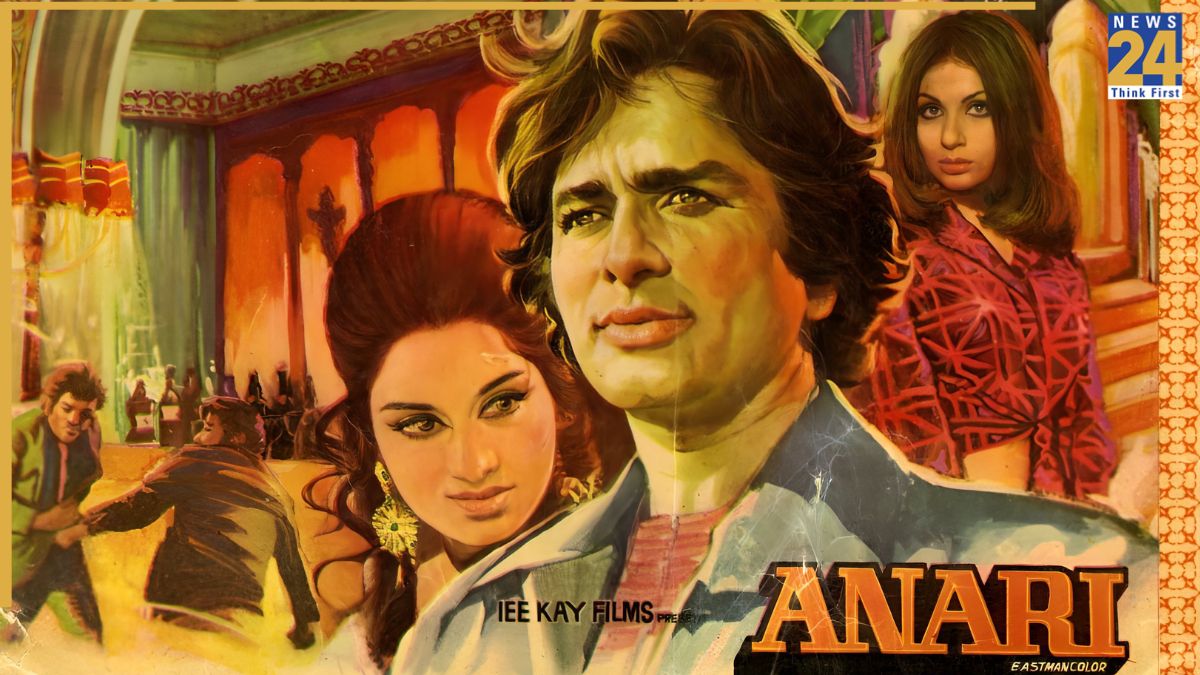

The year 1975, known for iconic Hindi films such as ‘Sholay’ and ‘Jai Santoshi Maa,’ also saw the release of ‘Anari,’ a film by director Asit Sen, often considered his worst work. The film starred Sharmila Tagore and Shashi Kapoor, an unsuccessful on-screen pairing, with Moushumi Chatterjee in a role that seemed out of sync with the rest of the narrative. The disjointed nature of the film and its weak character development set it apart from Sen’s other works and signaled a decline in his career. This is further highlighted by films that followed such as ‘Maa Aur Mamta’ and ‘Bairaag,’ the latter of which starred Dilip Kumar.
‘Anari’ is riddled with flaws, including a fragmented production process that resulted in missing scenes. A particularly jarring example of this is when Sharmila Tagore’s character, Poonam, a woman trying to escape poverty, tells Kabir Bedi’s character, Vikram, who is involved in criminal activities, that she was rejected by the hero Raja (Shashi Kapoor). The scene Poonam describes is not included. The central plot centers on Raja, an innocent hero who gets entangled in a criminal scheme led by a con artist (Utpal Dutt, in a Raj Kumar wig), who is pretending to be the heir to a wealthy family. The patriarch (Harindranath Chattopadhyay) is blind, which aids the deception. This is the second, and more complex, part of the story.
In the film’s first act, Sharmila Tagore plays Poonam, a woman from a poor home who dreams of a better life. She hopes to transform her relationship with Raja into a brighter future, which is understandable. However, Raja is burdened by family obligations after his brother (Kader Khan, unrecognizable) is murdered due to his union activities. The screenplay is a disaster, with characters who seem lost and aimless. Poonam is the most interesting character, as she seeks to escape her destiny. She gives Raja several chances to ‘rescue’ her, but how can he save her when he needs saving himself?
‘Anari’ had the potential to explore the struggles of those on the brink of financial ruin. However, director Asit Sen appears to have been constrained by budgetary limitations and a storyline that does not show respect for its characters. The actors struggle with their roles, and many lines seem out of place. Moushumi Chatterjee’s character is particularly unclear. Even the musical score by Laxmikant-Pyarelal is unusually weak, a departure from their more successful soundtracks that year. The movie’s overall failures indicate a lack of cohesion.