
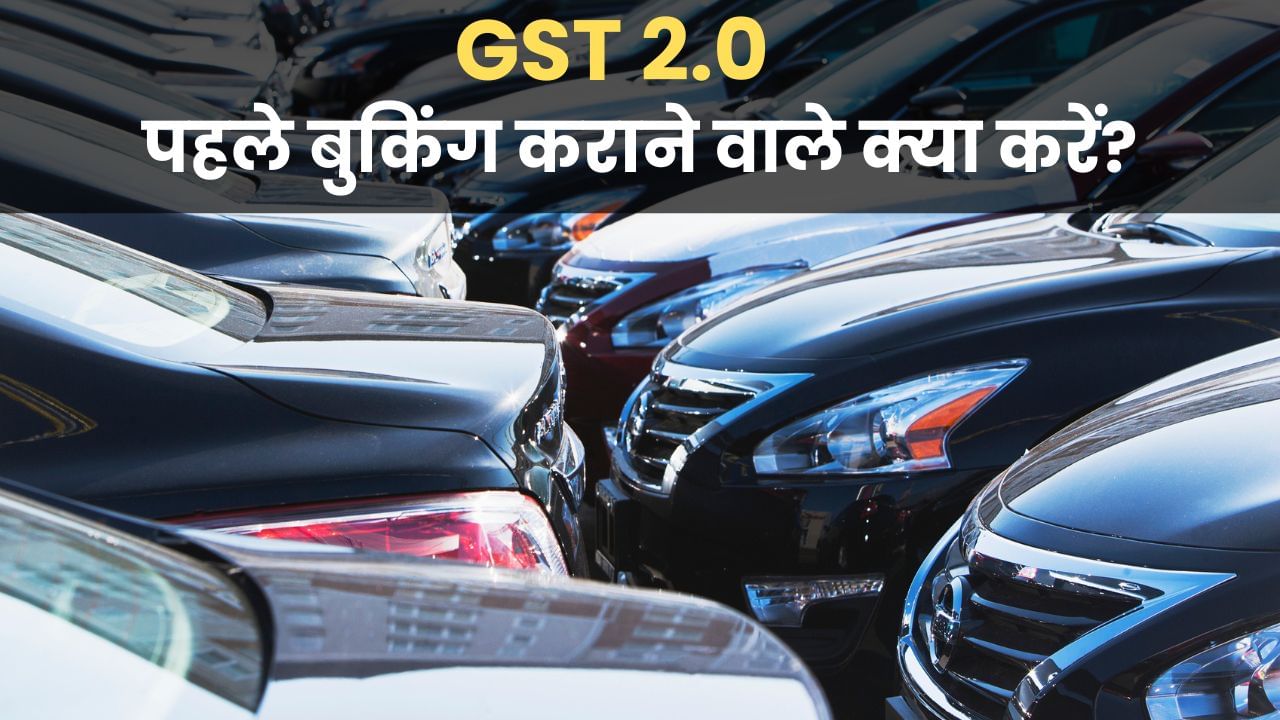

The Indian government’s decision to reduce Goods and Services Tax (GST) on cars is poised to bring down prices, offering financial relief to consumers. Most automakers have already adjusted their pricing strategies to reflect the revised GST 2.0 rates, scheduled to come into effect on September 22nd. This has prompted inquiries from potential buyers regarding the applicability of these new tax rates to pre-booked vehicles.
The process of purchasing a car is often a considerable undertaking, often involving months of planning and research. Many car models have substantial waiting lists, necessitating pre-booking to secure a purchase. Anticipating the upcoming festive season, numerous customers may have already placed orders for deliveries during Navratri. These individuals are now contacting dealerships to ascertain whether they will be eligible for the reduced GST benefits.
Will Early Bookings Benefit from the GST Reduction? The answer is positive. A Maruti Suzuki sales executive confirmed that all customers taking delivery of their vehicles on or after September 22nd will receive the advantages of the updated GST rates. The final GST calculation is applied at the time of billing, which coincides with the vehicle’s delivery. Consequently, all customers will experience the price reduction from September 22nd, regardless of their booking date.
Will Deliveries Before September 22nd be Affected? The response is negative. Customers who take delivery of their cars before September 22nd will be subject to the previous, higher GST rates. Therefore, those receiving earlier deliveries will not benefit from the price reduction. According to the Federation of Automobile Dealers Associations (FADA), sales in August were negatively impacted by consumers delaying deliveries, awaiting the GST reduction. The automotive industry body noted that the expectation of lower prices due to the ‘GST 2.0’ announcement led to consumers postponing purchases until September.
Small Cars: Significant Price Cuts
Following the GST modifications, small cars that operate on petrol or CNG, with engines up to 1200cc and a length not exceeding 4000mm, will now be subject to an 18% tax, a reduction from the previous 29%. This will result in lower prices for models such as the Maruti Suzuki Alto K10, Maruti Suzuki Swift, Hyundai i20, Renault Kwid, and Tata Tiago. Diesel cars with engines up to 1500cc and a length up to 4000mm will also benefit from the tax cut, experiencing a reduction from 31% to 18%. This includes vehicles like the Tata Altroz and Hyundai Venue.
Larger Cars: Still Taxed More, but Less Than Before
Large petrol and diesel cars will still be subject to higher tax rates than smaller cars, but the overall tax burden will be reduced. Petrol cars with engines exceeding 1200cc and a length greater than 4 meters will now face a 40% tax, down from the previous 45% (comprising 28% GST and 17% cess). This category encompasses vehicles like the Maruti Suzuki Brezza, Maruti Suzuki XL6, Hyundai Creta, and Honda City. Diesel cars with engines exceeding 1500cc will also see a tax reduction, with the rate dropping to 40% from the previous 48% (including a 20% cess). This applies to models like the Tata Harrier, Tata Safari, Mahindra Scorpio-N, and Mahindra XUV700.