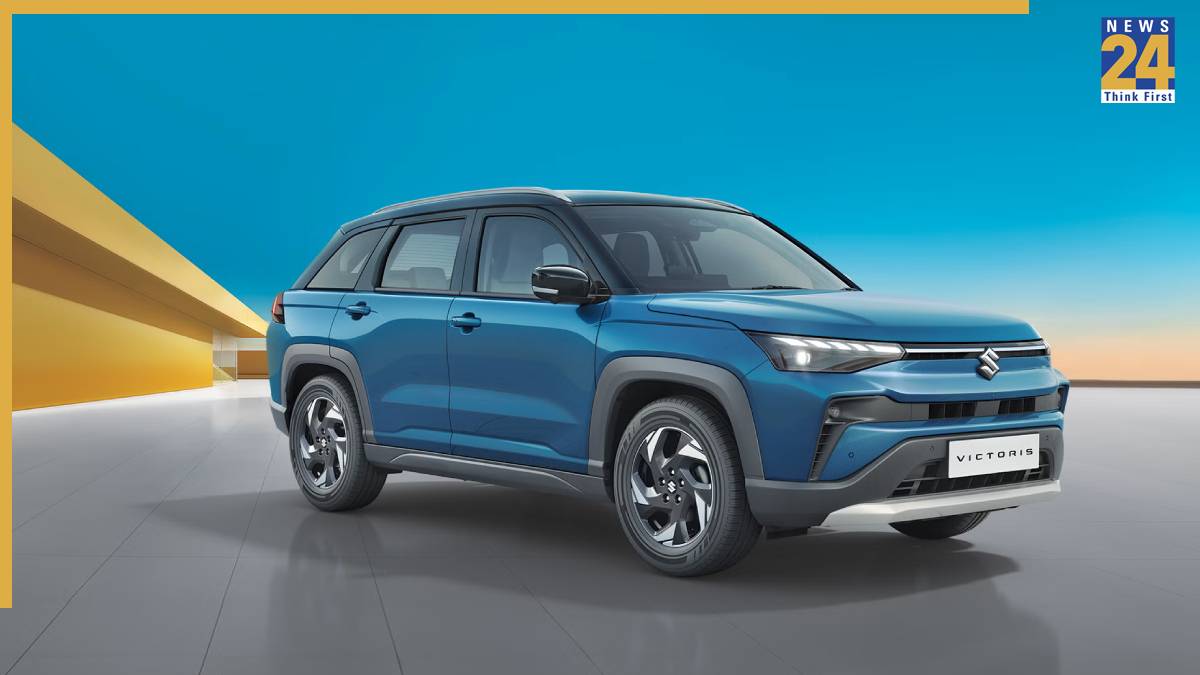

Maruti Suzuki’s Victoris, launched recently, is designed to compete with rivals such as the Hyundai Creta and Kia Seltos. While sales within India remain a key focus, the company is also looking to increase global sales of the Victoris through exports.
Suzuki’s Export Strategy
The Maruti Grand Vitara is currently exported to approximately 60 countries. The Victoris aims for a wider reach, targeting over 100 countries globally. Similar plans are in place for the e-Vitara, and exports have already begun.
The e-Vitara has been shipped to 12 European countries, including the UK, Germany, Sweden, the Netherlands, Hungary, Austria, Iceland, and Belgium, with the Victoris likely to follow a similar export pattern. Both the Victoris and e-Vitara will also be exported to various markets across Asia, the Middle East, South and Central America, and Africa.
Growing Export Numbers
India’s export-oriented production is increasing, and Maruti’s share in these exports is also growing. In August 2025, Maruti exported 36,538 cars, which represented about 20% of the company’s total sales of 1.8 lakh units for the month.
Maruti accounted for 40% of India’s car exports in FY25. The Victoris is expected to further expand the company’s export capabilities.
Maruti’s Global Export Lineup
Maruti already exports several models to global markets, including the Fronx, Jimny, Dzire, Baleno, Swift, Ertiga, Celerio, S-Presso, Eeco, Ciaz, Grand Vitara, Alto, Brezza, Ignis, XL6, and Wagon R.
The Fronx is currently Maruti’s top export model, having recently achieved the 1 lakh export milestone. The Fronx is exported to over 80 countries, and Suzuki plans similar success with the Victoris.