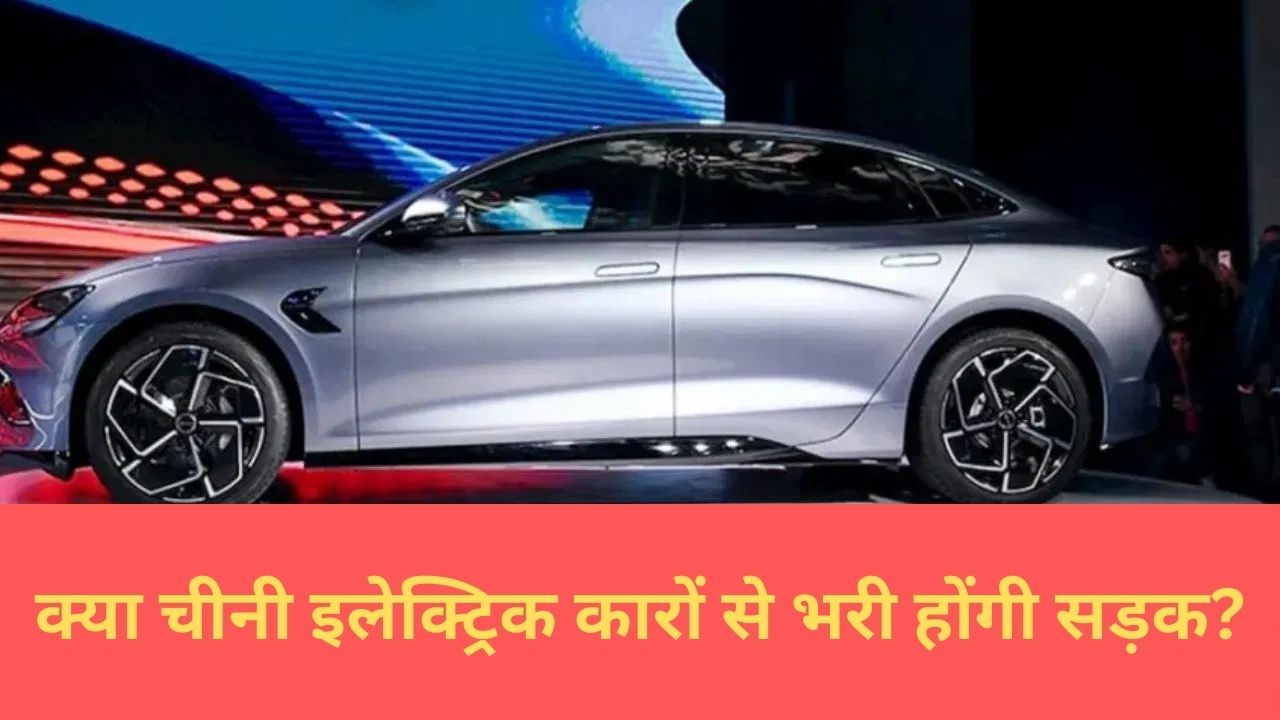

Electric cars are becoming increasingly common on our roads, representing a move towards reduced pollution and a vision of future transportation. But have you ever stopped to consider who is at the helm of this electric revolution? Who is the player that has surged ahead in this global race, outperforming even the largest companies in Western nations?
China’s Domination of the EV Market
Once thought to be the future of electric vehicles (EVs) for Western companies, the script has flipped. China now dominates the global EV market. A report by the Wall Street Journal shows that EVs made in China can be thousands of dollars cheaper than models from the US or Europe, and they now control over half of global sales.
Even amidst trade tariffs, Chinese vehicle manufacturers have managed to increase their share of global sales. Companies such as BYD and Geely Automobile have launched multiple models faster and cheaper than their established competitors. This is primarily due to substantial government subsidies and innovative manufacturing techniques.
A Chinese-made EV is frequently thousands of dollars cheaper than a comparable EV developed in the US or Europe, while offering high-end features and long-range battery packs, far exceeding the price points in the West. It’s not just about cost; it’s about quality and technology.
How China Achieved This Transformation
So, how did China pull off this remarkable feat? Several factors are at play. First, the Chinese government has provided substantial support to the EV industry. This includes significant subsidies, tax breaks, and investment in infrastructure development. These policies have helped Chinese companies to invest heavily in research and development (R&D) and quickly adopt new technologies.
According to Liang Wei, an automotive analyst in Shanghai, ‘The Chinese government saw EVs as a strategic industry and poured money into it. They didn’t just focus on building cars but also on developing the entire supply chain, from battery technology to charging infrastructure.’
Secondly, there are the innovative manufacturing capabilities. China’s production capacity is so immense that they can reduce costs through mass production. They are also at the forefront of battery manufacturing, which is the most expensive part of any EV.
Professor Mini Shaji Thomas of the Department of Electrical Engineering at Jamia Millia Islamia recalls, ‘I went to Beijing in 2006, and work on EVs had already begun many years before. Research had been ongoing, and the government had been subsidizing EV manufacturing from the start. I saw 400 students in the M.Tech class, whereas the numbers are considerably lower here.’
Professor Mini Shaji Thomas went on to say, ‘There is a lot of emphasis on battery manufacturing for electric vehicles in China, and the raw materials used for battery construction are available in large quantities, which has reduced costs and given China an advantage in the EV market.’
Impact on the Global Market and Concerns in Western Countries
China’s dominance is deeply impacting the global EV market. Western companies, such as Tesla, General Motors, and Volkswagen, are now finding it difficult to compete with China’s price and speed. They are under pressure to cut production costs and develop new technologies.
Valdis Dombrovskis, the European Union’s Trade Commissioner, said in a recent statement, ‘We need to seriously consider the growing competition from Chinese EVs. This is not just an economic challenge, but also a challenge to our industrial capacity.’ US Senator Chuck Schumer has also voiced concern, stating, ‘We need to make sure that the American automobile industry doesn’t fall behind in this transformation.’
It is not just about car companies; it is also a matter of jobs and technological leadership. If Chinese EVs continue to dominate the market, it could become a major challenge for Western economies and their innovation ecosystems.
Future Path
So, what’s next? Will China’s dominance continue, or will Western countries change their strategy to make a comeback in the electric vehicle market? It will be interesting to see which direction the global EV market will take. Western companies are now focused on strengthening their supply chains, reducing costs, and further advancing their own EV technologies. Some countries are also considering raising tariffs on Chinese EVs or banning them. It is clear that the future of electric vehicles is going to be very exciting, and China has already established itself as a strong contender in this race.
China has shown that with large-scale production, government support, and innovation, any country can surpass the world in any industry. But the story is not over yet. Will the West and India be able to face this challenge? Are we moving towards a future in which roads will be filled with Chinese electric cars? These questions show us that the global economic landscape is changing rapidly.