
The Indian automotive industry is currently emphasizing “5-star safety ratings,” influencing consumer decisions. When selecting a new or used car, buyers are increasingly prioritizing safety alongside fuel efficiency and design. But what exactly does it take for a car to achieve a 5-star rating? This article demystifies the crash test process and its real-world implications.
The purpose of crash tests is to assess how well a car protects its occupants during a collision. Road accidents lead to a significant number of injuries and fatalities each year, making it vital to evaluate a car’s structural integrity, airbags, seatbelts, and other safety features; crash tests provide this evaluation.
Internationally, organizations such as NCAP (New Car Assessment Program) conduct these tests. India has recently seen the introduction of Bharat NCAP. Other prominent organizations include European NCAP, Latin NCAP, and Global NCAP, which test cars for various markets.
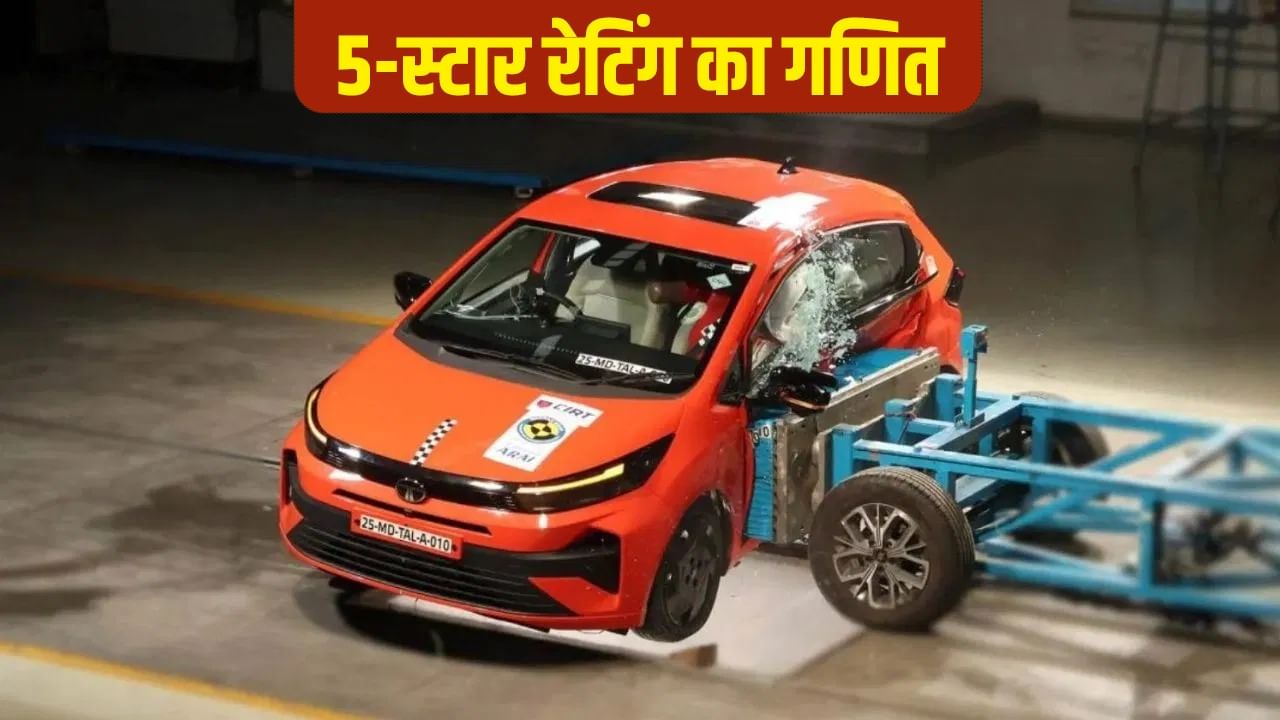
During a crash test, the car is subjected to various collision scenarios.
Post-test, data is collected from sensors within the dummies (devices designed to mimic human characteristics). This data indicates potential injuries to the head, chest, legs, and spine. The car’s overall score is determined based on this data.
* 0 to 1 star: Low Safety
* 2 to 3 stars: Average Safety
* 4 stars: Good Safety
* 5 stars: Highest Safety Level
It is essential to recognize that a 5-star rating does not guarantee 100% safety. It only shows that the car provides a higher level of protection compared to others. Actual accidents also depend on variables like speed and road conditions.
In India, where thousands of accidents occur daily, customers need to understand that their cars should prioritize safety. This understanding has increased sales for models like the Tata Nexon and Mahindra XUV300, which achieved 5-star ratings.
The recently released Maruti Victoris received a 5-star rating in the Global NCAP (New Car Assessment Program) crash test. The Maruti Victoris is available from approximately 10.50 lakh rupees to 19.99 lakh rupees. It incorporates safety features, including 6 airbags, Level-2 ADAS, a 360-degree camera, and systems such as ABS and ESP.
.jpeg "Featured Image")