
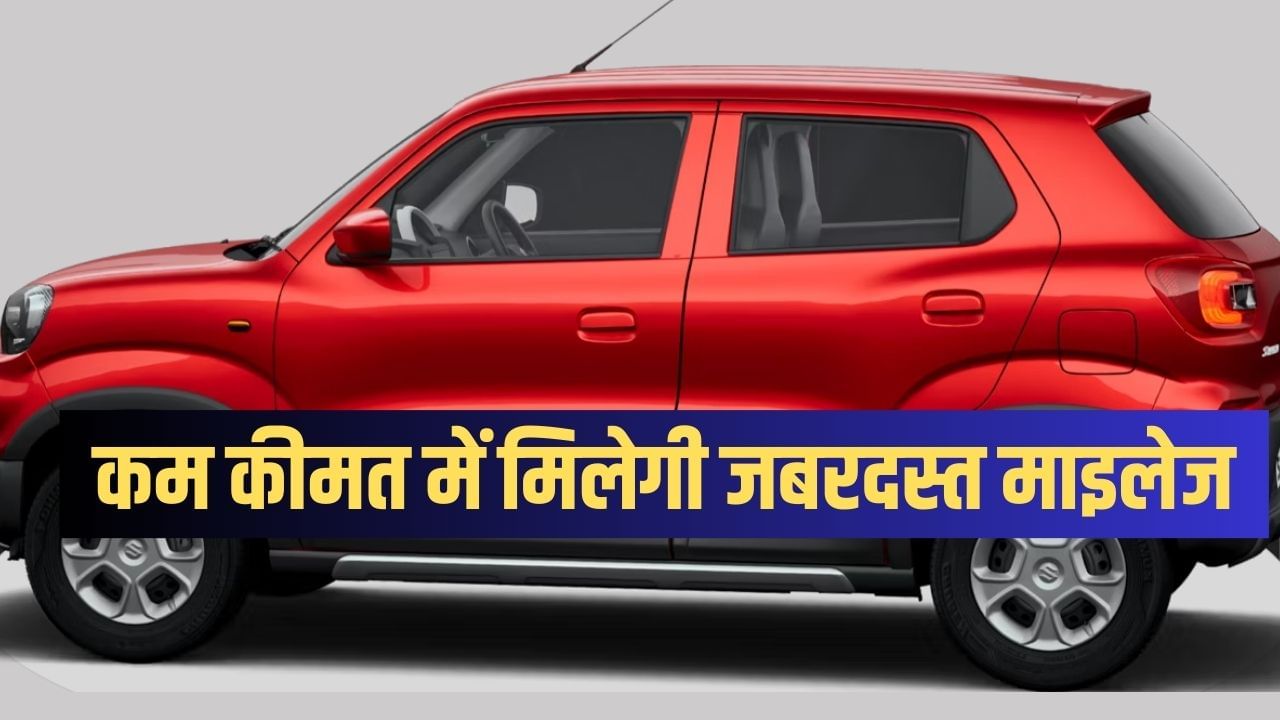

The Indian automotive industry is currently undergoing significant transformations. The implementation of GST 2.0 reforms has led to changes in the tax structure, directly influencing vehicle prices. Maruti Suzuki’s S-Presso, an entry-level car, is the primary beneficiary of these changes. The Alto K10 previously held the title, but this has now shifted. The S-Presso now boasts the lowest price point. Following the GST 2.0 adjustments, Maruti reduced the prices of several compact cars. The S-Presso experienced the most significant price reduction, with the starting price now at 3.50 lakh rupees. The Alto K10, on the other hand, starts at 3.70 lakh rupees. The main reason for the price reduction is the difference in safety features. The government has mandated that new vehicles must include six airbags as standard. Maruti has updated the Alto K10 and Celerio to meet this requirement, while the S-Presso is still equipped with only two airbags. This difference in safety features accounts for its lower price. The S-Presso remains an appealing choice for budget-conscious buyers. Notably, a tax reduction of up to 10 percent has been introduced for smaller petrol cars. The tax rate has decreased from 28 percent to 18 percent, with the cess also being eliminated. This directly impacts the on-road price, making car ownership more affordable. Interestingly, India’s most affordable car now sports an SUV-inspired design. The S-Presso’s raised stance, boxy aesthetics, and crossover styling set it apart. This design is particularly attractive to individuals transitioning from two-wheelers to cars.