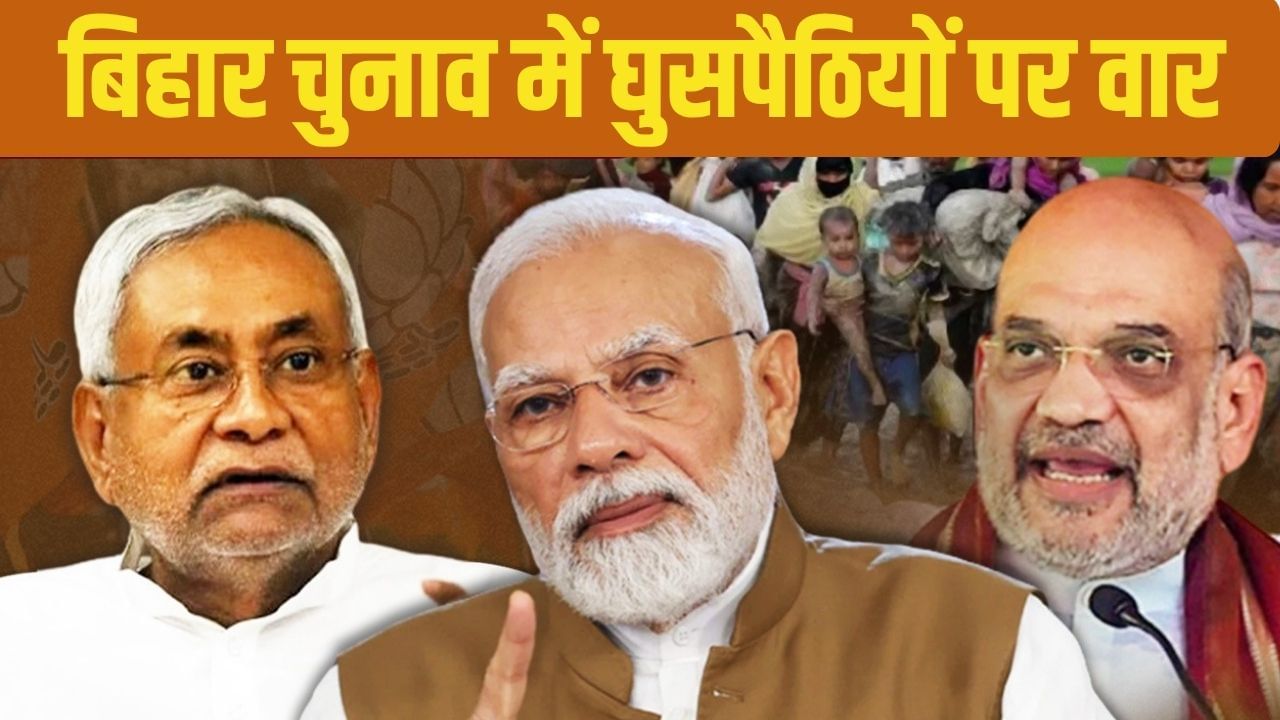

With Bihar’s election dates anticipated, the political discourse centers on the sensitive topic of Bangladeshi infiltration, particularly in the Seemanchal region. The BJP is strategically using this issue to gain an edge over the Congress and RJD, intensifying its focus on this area.
Seemanchal, bordering West Bengal, is a key battleground with a significant Muslim population of about 47%, far exceeding the state average. The BJP is looking to capitalize on this demographic and the AIMIM’s previous gains in the region.
Seemanchal’s Significance for the BJP:
The area’s high Muslim population, according to the 2011 census, makes it crucial for the BJP’s strategy. The four districts of Seemanchal – Purnia, Araria, Kishanganj, and Katihar – hold 24 out of Bihar’s 243 assembly seats. Historically, the RJD-Congress alliance has enjoyed robust support from the Muslim and Yadav voters in this region.
The AIMIM’s unexpected success in the last election by securing five seats fragmented the opposition votes, indirectly benefiting the BJP, which then emerged as the most prominent party in the area.
Infiltration as a Core Election Issue in Bihar:
The Prime Minister has recently criticized the Mahagathbandhan partners for alleged protection of foreign infiltrators. This has been followed by Union Home Minister Amit Shah’s warning that the opposition’s “vote rights yatra” is aimed at protecting the right of infiltrators to vote.
This is not the first occasion the BJP has used the illegal infiltration issue before state assembly elections. Previous instances were seen in states like Assam and West Bengal, where the BJP accused the ruling parties of appeasing Bangladeshis to create a vote bank.
Echoes of Infiltration in Other States:
The BJP has previously mounted a strong campaign against illegal immigration in Delhi and Jharkhand. In Delhi, the focus was on Rohingya and Bangladeshi migrants, whereas in Jharkhand, the BJP accused the government of transforming the state into a shelter for infiltrators. These campaigns featured strong rhetoric from key BJP leaders.
Strategy for Polarizing Votes:
The BJP appears to be employing a strategy to polarize votes along religious lines. The Prime Minister’s assertions that supporting infiltrators threatens the tribal population and the nation are designed to consolidate Hindu votes while isolating the Muslim community.
With the Bihar elections anticipated in October-November 2025, the competition is expected to be between the NDA, Mahagathbandhan, and Jan Suraaj Party. By highlighting the infiltration issue, the BJP aims to polarize voters to its advantage.