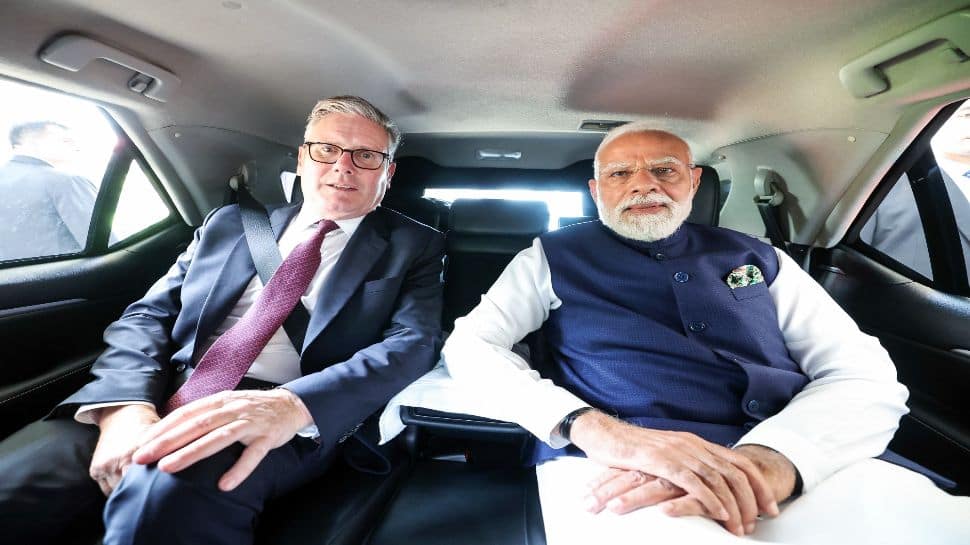

Prime Minister Keir Starmer has officially signaled the United Kingdom’s support for India’s pursuit of a permanent seat on the United Nations Security Council (UNSC). During a productive meeting with Indian Prime Minister Narendra Modi in Mumbai, Starmer articulated the UK’s desire to see India rightfully positioned within the UNSC, referencing their shared participation in global forums like the Commonwealth and G20. A joint statement issued after the discussions emphasized a mutual commitment to global peace, shared prosperity, and upholding a rules-based international order. The leaders committed to a collaborative approach in advancing reformed multilateralism, with a particular emphasis on reforming the UNSC. The UK explicitly reaffirmed its long-standing backing for India’s legitimate aspirations to permanent membership in a reorganized UNSC. Foreign Secretary Vikram Misri confirmed this ongoing support, stating that the UK’s position on India’s objective for a permanent seat on a reformed council is well-documented and greatly appreciated. The discussions also placed a strong emphasis on deepening trade and investment ties. Both Prime Ministers noted the significant enthusiasm within the business communities of both nations for the Free Trade Agreement (FTA) signed in July, which is currently undergoing ratification. They highlighted the potential for substantial future trade and investment cooperation. The visit provided an opportune moment to explore enhanced strategic economic engagement and fully capitalize on the tariff reductions offered by the FTA. The inaugural meeting of the refreshed India-UK CEOs Forum also took place, focusing on the long-term trade and investment relationship and supporting the FTA’s implementation. Key joint initiatives were announced, including an increase in the Climate Technology Startup Fund to support innovators in climate technology and Artificial Intelligence, thereby reinforcing the FTA’s innovation chapter and broader technology initiatives. The technology and innovation sector was identified as a cornerstone of the bilateral relationship. Announcements were made regarding an India-UK Connectivity and Innovation Centre, a Joint Centre for Artificial Intelligence, and a Critical Minerals Industry Guild, aimed at securing supply chains and promoting green technologies. Further developments include the launch of phase two of the UK-India Critical Minerals Supply Chain Observatory and the establishment of a new satellite campus at IIT, the Indian School of Mines in Dhanbad. Defense cooperation saw a significant boost with a £350 million deal for India’s procurement of air defence missiles and launchers, securing jobs in Northern Ireland and enhancing India’s defense capabilities. This deal is seen as a stepping stone to broader defense industry collaboration. The ongoing participation of the UK Carrier Strike Group in joint naval exercises with the Indian Navy in the Indian Ocean signifies the strengthening strategic security partnership. India and the UK also pledged to enhance maritime security in the Indo-Pacific and bolster their commitment to combating terrorism and violent extremism. Cultural diplomacy was also a highlight, with a performance showcasing the artistic collaboration between the two nations, and plans for increased film production in the UK, further strengthening people-to-people ties.