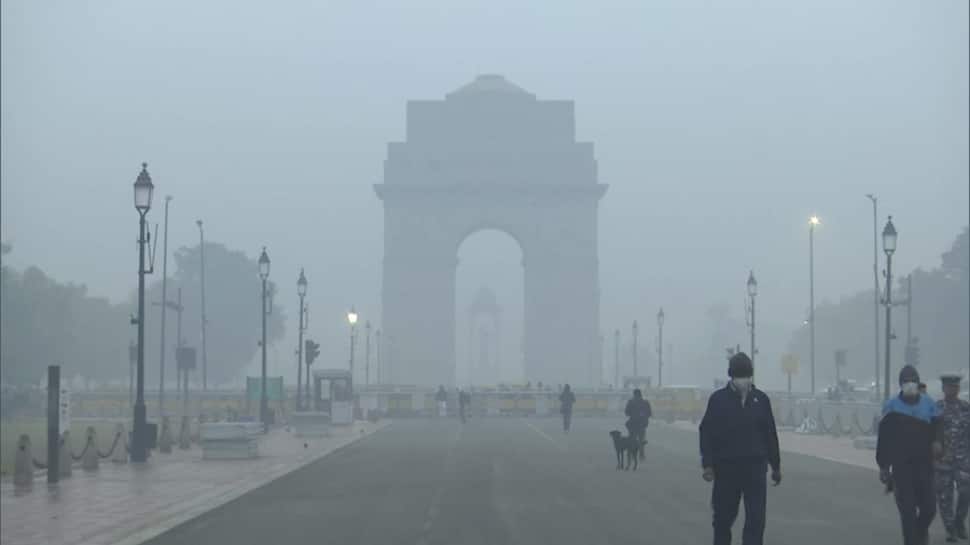

Delhi and its surrounding National Capital Region (NCR) are experiencing an early onset of cold weather this October, prompting discussions about the upcoming winter. Adding to the seasonal shift, the higher reaches of Jammu and Kashmir, including Bhaderwah, have already witnessed their first snowfall of the year. The India Meteorological Department (IMD) is closely monitoring the developing climate patterns and has flagged a heightened probability of La Niña.
IMD’s internal climate models suggest a considerable likelihood, exceeding 50%, of La Niña conditions forming during the October to December 2025 period. An IMD official explained that La Niña is generally linked to more severe cold spells in India. Despite the complexities introduced by global climate change, winters during La Niña events tend to be significantly colder than those in ENSO-neutral periods. This forecast serves as a warning for India to prepare for a potentially harsh and colder winter, especially as the year draws to a close.
Understanding La Niña involves recognizing its role within the El Niño-Southern Oscillation (ENSO) phenomenon. La Niña, literally meaning ‘Little Girl’ in Spanish, is characterized by cooler sea surface temperatures in the central and eastern equatorial Pacific. ENSO cycles, encompassing El Niño, La Niña, and neutral states, are natural climate variations that occur sporadically. Current predictions indicate that La Niña conditions are active and likely to persist through the winter months, with a possibility of reverting to neutral ENSO conditions by early 2026.
The early snow has transformed parts of Jammu and Kashmir into tourist attractions, but the challenging weather conditions have also led to the closure of key transportation arteries, impacting travel and connectivity.