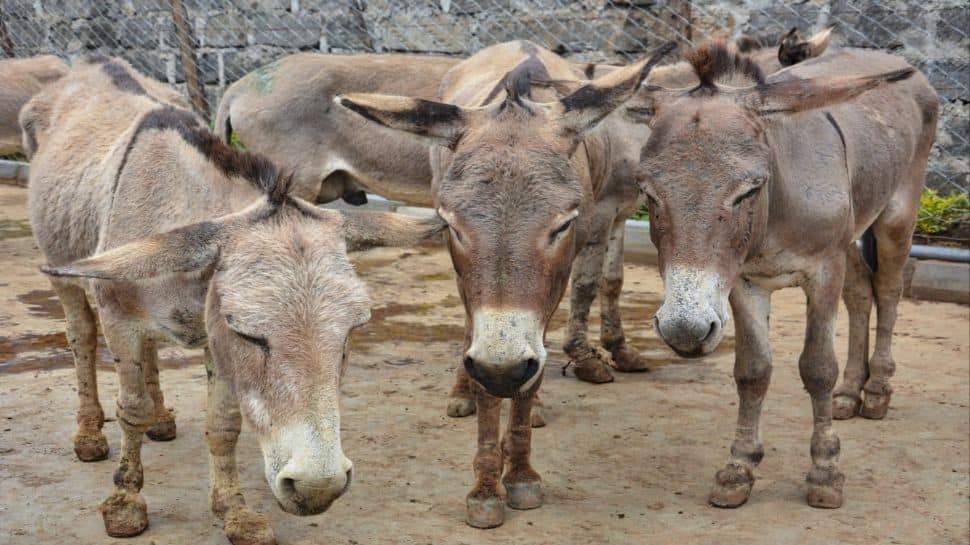

The global market for a traditional Chinese remedy, Ejiao, is responsible for the slaughter of millions of donkeys every year. This lucrative trade involves harvesting the skins of donkeys, primarily imported from Africa and Pakistan, to produce a gelatinous substance believed to have numerous health benefits. Ejiao, used for centuries in traditional Chinese medicine, is purported to combat aging, enhance circulation, and alleviate issues like anemia and insomnia. Its popularity has expanded significantly beyond its historical user base, now catering to a vast and affluent middle-class consumer market in China.
The process of obtaining donkey skins is often marred by extreme animal cruelty. Reports indicate that donkeys are forced into grueling journeys, deprived of basic necessities, and subjected to violent abuse before being killed. Their hides are then shipped to China for industrial processing and sale as high-value health and beauty products. The economic incentives driving this demand have led to severe depletion of donkey populations in key supplying countries. In Botswana, the number of donkeys has drastically declined, serving as a stark indicator of the unsustainable nature of this trade. Conservationists are issuing dire warnings about the future of donkeys in Africa, projecting a substantial population decrease if the current rate of slaughter continues. This trade highlights a troubling intersection of ancient traditions, modern consumerism, and significant animal welfare concerns.