
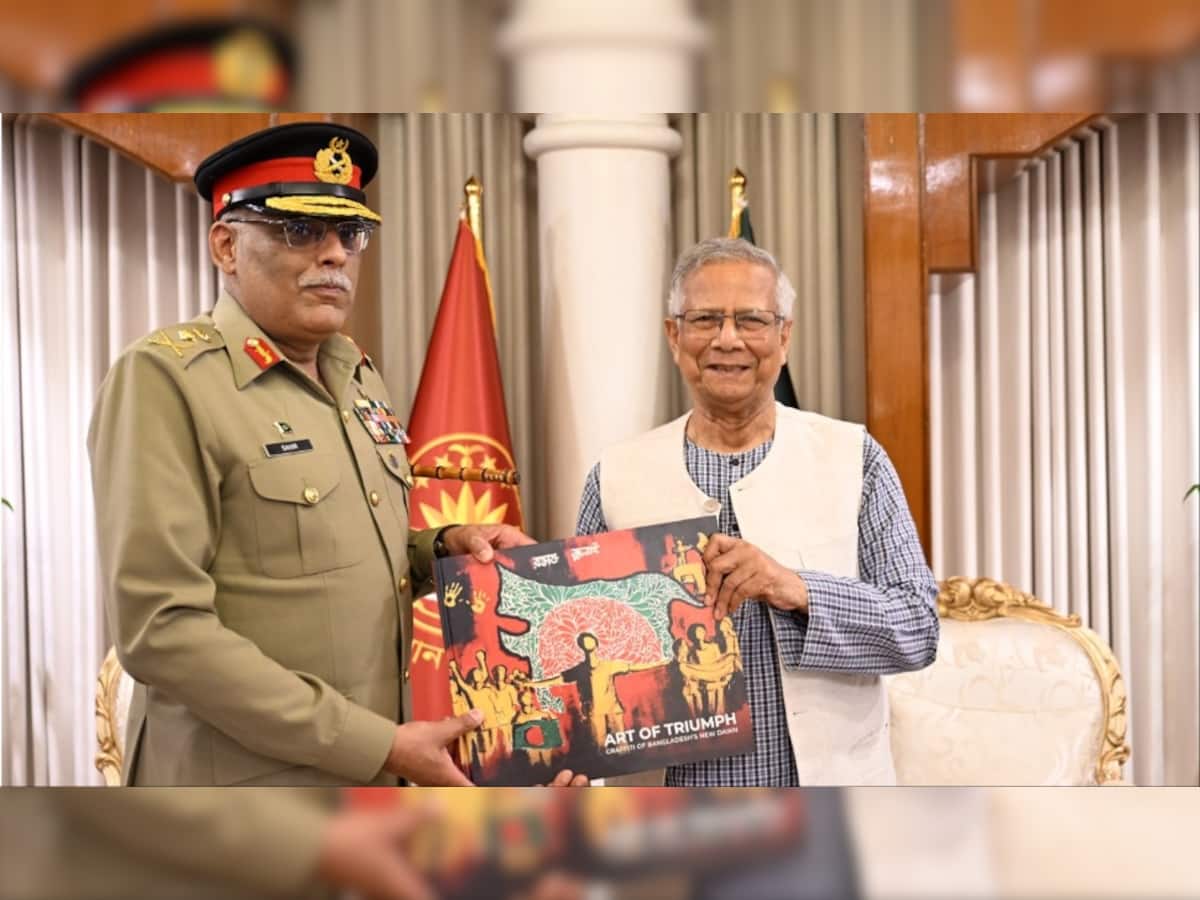

Tensions have flared between India and Bangladesh after interim leader Muhammad Yunus presented a map to Pakistan’s General Sahir Shamshad Mirza that included large swathes of Indian territory within Bangladesh. The map, featured in a book gifted during the Pakistani general’s visit to Dhaka, depicts the northeastern Indian states as part of Bangladesh, a concept often referred to as ‘Greater Bangladesh’.
This controversial cartography has drawn sharp criticism and raised concerns in New Delhi. The map, which has a history of appearing in certain circles, also includes West Bengal and portions of Bihar, Jharkhand, and Odisha, along with a part of Myanmar. The imagery suggests a historical territorial claim that has been revived.
The diplomatic fallout is occurring against a backdrop of shifting political alliances and strained bilateral ties. Since the recent change in government in Bangladesh, there are reports of strengthening connections with China and Pakistan by the interim administration. India has consistently highlighted the strategic significance of its northeastern states for regional connectivity, particularly within the BIMSTEC framework.
This territorial dispute adds another layer to India’s complex regional relationships. India is already engaged in border disputes with China over Arunachal Pradesh and Aksai Chin, and with Pakistan over the disputed territory of Kashmir. The latest incident underscores the enduring nature of territorial claims and the potential for such issues to ignite diplomatic rows in the subcontinent.