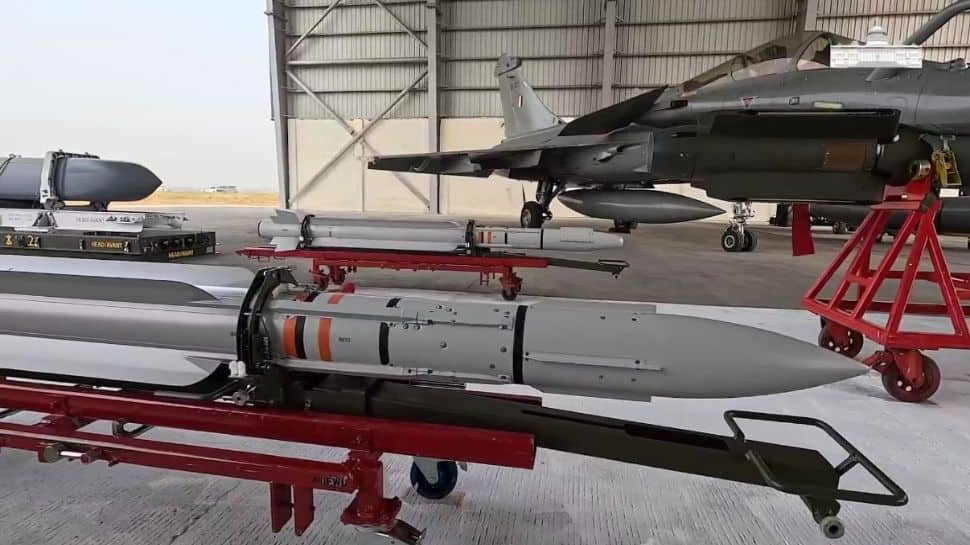

India’s ambitious 2016 deal for 36 Rafale fighter jets, promoted as a significant boost to national security and air power, is now facing intense scrutiny over a critical omission: the lack of the Meteor air-to-air missile. This state-of-the-art missile, developed by MBDA, offers an unparalleled range of approximately 200 kilometers, giving fighter jets a decisive advantage in beyond-visual-range engagements. Without the Meteor, the Rafale’s formidable capabilities are significantly curtailed, undermining the very premise of its high-value acquisition.
Reports indicate that the Indian government is now fast-tracking a proposal worth around Rs 1,500 crore to procure a new batch of Meteor missiles. This initiative, pending final clearance, aims to equip the Indian Air Force’s (IAF) Rafale fleet with its intended primary long-range weapon, acknowledging the aircraft’s operational limitations over the past several years. The move suggests a belated recognition of a critical gap in the original procurement strategy.
Military veterans and defence analysts are expressing strong concerns, characterizing the oversight as a grave planning error and a failure of accountability. The reduction in the number of jets from the original plan was justified by claims of acquiring superior, more advanced aircraft. However, the absence of the Meteor missile renders these claims questionable, particularly when the primary objective was to counter advanced threats like Pakistan’s F-16s equipped with AMRAAM. The situation raises serious questions about who authorized a deal that effectively stripped the Rafale of its most significant combat advantage.
The necessity for such long-range air-to-air missiles was highlighted during recent military engagements, emphasizing the need to neutralize enemy aircraft at a safe distance. The impending acquisition of the Meteor missile is seen as an essential step to fulfill the original promise of the Rafale deal and achieve air dominance.
While India focuses on developing indigenous missile technology like the Astra Mark 2 for other aircraft, the Rafale’s Meteor missile saga underscores significant issues in defence procurement. The decade-long delay in acquiring this pivotal weapon system points to systemic flaws in oversight and strategic foresight, casting a long shadow over India’s celebrated defence purchase.