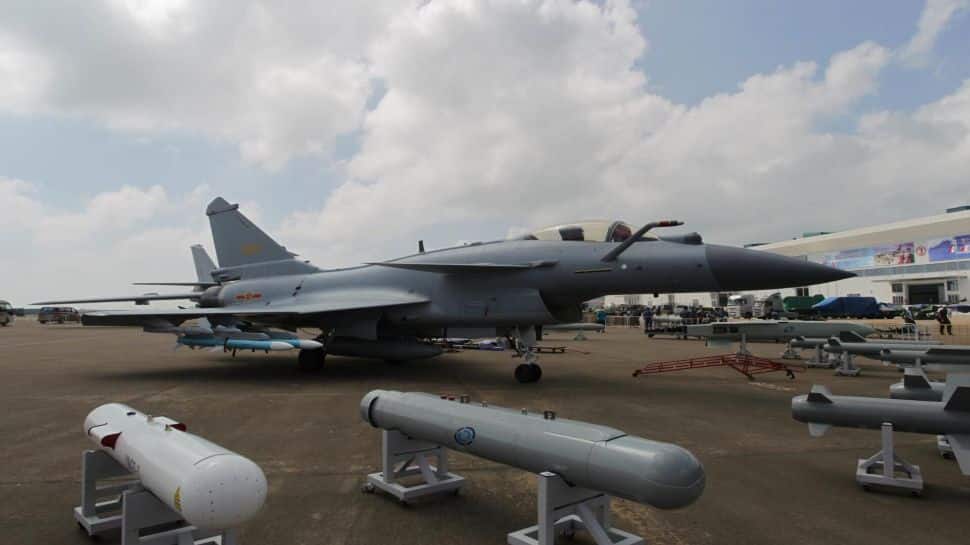
China appears to be significantly enhancing its military infrastructure near the Line of Actual Control (LAC) with India, as evidenced by new satellite imagery revealing at least two advanced missile bunker sites near Pangong Lake. These installations, situated in western Tibet, are strategically located along a frontier that has seen considerable tension and skirmishes. Analysts believe these reinforced concrete bunkers, featuring retractable roofs for protection and concealment, are intended for China’s potent HQ-9 long-range surface-to-air missile system. The HQ-9 is a formidable weapon capable of targeting a wide array of airborne threats, thereby bolstering Beijing’s integrated air defense network. The discovery suggests a deliberate effort by China to expand its ‘anti-access and area denial’ (A2/AD) capabilities, potentially creating a buffer zone that could impede Indian aerial operations. The comprehensive nature of the construction, including underground command centers and support facilities, indicates these are intended as long-term operational bases. Observers note the architectural similarities to Chinese military facilities previously identified in the South China Sea, pointing to a consistent pattern in China’s strategic fortification efforts. This development signifies a further militarization of the already volatile Himalayan region and highlights China’s commitment to strengthening its border defenses for potential high-intensity operations, a move that could complicate regional security dynamics.