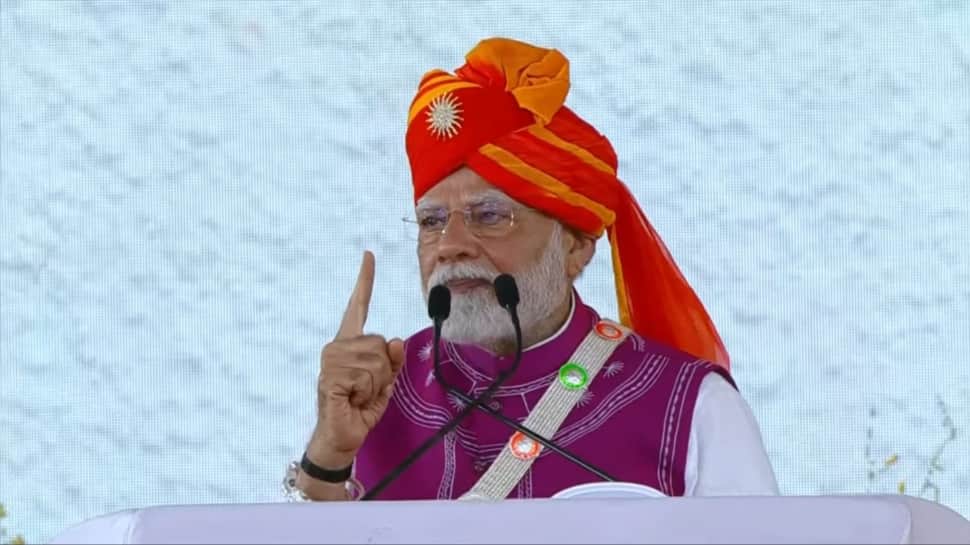

Prime Minister Narendra Modi’s recent campaign stop in Muzaffarpur, Bihar, generated significant buzz with his display of a traditional gamcha. This visually striking gesture, now widely shared on social media, has injected a potent symbol into the state’s electoral landscape.
Addressing thousands of supporters who braved the intense sun at the Muzaffarpur helipad ground, the Prime Minister responded to enthusiastic ‘Modi, Modi’ slogans by waving a gamcha adorned with the distinctive Madhubani art. This moment of connection preceded his departure for another rally in Chhapra.
This is not an isolated incident; Modi has previously used the gamcha during his Bihar visits, notably after inaugurating a bridge in August. This practice is part of his established approach to embracing local cultural symbols. Whether it’s distinct turbans for national holidays or regional scarves, he consistently utilizes such elements to build rapport with diverse Indian audiences.
In Bihar and other eastern Indian regions, the gamcha is a potent symbol representing the common person – laborers, farmers, and daily wage earners. It’s a practical garment, offering relief from the heat and serving multiple daily needs. By incorporating the gamcha, Modi connects with the shared experiences and identities of these segments of the population, reinforcing his image as a leader who stands with the working classes.
The economic profile of Bihar underscores the importance of this gesture, with agriculture being the primary source of employment for over half its population (53.2%). The state’s large numbers of landless laborers and migrant workers represent a crucial voting bloc. Observers believe Modi’s gamcha act is a deliberate outreach to these rural communities, signaling that the NDA remains focused on their welfare. Amidst the escalating political contest, the gamcha’s inherent simplicity and regional familiarity are set to be a key element of the BJP’s voter engagement.
For Prime Minister Modi, the gamcha transcends its practical use; it’s a statement of cultural resonance and empathy. In a state where agriculture is the backbone of livelihoods, such symbolic acts deeply connect with the populace. As Bihar heads towards the polls, Modi’s gamcha gesture signifies a thoughtful combination of cultural acknowledgment, traditional values, and strategic political messaging.
.jpeg "Featured Image")