
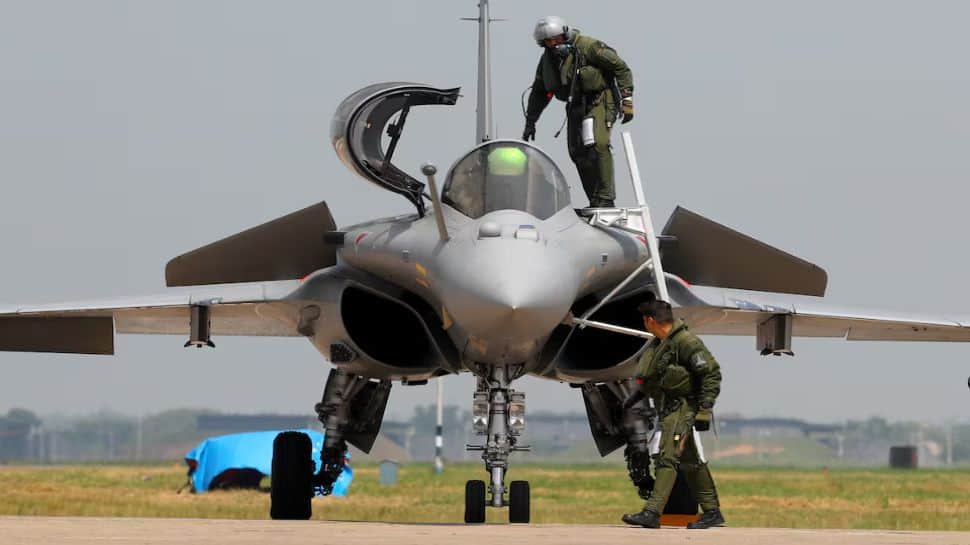

India’s defense landscape is witnessing a strategic redirection, with a clear emphasis on cultivating indigenous fighter jet manufacturing capabilities over expanding its fleet of foreign-origin aircraft. This decisive pivot aims to establish self-reliance in advanced aviation, even as the Air Force grapples with a significant squadron deficit. The government’s current approach suggests a slowdown in large foreign purchases, like the proposed acquisition of more Rafale jets.
The Indian Air Force (IAF) is critically understaffed in terms of fighter squadrons, operating 31 against the required 42. While the need for enhanced aerial combat power is paramount, the government has reportedly sent back a proposal for 114 Rafale jets, estimated to cost over Rs 2 lakh crore. The core requirement for this potential deal now centers on deep technology transfer and substantial local manufacturing by the French firm, Dassault Aviation.
Defense strategists note that the opportune moment for a third Rafale acquisition is diminishing. As India’s indigenously developed Tejas Mk-2 and the advanced fifth-generation AMCA stealth fighter progress towards operational status, the strategic justification for further foreign acquisitions becomes questionable. The Tejas Mk-2 is on track for its prototype in mid-2026 and first flight in 2027, with production slated for 2029-2030. The AMCA prototype is anticipated around 2030.
Even with existing Rafale orders for the Air Force and Navy, the prospect of an additional multi-billion dollar deal faces significant hurdles. Long delivery timelines, estimated to begin only after three years, combined with ongoing negotiations for local production, create a substantial overlap with the readiness of India’s domestic fighter programs.
The geopolitical landscape also presents alternative options, such as Russia’s offer of the Su-57E fighter with complete technology transfer. However, India’s strategic priority appears to be strengthening its own defense industrial base.
To achieve this, the government is actively promoting domestic production. Hindustan Aeronautics Limited (HAL) is being urged to ramp up output, with a concerted effort to integrate private sector players into the supply chain. The ultimate goal is to build a robust ecosystem for producing world-class fighter jets entirely within India, fostering economic growth and ensuring long-term strategic autonomy. This strategic shift makes a future Rafale deal increasingly unlikely.