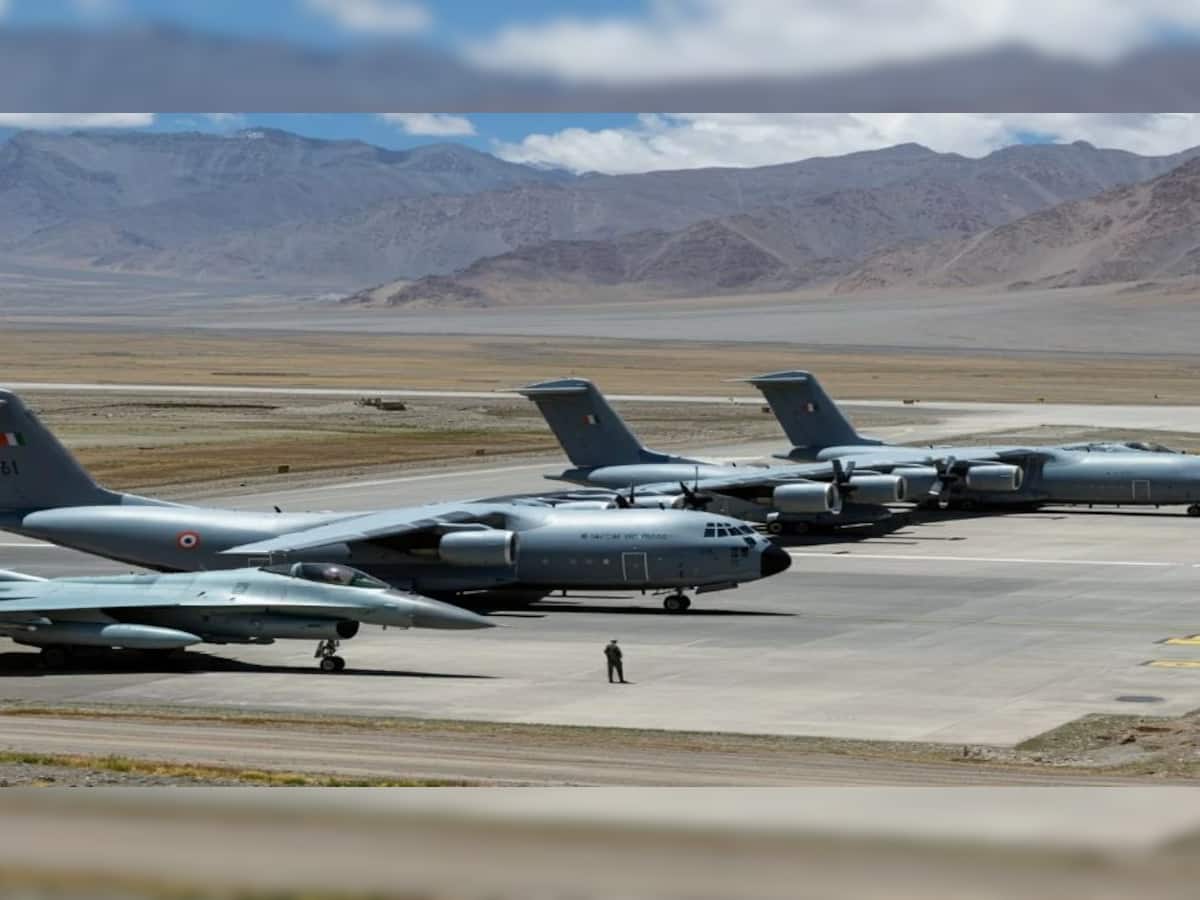

India has achieved a significant military milestone with the operationalization of Nyoma Airbase, now recognized as the world’s highest airfield. Situated at a formidable 13,700 feet in eastern Ladakh’s Changthang region, this strategically vital base lies just about 50 kilometers from the Line of Actual Control with China. The development significantly enhances India’s air power projection capabilities in the sensitive Himalayan theater.
The Nyoma Airbase, a testament to India’s engineering prowess in extreme conditions, has a history stretching back to 1962. However, its true potential was unlocked following the 2020 Galwan Valley clashes, which spurred a rapid upgrade. In 2021, the government approved the transformation of the modest airstrip into a fully functional fighter base. The Border Roads Organisation, through its Project Himank, led the substantial Rs 220 crore infrastructure development. Years of challenging construction work in sub-zero temperatures and thin air have culminated in a fully operational state-of-the-art facility.
The airbase features a 3-kilometer paved runway designed to accommodate India’s most advanced aerial assets, including Sukhoi-30MKI and Rafale fighter jets. It also supports heavy-lift aircraft like the C-17 Globemaster III and IL-76, critical for rapid deployment of troops and equipment. Essential infrastructure includes hardened aircraft shelters, a modern Air Traffic Control center, and specialized blast pens built to withstand extreme weather and combat conditions. Reports indicate that fighter operations, including those by Sukhoi jets, have already begun from Nyoma, marking a new era of aerial readiness.
Nyoma Airbase strengthens India’s integrated air defense network, working in synergy with existing bases at Leh and Thoise. Its strategic positioning, south of Pangong Tso and close to sensitive points like Demchok and the Depsang Plains, allows for quicker response times to any border provocations. The base is also crucial for enhancing the logistical capabilities of C-130J Super Hercules and various helicopter types that supply troops stationed in the harsh mountainous terrain.
Operating at such extreme altitudes presents formidable challenges. The thin air impacts aircraft performance, requiring extended runways and robust materials. Temperatures can fall to -40°C, posing continuous threats of runway obstruction due to snow and extreme operational difficulties for maintenance crews. Every flight operation is a victory against the unforgiving environment.
The establishment of Nyoma Airbase signifies India’s unwavering commitment to securing its northern borders and maintaining strategic parity. It is a clear demonstration of India’s resolve and its capability to operate advanced military assets at the world’s highest altitudes, reinforcing its position as a major power in the region.