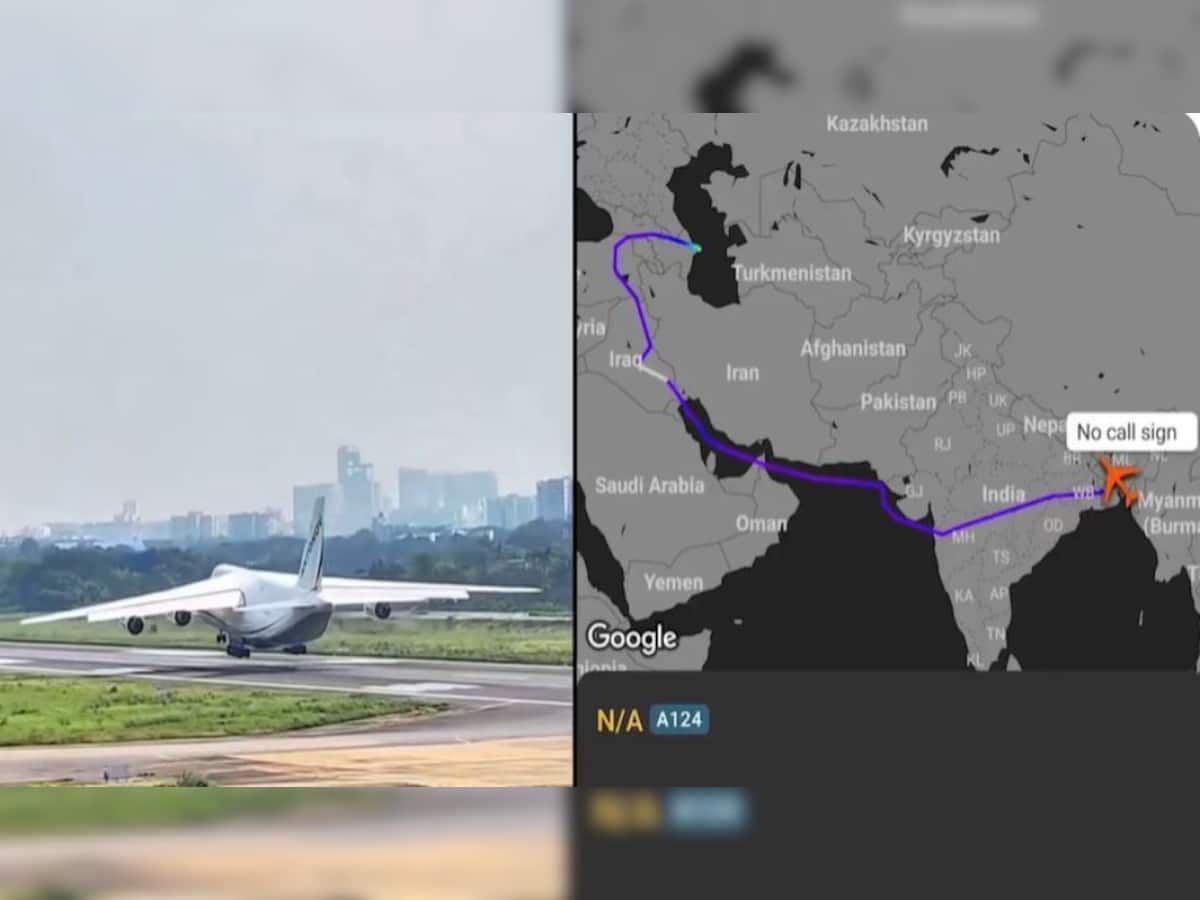

India is closely observing a series of unusual military movements in neighboring Bangladesh, which have raised eyebrows in New Delhi regarding potential implications for the strategic Siliguri Corridor. A large Antonov AN-124 cargo aircraft, reportedly en route from Azerbaijan, made an unannounced landing in Dhaka. Significantly, the flight appears to have circumvented Iranian airspace, a common route for sensitive international transfers, and no official statement has clarified the cargo’s nature or the operational rationale for its discreet journey. Concurrently, the Chief of the Bangladesh Navy, Admiral Mustaq Ahmed, participated in extensive discussions focused on naval cooperation and maritime industry partnerships with Pakistan during the Pakistan International Maritime Exhibition and Conference (PIMEC 2025) in Karachi. This significant engagement between Dhaka and Islamabad marks a new chapter in their defense relations.
Further adding to the strategic unease, a U.S. Air Force C-130 Hercules aircraft transported over one hundred American soldiers to Chattogram. The soldiers were subsequently housed in a city hotel, with no official clarification provided for their presence. The critical aspect is Chattogram’s proximity, situated less than 100 kilometers from India’s Siliguri Corridor, often referred to as the ‘chicken’s neck.’ This narrow land bridge is a paramount strategic vulnerability for India. Heightened foreign military activity near this vital artery naturally triggers significant concern. The convergence of American military personnel and deepening defense ties with Pakistan in Bangladesh has fueled worries in New Delhi about a potential destabilization of the security architecture surrounding the Siliguri axis. Analysts suggest Bangladesh is strategically diversifying its military relationships, seeking shipbuilding and defense technology collaboration with Pakistan, training and logistical support from the U.S., and potential equipment acquisition from Azerbaijan. With existing major power rivalries intensifying in the Bay of Bengal, these developments on India’s eastern periphery introduce additional uncertainty. While no immediate hostile intentions are apparent, the combination of undisclosed cargo flights, increased naval collaboration, and the presence of foreign troops near India’s critical corridor has deepened apprehension in New Delhi regarding Bangladesh’s strategic direction and its potential impact on India’s eastern security defenses.