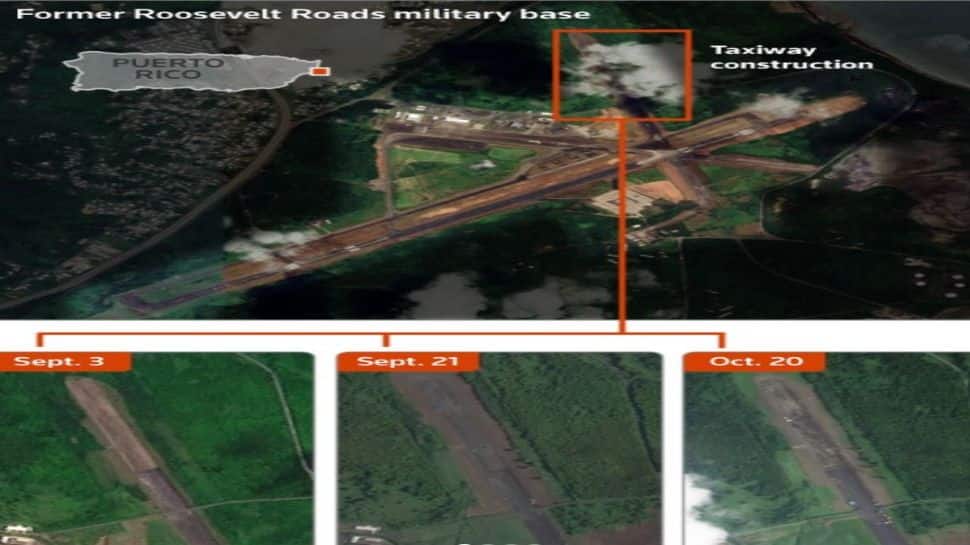

The quiet island of Puerto Rico is now a focal point of geopolitical tension, with unusual developments at the Roosevelt Roads Naval Base. This facility, abandoned for two decades, is undergoing a rapid revival, evident in satellite images showing upgraded runways and cleared access roads. Its proximity to Venezuela, approximately 800 kilometers away, has fueled speculation of a potential U.S. military buildup.
Established in the 1940s, the Roosevelt Roads Base was a significant Cold War outpost, housing thousands of U.S. personnel and considerable military hardware before its closure in 2004. The sudden and substantial refurbishment has caught the attention of observers globally, who see it as a signal of increasing pressure on Venezuelan President Nicolás Maduro’s government.
Further indications of heightened military readiness include upgrades at civilian airports in Puerto Rico and neighboring St. Croix. These improvements, such as runway extensions and expanded logistics and fuel storage, could readily support military air operations, given their strategic location relative to Venezuela.
Multiple U.S. defense officials and naval analysts have indicated that these infrastructure enhancements are a deliberate strategy to pressure Maduro into relinquishing power or facing punitive measures. Washington’s long-standing criticism of Maduro’s leadership, citing human rights and democratic concerns, has been reinforced by these visible preparations, moving beyond sanctions and diplomatic campaigns.
In Venezuela, President Maduro is reportedly seeking strategic alliances with Russia and China, citing fears of an imminent U.S. military strike. This concern was amplified by the recent arrival of a Russian IL-76 cargo aircraft in Venezuela, an aircraft associated with the Wagner Group. The nature of the cargo remains unconfirmed but symbolizes Russia’s continued support for the Venezuelan regime.
Maduro’s government has consistently maintained that the United States seeks to destabilize the country to exploit its immense oil reserves. Venezuela, despite possessing the world’s largest oil reserves, is mired in a severe economic crisis, with U.S. pressure adding to the nation’s difficulties.
The South American region is experiencing heightened geopolitical friction. While the U.S. asserts its interest in fostering democracy, many international analysts point to the strategic importance of Venezuela’s resources and regional influence. Both Russia and China are bolstering their ties with Maduro, aiming to counter U.S. dominance.
The United Nations has expressed apprehension over the escalating situation, warning of the risks of regional conflict. Any minor incident could have severe repercussions, especially given Venezuela’s history of border disputes. The revived Puerto Rican base serves as a stark reminder of enduring global rivalries and the potential for renewed confrontation.