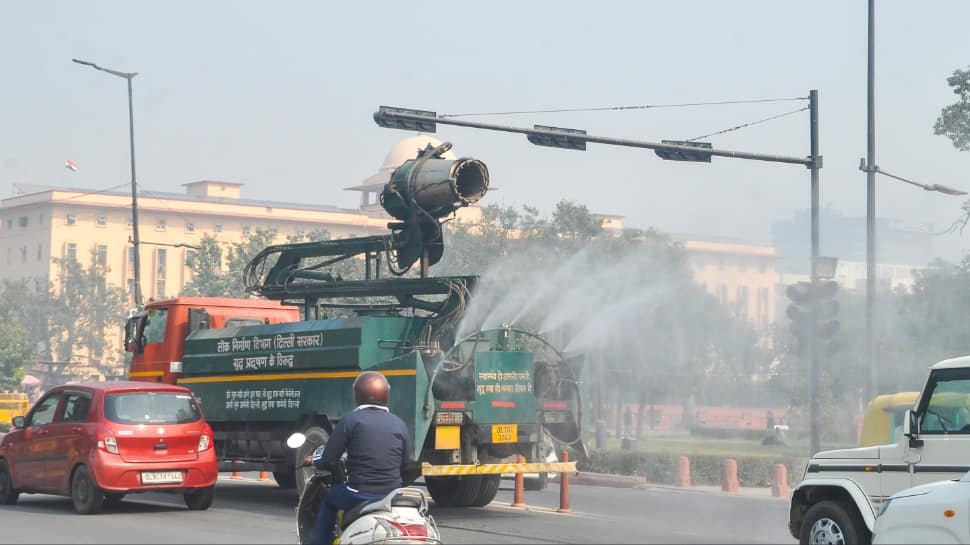

Delhi’s air quality has plunged back into the ‘Severe’ category for a second consecutive day, with Wednesday’s Air Quality Index (AQI) recorded at 418. This persistent pollution makes the capital city one of the most polluted in the country, alongside Jind, Haryana. The situation has triggered the enforcement of Stage III of the Graded Response Action Plan (GRAP), a set of emergency measures by the Commission for Air Quality Management (CAQM).
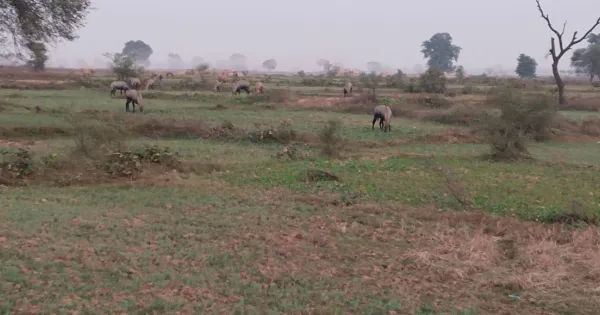
The primary driver of this hazardous air is the escalating contribution from stubble burning. On Wednesday, agricultural fire smoke accounted for a season-high 22.5% of Delhi’s PM2.5 pollution. This significant increase has made it the leading pollutant, surpassing everyday sources like vehicular emissions.
The impact of stubble burning has been steadily growing throughout the week, rising from 13.7% on Monday to 15.5% on Tuesday, and reaching its peak on Wednesday. Experts highlight that unfavorable meteorological conditions are exacerbating the problem. Light winds, cooler temperatures, and a low atmospheric boundary layer are preventing the dispersal of pollutants, creating a thick blanket of toxic haze close to the ground. Neighboring cities in the NCR are also experiencing severe air pollution, with Noida at 408 and Rohtak at 406.
Out of the 39 active monitoring stations in Delhi, a majority have reported ‘Severe’ air quality. The worst-affected areas, including Wazirpur, Chandni Chowk, and Bawana, have AQI levels exceeding 450, placing them in the ‘Severe-Plus’ zone. The forecast suggests a slight improvement to ‘Very Poor’ from Thursday to Saturday, but the current dangerous air quality levels are expected to continue.