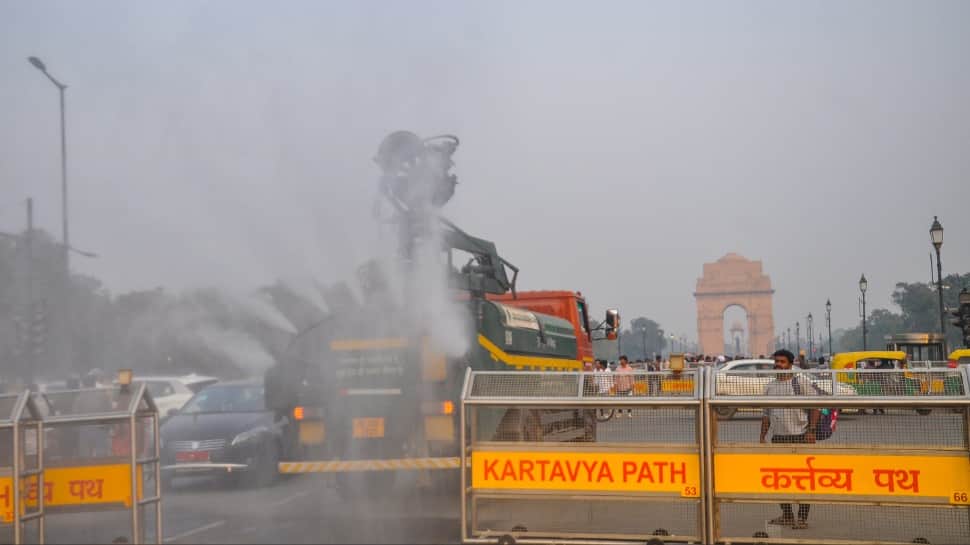

Delhi is grappling with a severe air quality crisis this Saturday, with a thick layer of smog obscuring visibility and pushing the Air Quality Index (AQI) into hazardous territory in numerous areas. This grim scenario unfolds despite the activation of Stage III of the Graded Response Action Plan (GRAP), designed to mitigate pollution during such exigencies. The capital’s overall AQI stands at a concerning 389, barely escaping the ‘Severe’ classification (401-500). The health implications are profound, impacting everyone from healthy individuals to those with pre-existing medical conditions. Specific pollution hotspots have registered AQI values exceeding 400, painting a dire picture. Wazirpur leads the list with an AQI of 450, followed closely by Bawana (443), Rohini (426), Anand Vihar (426), and Mundka (425). Other affected areas include Jahangirpuri (423), Vivek Vihar (420), Chandani Chowk (420), Narela (419), and ITO (419). The persistent poor air quality, evidenced by yesterday’s 4 pm AQI of 387, is compounded by unfavorable weather patterns. Slow-moving winds and cooler temperatures prevent the dispersal of accumulated pollutants, creating a stagnant, toxic atmosphere. The Supreme Court has taken note of the issue, urging state governments to address stubble burning, a significant contributor to the regional pollution problem. Further deterioration in wind speed is anticipated, potentially prolonging this critical air quality episode.