
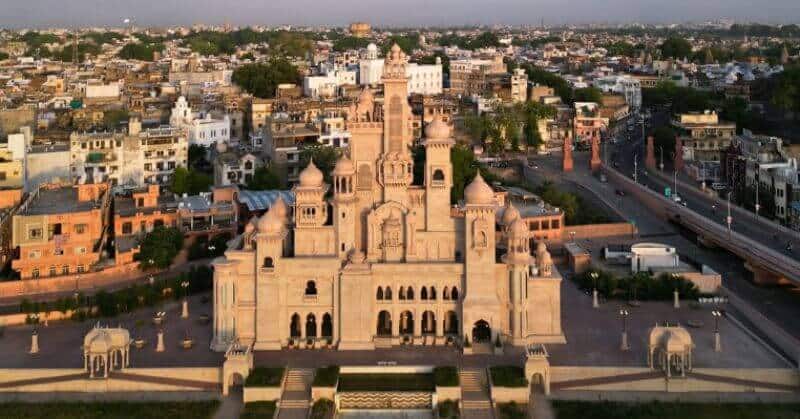

In a remarkable urban innovation, Kota, Rajasthan – famous as India’s educational hub – has officially become the nation’s first city to operate completely without traffic lights. This pioneering move promises a seamless and uninterrupted travel experience for its inhabitants, daily commuters, and the vast student population, driven by intelligent design and advanced infrastructure.
The Urban Improvement Trust (UIT) of Kota spearheaded this traffic revolution with a singular vision: to create a city that keeps moving. Their strategy involved building a sophisticated network of interconnected ring roads, designed to route traffic around congested intersections. This bypass system dramatically cuts down travel times and ensures the city’s roadways remain clear and efficient.
Further enhancing this continuous mobility, Kota has integrated more than two dozen flyovers and underpasses at pivotal points throughout the city. These elevated and sunken pathways allow vehicles to proceed without the need to stop at traffic signals, maintaining momentum and reducing delays.
The tangible results are impressive: commutes are faster, leading to significant time savings. Additionally, the reduced stop-and-go traffic has contributed to a notable decrease in road accidents and a more efficient use of fuel, making travel both greener and more economical.
Kota’s successful implementation of a signal-free traffic system now presents an inspiring model for other Indian cities facing persistent traffic congestion. It demonstrates that with thoughtful urban planning and investment in infrastructure, a city can transcend the limitations of traditional traffic management systems while simultaneously improving safety and efficiency.
Even with hundreds of thousands of residents and thousands of students commuting daily, Kota has cultivated a traffic ecosystem where waiting at red lights is a distant memory. This transformation showcases the profound impact of smart planning in creating a fluid, uninterrupted urban transit experience, setting a new paradigm for city planning in India.