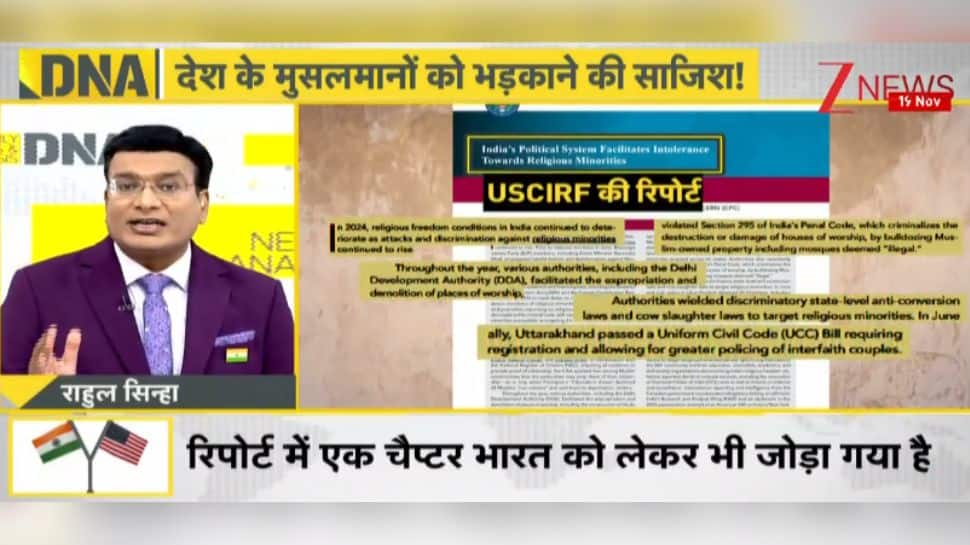

A new report by the United States Commission on International Religious Freedom (USCIRF) has sparked a sharp rebuke from India, with accusations of bias and factual inaccuracies flying. The report outlines concerns about minority rights in India, alleging that religious sites are being repurposed and that certain laws infringe upon religious freedom, painting an ‘alarming’ picture of the current climate.
Indian leaders and representatives from affected communities have strongly refuted the report’s findings. They argue that the USCIRF’s conclusions are based on incomplete narratives and fail to reflect the ground truth. Clerics from the Muslim community have publicly stated that India remains a haven for religious minorities, asserting that such reports are designed to incite discord and harm India’s global standing.
This is not the first time USCIRF has targeted India with similar accusations. Critics question the recurring nature of these one-sided evaluations, viewing them as part of a deliberate strategy to apply international pressure on India.
Furthermore, Indian commentators have pointed to the United States’ own struggles with protecting minority rights. Evidence from US civil rights organizations indicates a significant uptick in hate crimes, with Jewish and Muslim communities being frequent targets. Thousands of hate incidents against Jewish individuals have been recorded, and hate crimes against Muslims have surged dramatically in recent years. Vandalism at Hindu and Buddhist temples in the US has also been reported.
Experts suggest that these domestic statistics from the US undermine its capacity to credibly assess other nations’ religious freedom conditions. Many in India interpret the USCIRF report as a geopolitical tactic aimed at undermining the rise of new global powers, a viewpoint that aligns with historical analyses of international power dynamics and the resistance to shifts in global influence.