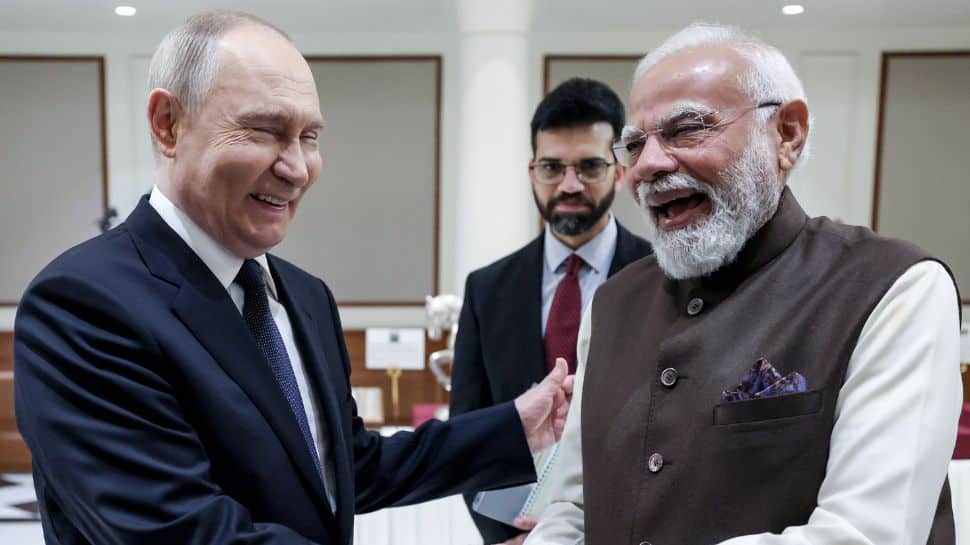
Prime Minister Narendra Modi, speaking at the India-Brazil-South Africa (IBSA) Leaders’ Meeting in Johannesburg, declared that reforms for the United Nations Security Council (UNSC) are an ‘imperative’ rather than an ‘option.’ He argued that the existing global governance bodies are no longer representative of current global realities.
Modi also emphasized the urgent need for coordinated action against terrorism within the IBSA framework, stating unequivocally that there is no room for leniency or differing approaches. Furthermore, he highlighted IBSA’s significant potential to contribute to the development of AI norms that are secure, reliable, and place human interests at the forefront.
A key initiative proposed by the Prime Minister was the ‘IBSA Digital Innovation Alliance.’ This alliance would serve as a platform for sharing successful Digital Public Infrastructure, including India’s widely adopted UPI system and its CoWIN healthcare platform. He reiterated that IBSA transcends its status as a mere trilateral group, acting instead as a critical bridge connecting three continents, three prominent democracies, and three substantial economies.
According to the Ministry of External Affairs, Prime Minister Modi underscored the significant divergence between global governance institutions and the challenges of the 21st century. He also pointed to IBSA’s capacity to shape international standards for AI, ensuring they are ‘safe, trustworthy, and human-centric.’
“The IBSA partnership offers a unique opportunity for mutual development and can set an example for sustainable economic progress,” the MEA communiqué stated. The Prime Minister identified collaboration in areas like millets, sustainable farming, disaster preparedness, green technologies, and healthcare as key opportunities.
Acknowledging the valuable work of the IBSA Fund in supporting development initiatives across numerous countries, particularly in education, health, and renewable energy, PM Modi proposed the establishment of an ‘IBSA Fund for Climate Resilient Agriculture’ to further enhance South-South cooperation in combating climate change impacts.
PM Modi had arrived in Johannesburg for the G20 Summit, extending his thanks to South African President Cyril Ramaphosa for the warm welcome and the successful organization of the event. This visit marked his fourth official trip to South Africa, following earlier engagements in 2016 and for two BRICS summits in 2018 and 2023.
South Africa is making history by hosting the first G20 Summit ever held on the African continent. The African Union’s recent elevation to a permanent G20 member during India’s G20 presidency in 2023 adds further significance to this gathering.