
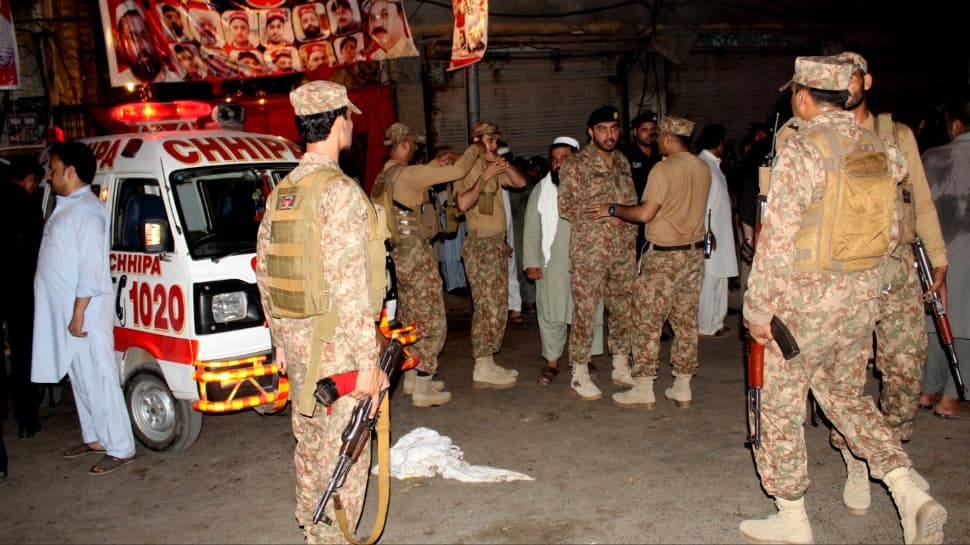

Pakistan’s military conducted airstrikes inside Afghanistan late Monday, killing a reported 10 civilians, including nine children and a woman, according to the Taliban government. This severe escalation of cross-border violence follows a significant militant attack on a security base in Peshawar, Pakistan, just hours earlier, intensifying friction between the two neighbors.
Taliban spokesperson Zabihullah Mujahid condemned the strikes as an “invasion” and warned of repercussions for further violations of Afghan territory. The deadly raid hit a residential home in the Gerbaz district of Khost province, flattening the dwelling and killing five boys, four girls, and one woman. Mujahid shared these details via social media, underscoring the devastating civilian toll. Additionally, four other civilians were injured in separate Pakistani airstrikes targeting the Kunar and Paktika border areas.
The airstrikes are widely interpreted as a direct response to the coordinated militant assault on the Frontier Constabulary (FC) headquarters in Peshawar. The attack, which involved suicide bombers and gunmen, breached a key security installation. Initial reports indicate at least three fatalities and a protracted battle within the compound. This security lapse in Pakistan is a growing concern, compounded by the strained diplomatic relationship with Kabul.
The ongoing crisis is deeply intertwined with the presence and activities of the Tehrik-i-Taliban Pakistan (TTP). The TTP, which has ideological ties to Afghanistan’s ruling Taliban, claimed responsibility for a recent suicide bombing in Islamabad that killed 12 people. Pakistan has accused the TTP leadership of operating from Afghan soil. The lack of progress in recent diplomatic talks to resolve border issues has further exacerbated the situation, leading to this latest bout of bloodshed.
In a notable development amidst these tensions, Afghanistan’s Taliban administration is reportedly seeking to strengthen economic ties with India. Following a high-level visit to New Delhi, Afghan officials have expressed optimism about revitalizing trade and investment, signaling a potential shift in regional economic strategies.