


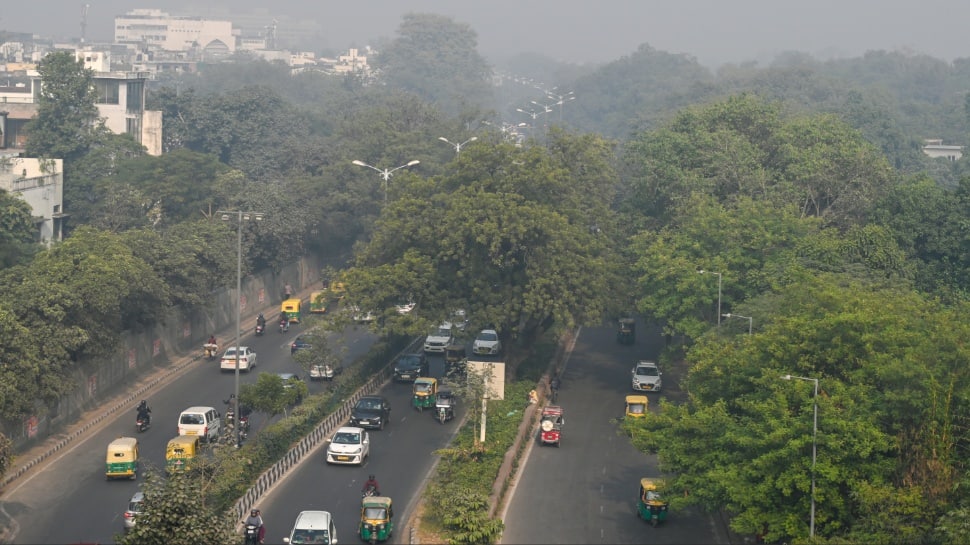

Delhi’s air quality has plunged back into the ‘Severe’ category, with the overall Air Quality Index (AQI) recorded at 384. This alarming development follows closely on the heels of the Commission for Air Quality Management lifting stringent Stage III restrictions, underscoring the persistent nature of pollution in the capital, now in its 14th consecutive day of poor air.
The toxic air is not limited to Delhi; many areas across the National Capital Region (NCR) are also facing hazardous conditions. Within Delhi, a concerning 19 out of 39 monitoring stations have registered AQI levels in the ‘Severe’ range (401+). Prominent pollution hotspots include Anand Vihar (411), Bawana (414), Ashok Vihar (417), Chandni Chowk (407), Narela (407), and Aya Nagar (402).
Several other monitoring points are experiencing air quality in the upper echelons of the ‘Very Poor’ category, such as ITO (396), Alipur (355), and IGI Airport (360). The situation is equally dire in neighboring cities.
Noida is experiencing severe air quality, with Sector 116 at an alarming 438 and Sector 125 at 422. Ghaziabad’s Loni is also in the ‘Severe’ zone (AQI 425), while Indirapuram sits at 385 (‘Very Poor’). Greater Noida’s Knowledge Park-V is perilously close to ‘Severe’ at 399. Gurugram reports an overall AQI of 318, classified as ‘Very Poor’.
The winter season is a significant contributor to the deteriorating air quality. Cold temperatures and minimal wind speeds trap pollutants close to the ground. The India Meteorological Department forecasts cloudy skies and fog, with minimum temperatures ranging from 8 to 10 degrees Celsius. The Air Quality Early Warning System projects this ‘Severe’ to ‘Very Poor’ air quality trend to persist for the next six days, indicating a prolonged period of concern for the region’s inhabitants.





.jpeg "Featured Image")