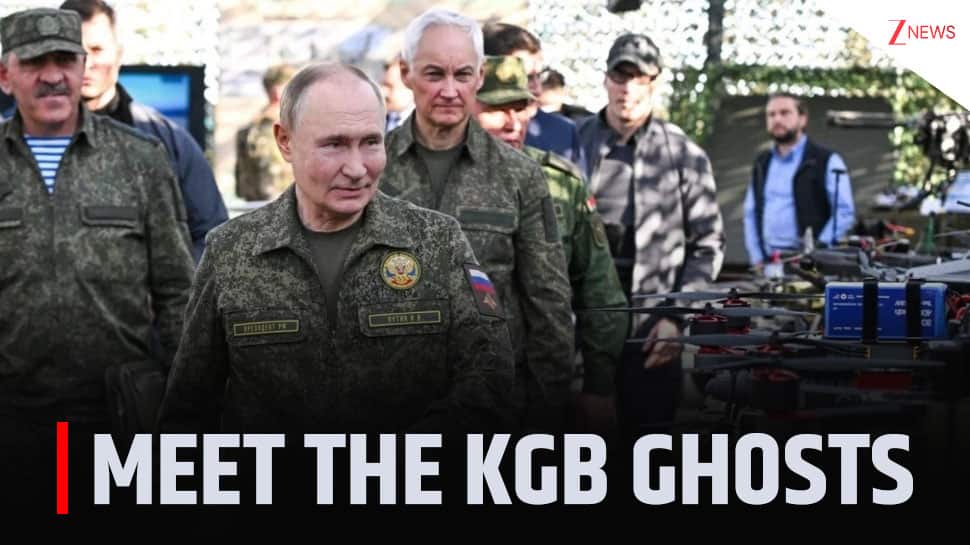

As President Vladimir Putin engages in international diplomacy, attention inevitably focuses on the “Siloviki,” the formidable group of trusted security officials who form his innermost circle. These “men of force,” often ex-KGB or FSB operatives, are the custodians of Putin’s security and the key architects of Russia’s most consequential decisions, particularly in national security and defense.
The structure of Putin’s elite is often bifurcated, with technocrats occupying government posts separate from the security apparatus. The Siloviki, however, are deeply embedded, influencing nearly every facet of the national agenda. Many analysts argue that these powerful figures are the primary architects of Russia’s hardline policies, including its actions in Ukraine and its broader European strategy, suggesting their views are paramount in Kremlin deliberations.
Key members of this exclusive group are highly influential. Nikolai Patrushev, head of the Security Council, is considered the most powerful, a long-time confidante with intensely anti-Western beliefs and a history in the KGB. Sergei Naryshkin, chief of the Foreign Intelligence Service, also has deep ties to Putin and actively promotes a specific national historical narrative. Alexander Bortnikov, who directs the FSB, controls a vast internal security network and shares a KGB past with the president. Defense Minister Sergey Shoigu, though less traditional in background, holds a powerful position and maintains a close, personal relationship with Putin. General Valery Gerasimov, Chief of the General Staff, stands as the strategic mind behind the Ukraine invasion.
In addition to these formal positions, informal advisors like Yury Kovalchuk, whose personal and family connections to Putin run deep, and Anton Vaino, the Chief of Staff managing the presidential administration, also play vital roles. These individuals collectively form the bedrock of Putin’s power structure, shaping domestic and foreign policy from behind the scenes.