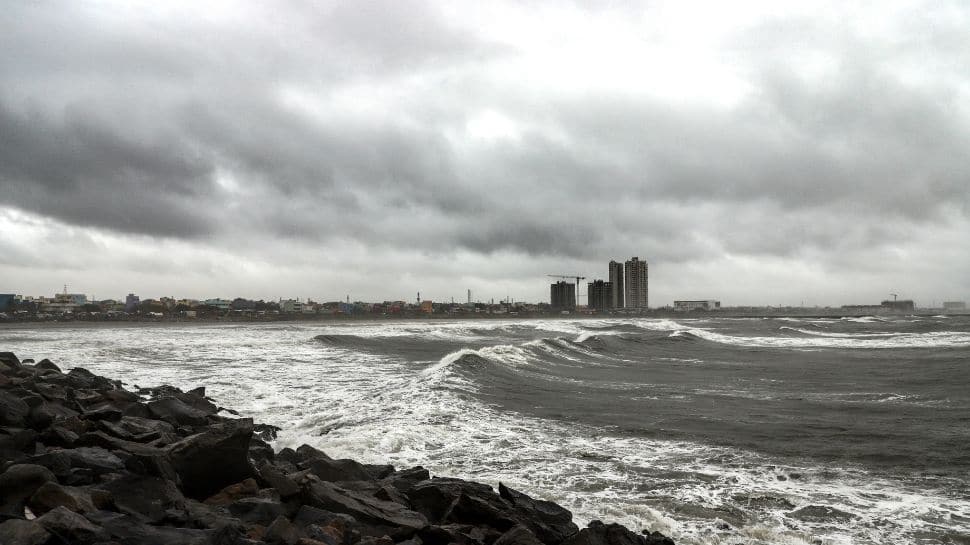

The Southwest Bay of Bengal is currently experiencing the powerful impact of Cyclone Ditwah, a tropical storm that formed around November 26, 2025. As the system strengthens and moves across the region, the IMD has issued urgent warnings for Tamil Nadu, Puducherry, and South Andhra Pradesh, advising extreme caution. The cyclone’s rapid evolution from a low-pressure system to a full-fledged storm has raised concerns due to its potent atmospheric drivers.
Scientists have identified several critical factors contributing to Cyclone Ditwah’s rapid development. Warm ocean waters, registering between 28°C and 30°C, acted as a vital energy source. Low vertical wind shear, a measure of changing wind speed and direction with height, was also a crucial element, allowing the storm’s cloud structure to grow vertically. Furthermore, moisture supplied by prevailing monsoonal winds bolstered the storm’s intensity, accelerating its transition through various stages of cyclonic development within a 24 to 36-hour timeframe.
The naming of the cyclone, ‘Ditwah,’ follows an established international protocol. Yemen submitted the name, which is associated with the Detwah Lagoon, an ecologically rich area within Yemen’s Socotra Archipelago. This system ensures that cyclones are systematically named from a pre-approved list contributed by regional nations.
Sri Lanka has suffered immense loss due to Cyclone Ditwah, with official figures indicating at least 410 deaths and 336 people missing. The cyclone’s landfall on the island’s eastern coast unleashed devastating floods and landslides, disproportionately affecting areas like Kandy. Tens of thousands have been displaced, and millions affected by the widespread damage. Immediate relief operations, including the deployment of heavy machinery to clear roads and restore services, are in progress. India has provided significant aid through its ‘Neighbourhood First’ initiative.