


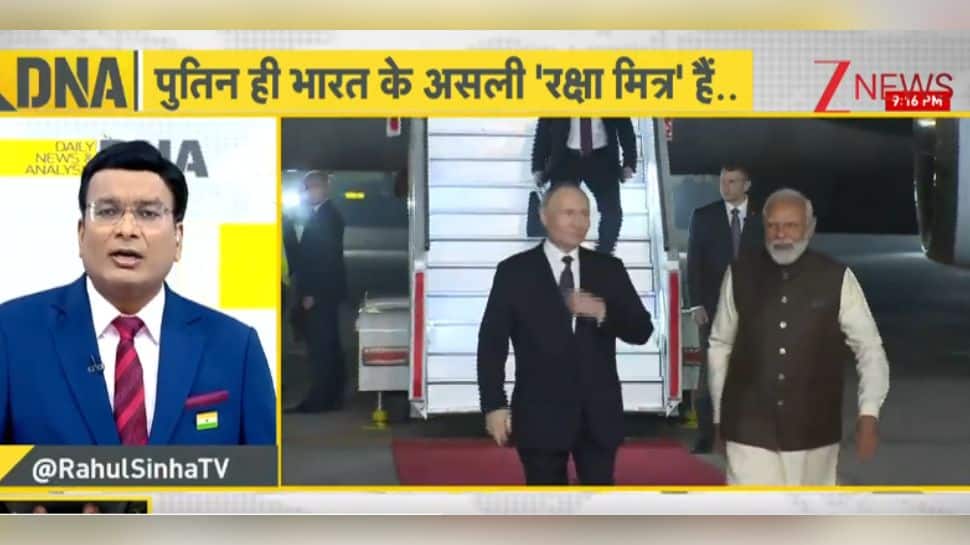

President Vladimir Putin’s recent trip to India has once again drawn international attention to the significant ‘Special and Privileged Strategic Partnership’ between Russia and India. Putin has consistently articulated India’s importance, positioning it as a crucial strategic ally and a cornerstone of Russia’s defense strategy.
The highly effective BrahMos missile system, a product of this enduring collaboration, is a prime illustration of their shared capabilities. Although the foundational agreement was signed in 1998, the project gained substantial momentum after Putin’s ascent to the presidency in 2000. His decisive leadership helped navigate Russian bureaucratic complexities, leading to accelerated joint development.
This historical success leads many observers to believe Putin may be poised to offer another major defense asset during his current visit. The S-500 air-defense platform or the advanced Su-57 fighter jet are considered strong possibilities, further enhancing India’s military strength.
Putin’s strategic approach toward India was formalized with his ‘Turn to the East’ doctrine in 2000, which designated India as a linchpin for three key economic corridors. His appreciation for India’s global standing was evident in a recent interview where he praised India as a ‘superpower,’ highlighting its economic trajectory, skilled workforce, and cultural depth.
Russia’s commitment to India has been unwavering, from assisting in investigations into the 2008 Mumbai attacks to supplying the S-400 system despite U.S. sanctions. India has reciprocated this trust, maintaining vital oil trade with Russia during the Ukraine crisis and opting to deepen defense ties with Moscow, even foregoing offers for Western aircraft like the F-35.
Putin’s delegation, including seven senior ministers, underscores the profound strategic bond. India’s Defense Minister has expressed eagerness for the visit, anticipating it will inaugurate a new phase in the celebrated India-Russia partnership.
.jpeg "Featured Image")