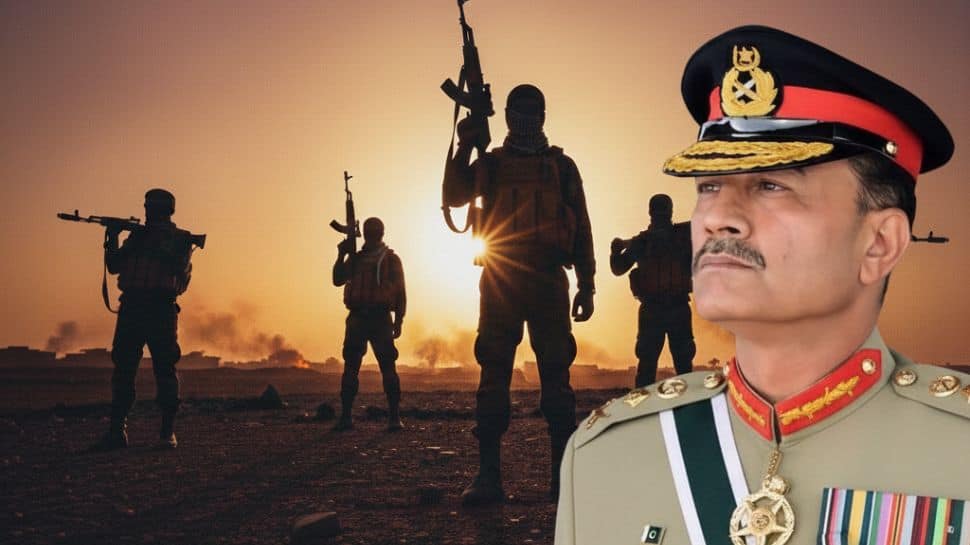
A significant geopolitical strategy spearheaded by Pakistan’s Army Chief, General Asim Munir, is reportedly aimed at establishing an ‘Islamic NATO’ with the explicit goal of countering India. Recent diplomatic activities highlight General Munir’s engagement with Middle Eastern nations to build this strategic partnership. A key interaction occurred with the Army Chief of Jordan, where proposals for ‘strategic cooperation’ were discussed. These discussions allegedly included the possibility of deploying Pakistani troops on Jordanian territory, presented as a measure to enhance regional stability.
The alleged blueprint for this alliance is structured around three main pillars. The first involves utilizing Pakistan’s nuclear arsenal as leverage to command a pan-Islamic military coalition. Public statements attributed to General Munir have purportedly outlined the alliance’s objectives as confronting Israel in West Asia and decisively defeating India in South Asia. The second pillar suggests offering Pakistan’s military forces as a paid service to wealthy Arab nations, thereby securing financial backing and potentially disrupting India’s economic links in the Gulf. The third pillar relies on the mobilization of Jihadi ideology to foster unity among Muslim countries, potentially diverting attention from Pakistan’s own internal challenges and economic plight.
General Munir’s public statements have drawn scrutiny, with some commentators likening his rhetoric to that of extremist leaders. However, the proposed ‘Islamic NATO’ is widely considered to face substantial challenges to its realization. Key Arab states have established strong economic and defense relationships with India, and are unlikely to align with a Pakistan-centric military bloc. Furthermore, Pakistan’s precarious economic situation and its dependence on international financial aid cast doubt on its ability to sustain such an ambitious undertaking. Observers anticipate that the alliance, if formed, would lack the necessary financial and political backing. Concurrently, India is actively reinforcing its strategic and trade relationships across the Middle East, positioning itself to navigate and potentially counter any emerging regional threats.