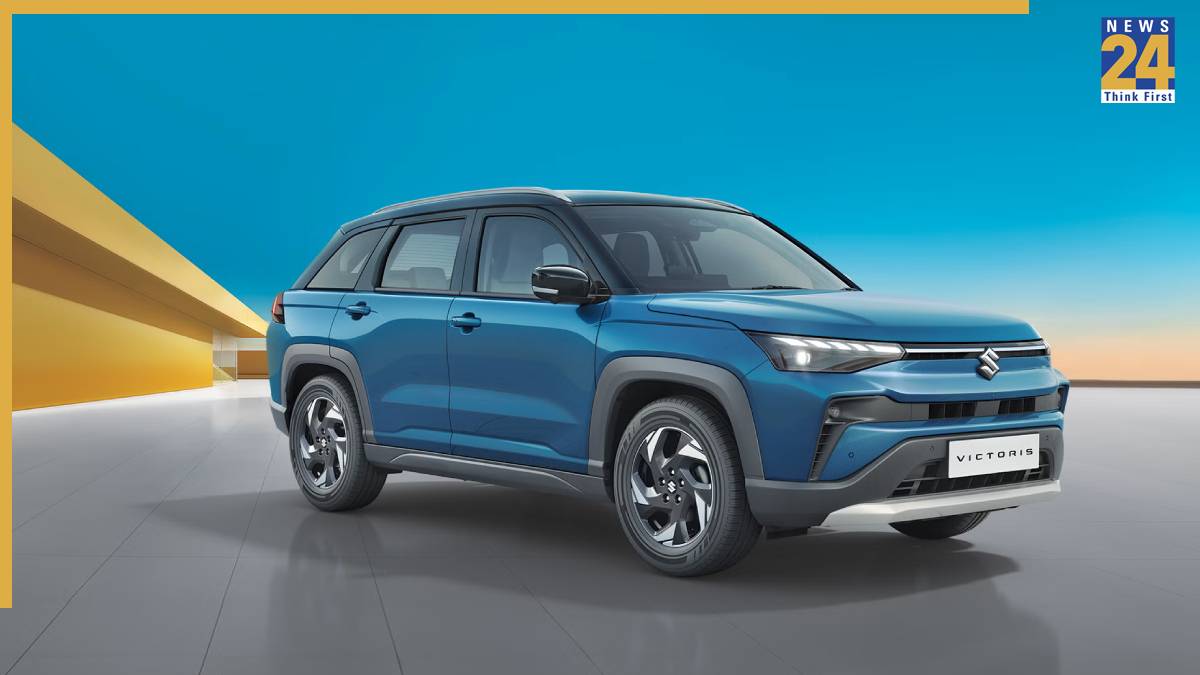

Maruti Suzuki’s new Victoris is aimed at competing with established models like the Hyundai Creta and Kia Seltos. While focusing on domestic sales, Suzuki is also looking to expand its global presence by exporting the Victoris to key international markets. Suzuki’s strategy includes targeting an extensive list of countries. The Grand Vitara, a compact SUV, is currently exported to roughly 60 countries. The Victoris, however, will be aimed at a broader market, potentially reaching over 100 countries worldwide. The e-Vitara shares a similar export strategy, with exports already underway.
The e-Vitara has already been shipped to 12 European countries, including the UK, Germany, Sweden, the Netherlands, Hungary, Austria, Iceland, and Belgium. The Victoris is expected to follow suit, entering similar markets. In addition to Europe, the Victoris and e-Vitara are planned for export to several locations across Asia, the Middle East, South and Central America, and Africa.
Recent data shows that India’s export-oriented manufacturing is growing, with Maruti’s share in this growth increasing steadily. In August 2025, Maruti’s exports totaled 36,538 cars. These exports accounted for roughly 20% of the company’s total sales of 1.8 lakh units for the month. Maruti’s share of overall car exports from India reached 40% in FY25. With the introduction of new models like the Victoris, Maruti aims to further enhance its export capabilities.
Maruti currently exports several models across global markets, including the Fronx, Jimny, Dzire, Baleno, Swift, Ertiga, Celerio, S-Presso, Eeco, Ciaz, Grand Vitara, Alto, Brezza, Ignis, XL6, and Wagon R. The Fronx is currently Maruti’s best-selling export model, having recently reached the 1 lakh export mark. The Fronx is available in over 80 countries, and Suzuki has similar goals for the Victoris.