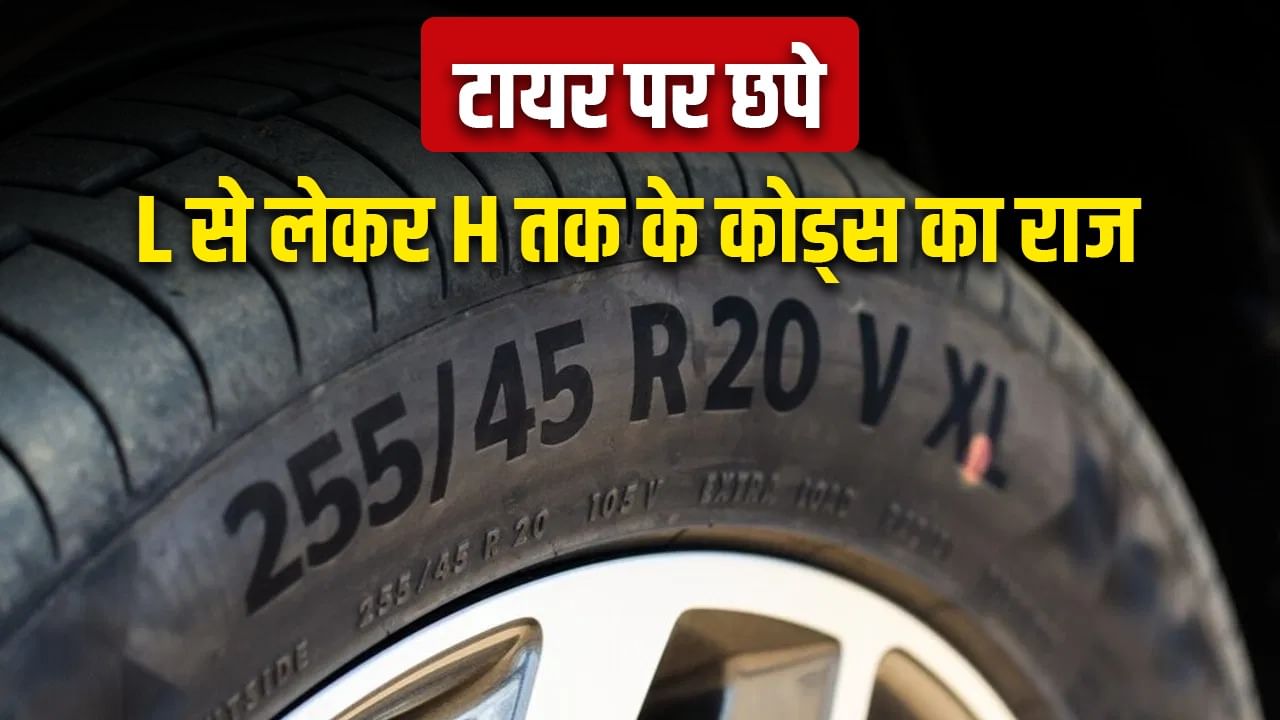

When considering a new car or motorcycle, consumers often focus on the engine specifications, fuel efficiency, design aesthetics, and advanced features. However, an often-overlooked aspect is the tire, a critical component for road safety and overall vehicle performance. The letters on a tire’s sidewall, such as L, M, N, P, Q, R, H, V, and Z, denote its speed rating, which indicates the maximum safe speed the tire can handle.
Speed rating indicates the maximum speed at which a tire is designed to safely operate. This is determined through rigorous testing and is denoted using English alphabets on the tire sidewall. For example, a tire marked with ‘Q’ can handle speeds up to 160 km/h, while a tire with an ‘R’ rating is capable of handling speeds up to 170 km/h.
Choosing the right speed-rated tire is essential. A tire with a suitable speed rating enhances safety by preventing tire failure due to overheating, especially if driven at speeds exceeding its rating. This, in turn, reduces the risk of accidents. Moreover, correct speed-rated tires contribute to vehicle stability and control, particularly during high-speed driving on highways. Ultimately, tires perform better and last longer when operated within their intended speed limits.
The ‘Q’ and ‘R’ speed ratings have specific implications. A ‘Q’ rated tire is safe up to 160 km/h, commonly found on off-road vehicles, SUVs, and certain trucks, where torque and grip are often prioritized over high-speed capability. An ‘R’ rated tire can safely handle speeds up to 170 km/h. R-rated tires are typically installed on pickup trucks, SUVs, and some heavier vehicles.
For sports cars, tires with a Q or R rating may not be suitable. Such vehicles often require tires with V or Z ratings.
When selecting tires, several factors must be considered. Refer to the vehicle owner’s manual for recommended speed ratings and tire sizes. Consider your driving style; if you primarily drive in the city at low speeds, a high-speed-rated tire may not be necessary. However, if you frequently travel on highways at high speeds, choose tires with a rating higher than R. Also, pay attention to the load index, which specifies the maximum weight the tire can support. Always select tires from reliable brands, as the speed ratings of local tires may not be accurate.
Ignoring tire speed ratings can have severe consequences. The use of incorrect tires contributes to numerous accidents. People often view the markings on tires as technical jargon, but these details are directly related to safety. A cheaper or improperly rated tire might save money initially, but it can endanger the lives of you and your family on the road. Tire speed ratings are an essential part of driving experience and safety. Therefore, pay attention to the alphabets such as Q, R, or H when purchasing new tires. Selecting the right tire will improve your car’s performance and provide you with a safer driving experience.