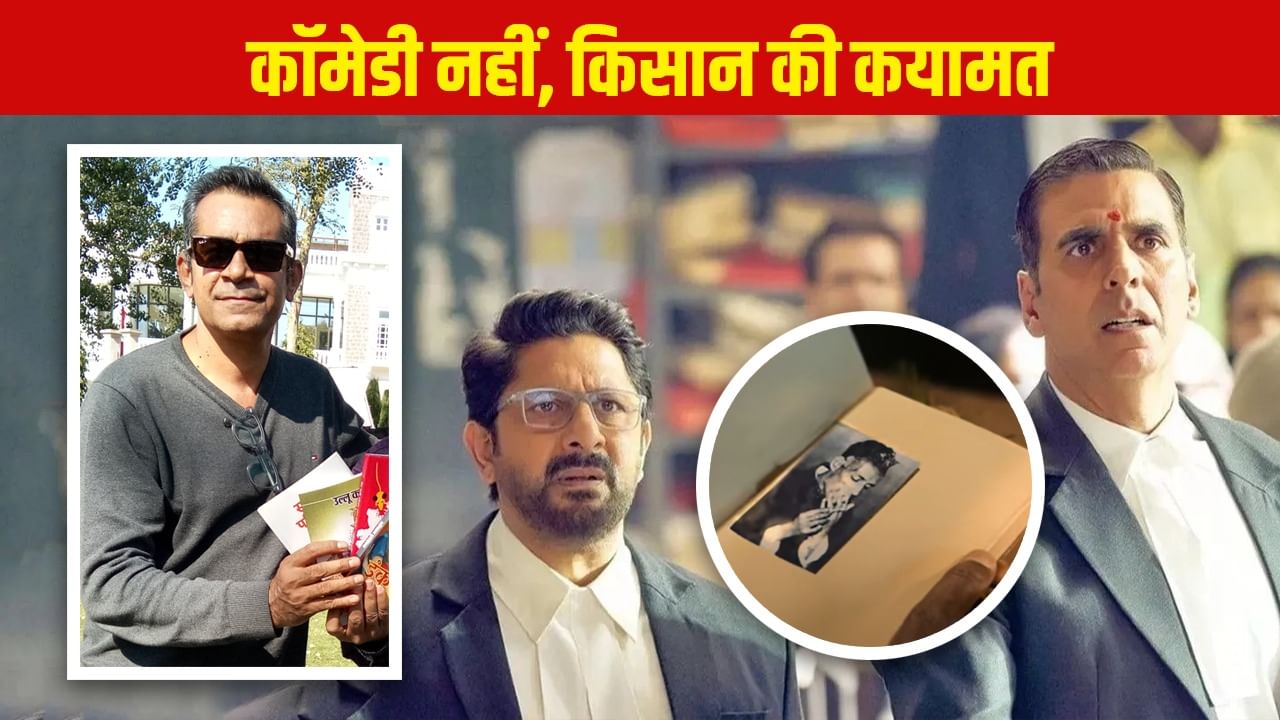

The release of Jolly LLB 3 generated anticipation, especially following the trailer’s debut. The film itself deepened this sense of expectation. The trailer featured a striking image of poet Muktibodh, which immediately captivated viewers. This image prompted the question: What is the film’s political message? The scene of a farmer examining pages, including a prominent picture of Muktibodh, triggered reflection on the film’s themes. What was the purpose of including Muktibodh’s image, and how would it contribute to the narrative? The role of such a significant Hindi poet in a film presented as a comedy was also a subject of curiosity.
Beyond the legal drama, the film also features a judge played by Saurabh Shukla, and other elements contributing to its seriousness. It shows Seema Biswas’s portrayal of grief, highlights the dynamics between the oppressed and the powerful, and presents the conflicts between farmers and industrialists. The judge’s humor and some of Muktibodh’s renowned quotes also added to the film’s complexity. This juxtaposition of comedy and social commentary increased the viewers’ curiosity about the director’s goals.
In Hindi literature, Muktibodh is recognized for his portrayals of life’s hardships. He is considered one of Hindi’s most realistic and progressive poets. His stance was evident in the 1960s when he stated, ‘The moon’s face is crooked,’ challenging conventional romanticism. Generations were intrigued by such writing, yet Muktibodh focused on the realities of the common people. He wrote of the moon’s illusions and the shadows, and the mischievous nature of moonlight.
Muktiibodh’s writing included calls to action, such as ‘Now one must take all the risks of expression, break the monasteries and forts…’ His work proclaimed light against darkness. Jolly LLB 3 shows that Muktibodh’s message remains significant. In a time of changing values, the film’s judge considers both ‘paper’ and ‘spirit’ when making decisions, suggesting that understanding ‘paper’ comes from ‘spirit,’ and true justice requires both.
If ‘spirit’ had been prioritized, the farmer Raja Ram Solanki’s land would not have been lost. The film’s narrative of loss and struggle is emotionally affecting. The farmer who initially asserts, ‘My land, my will,’ eventually loses his land and his life. The sequence of events, with its images and sounds, is deeply moving.
The farmer turns pages, revealing verses that are displayed on the screen. The image of Gajanan Madhav Muktibodh, holding a bidi, also appears. This image is a significant symbol of Hindi literature. The inclusion of Muktibodh in a mainstream film allows viewers to understand the film’s message.
The lines recited during the farmer’s suicide are:
My roof kept leaking still
I prayed for rain
From my grandfather to my great-grandfather
From my father to my grandfather
And the inheritance I received from my father
I wanted to give the same to my son
Wanted to give a little land
And a handful of seeds so that
Everyone’s hunger could be quenched
That’s why I believed
In all their words
In the sentiments expressed in the speech
I kept watching, mesmerized
Their heads rising towards the sky
And they pulled the ground from under my feet
I was proud to be an Annadata (grain giver)
This was my crime that
I was a farmer.
‘Our land, our will’
The film doesn’t specify the poem’s author. The film’s story is inspired by events in Bhatta Parsaul village in 2011. The setting is Rajasthan, but the village’s name is retained. The film’s theme is ‘Our land, our will.’ Industrialist Haribhai Khetan uses various methods to seize the village land for the ‘Bikaner to Boston’ project. The local administration and others are under his control. When the farmer Raja Ram Solanki asserts his will, the ‘monasteries’ and ‘forts’ begin to shake. Akshay Kumar and Arshad Warsi’s characters, the lawyers, undergo a change of heart and fight against injustice. The judge also takes a risk, choosing ‘spirit’ over ‘paper’.