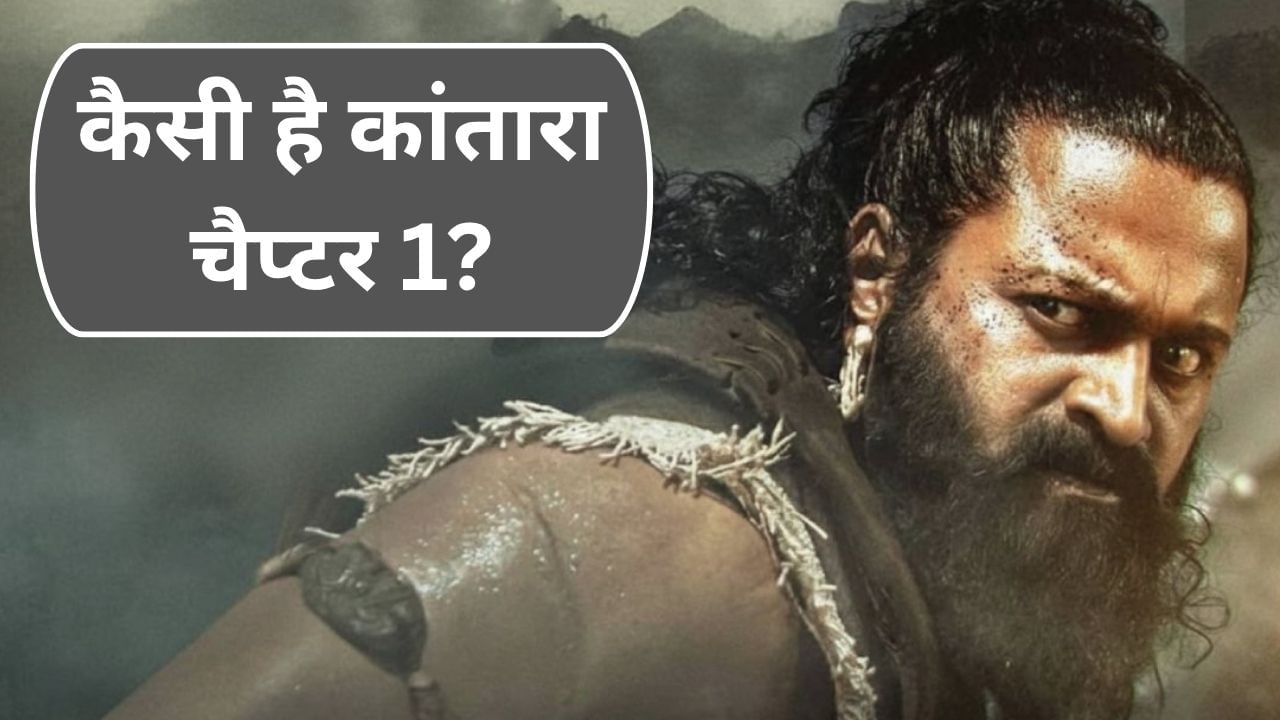

Rishab Shetty’s ‘Kantara: Chapter 1’ has hit theaters, promising a captivating and immersive cinematic experience. The film aims to deliver on multiple fronts, aiming to entertain, provoke thought, and leave a lasting impression, characteristics of a true cinematic masterpiece. The original film set a high bar, and this prequel attempts to build upon that success.
Initial reactions to the prequel’s trailer were met with a degree of apprehension, stemming from the potential challenges of adapting a local story to a grander, pan-Indian audience with a significant budget. Fortunately, the film dispels these concerns.
Three years ago, Rishab Shetty took on the challenge of bringing to life a local tale rooted in the Indian soil, a narrative deeply ingrained in the beliefs of millions living along the coasts of Maharashtra, Goa, and Karnataka. These communities have upheld these traditions for generations. To understand what makes this prequel exceptional, reading a thorough review is essential.
The story opens with a ruthless king from the Kadamba Sultanate, driven by an insatiable greed. His sole ambition is to control every aspect of the land: rivers, streams, fields, and mountains. He shows no regard for human life, eliminating anyone who stands in his way and seizing their territories.
One day, the king’s attention falls upon an elderly fisherman near the sea. He orders the fisherman’s immediate capture. As the old man is brought before the king, strange objects spill from his pocket. The king is immediately captivated! He resolves to discover the source of this newfound treasure, leading him to the sacred land of Kantara, where the inhabitants live in harmony with nature. However, when the king casts his evil eye upon the area, he inadvertently provokes the deity that resides there.
As the narrative progresses through time, the setting shifts to the Bhangra kingdom. Here, the king’s son, Vijendra (played by Jayaram), has aged and passed on his responsibilities to his son, Kulashekhara (played by Gulshan Devaiah). His daughter, Kanakavathi (played by Rukmini Vasant), manages the treasury. In Kantara, Barme (played by Rishab Shetty) takes on a leadership role, dedicated to enhancing the village’s prestige and transforming the lives of its people.
When the people of Kantara approach the Bhangra court with their grievances, everything changes. The central questions arise: Whose land is Kantara? Who will protect it? Who seeks to destroy it? A fierce battle unfolds, transcending human conflict to become a struggle for faith and rights, with devastating consequences. To experience this gripping drama, one must see Rishab Shetty’s Kantara Chapter 1 in theaters.
If the 2022 Kantara left you breathless, be prepared, as this prequel exceeds expectations. In the villages of Konkan, Karnataka, and Goa, the deities and their attendants, the Tulunadu Daivas, are revered. The Daivas are often worshipped in the form of rocks. In Kantara, we learn more about them, and this chapter 1 tells their story very interestingly. From the beginning, the story is so engaging that you become completely immersed in this world.
The meticulous crafting extends to every scene. It transcends mere entertainment; it addresses the centuries-old exploitation of the poor. The film shows how no one was allowed to touch the king’s horses, and those who did were killed. But Rishab Shetty’s rebellious character rides the horse, romances the king’s daughter, and also runs the chariot for the king. These scenes, which defy social norms, are woven into the story in such a way that they don’t feel forced. The first half is action-packed, and the second half offers many twists and turns. This shows Rishab’s dedication, making this a must-watch.
Rishab Shetty not only acts in this film but also directs it, creating a sensation. Along with drama and entertainment, he attempts to present aspects like the struggles of tribal communities and their internal conflicts, which we are unaware of. As a director, Rishab played a big game. The Guliga’s scream from the previous Kantara, which gave us goosebumps, seems like a mere trailer compared to this prequel! Barme’s (Rishab) scream varies, expressing different pains. Chilling moments don’t cease but keep coming. Technically, the cinematography by Arvind Kashyap and the music by Anjaneesh Loknath are outstanding. Visual effects are also great, but some graphics in the second half seem a little weak, although this minor flaw doesn’t matter much.
If Rishab Shetty is the backbone of this film, Rukmini Vasant (Kanakavathi) is its soul. Rukmini has been given a powerful role in this film, and she has played it with full force. Her acting is powerful. Jayaram has also added color with his experienced acting. As for Gulshan Devaiah, he played the role of the incompetent king Kulashekhara so beautifully that you will truly be angered by seeing him on screen, and that is his victory! But the real game-changer is Rishab Shetty! In the climax and Guliga scenes, he doesn’t seem like just an actor; we feel the deity is delivering justice.
If you felt that Kantara was a defining cinematic experience, this prequel shows the power in the roots! Combining compelling visuals with a heartwarming story, the most remarkable thing about this film is its honesty. Kantara’s response to the question of why you worship stones is a powerful one. This film is not just a box-office success; it is a cinematic experience that will be remembered for a long time. So, fasten your seatbelts and immerse yourself in the world of Kantara, because this is the best film of the year. We give this film 4 stars.