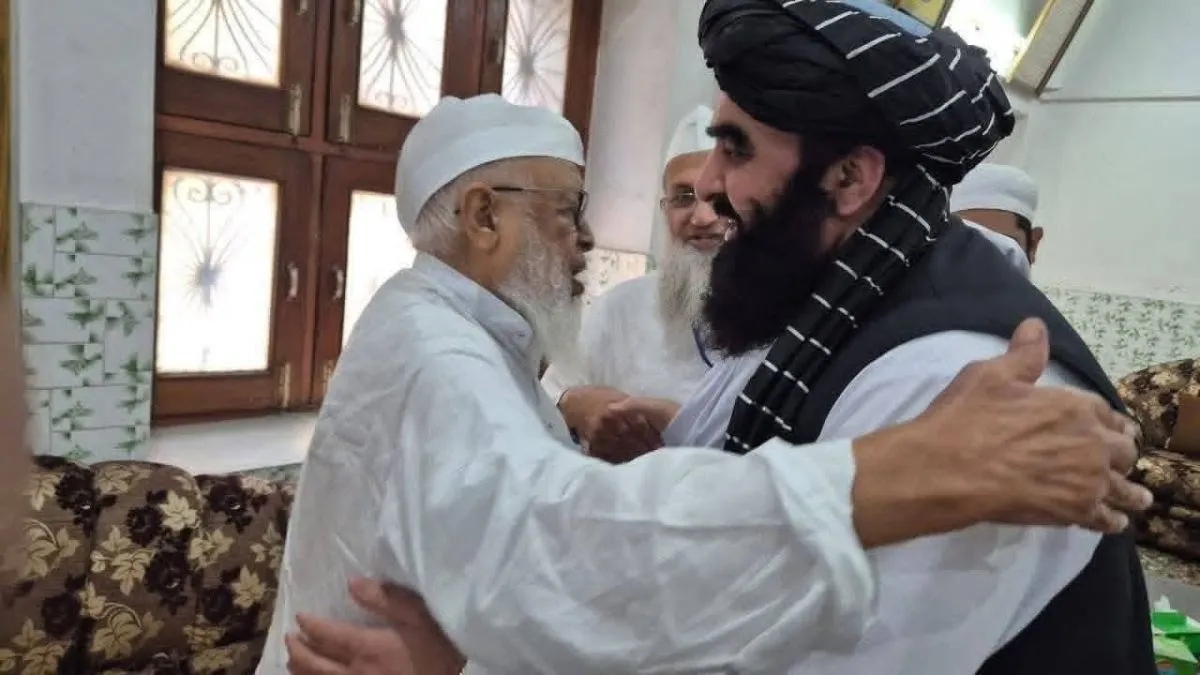

Afghanistan’s Foreign Minister, Amir Khan Muttaqi, recently visited the renowned Darul Uloom Deoband Islamic seminary in India, emphasizing a desire for strengthened bilateral relations. During his stay, Muttaqi met with respected figures such as Maulana Arshad Madani and expressed optimism about the future trajectory of India-Afghanistan ties. This visit, part of a comprehensive six-day Indian tour, is being interpreted as a blend of religious diplomacy and strategic positioning amidst shifting regional alliances. Upon his arrival from Delhi, Muttaqi and his entourage were greeted warmly at the historic Darul Uloom by its Vice-Chancellor, Mufti Abul Qasim Nomani, and Maulana Arshad Madani, the president of Jamiat Ulama-e-Hind. A considerable number of students and locals were present, adding to the palpable atmosphere, though security remained a priority. Muttaqi articulated his appreciation for the welcome, stating, “I hope that India-Afghanistan ties advance further.” The visit is seen as a significant development, potentially challenging the narrative that Pakistan is the primary custodian of Deobandi Islam and a key supporter of the Taliban. By engaging with Darul Uloom, a deeply respected institution, Muttaqi is underscoring the Taliban government’s own intellectual and religious lineage within India, suggesting a move towards diversifying foreign relations. Since its founding in 1866, Darul Uloom Deoband has become a pivotal center for Islamic scholarship in South Asia, producing influential leaders. Graduates of the seminary are highly valued within Afghanistan’s governance structures. Despite past challenges with visa regulations, approximately 15 Afghan students are currently pursuing their studies there. Muttaqi also spoke about future diplomatic interactions, mentioning the dispatch of new diplomats and extending an invitation for Indian delegations to visit Kabul. He also touched upon the prospect of joint development projects, including the Chabahar port in Iran, while acknowledging the impact of international sanctions. This diplomatic initiative gains traction within the context of strained relations between India and Pakistan, highlighting Afghanistan’s efforts to forge stronger connections across South Asia beyond its immediate neighbor.