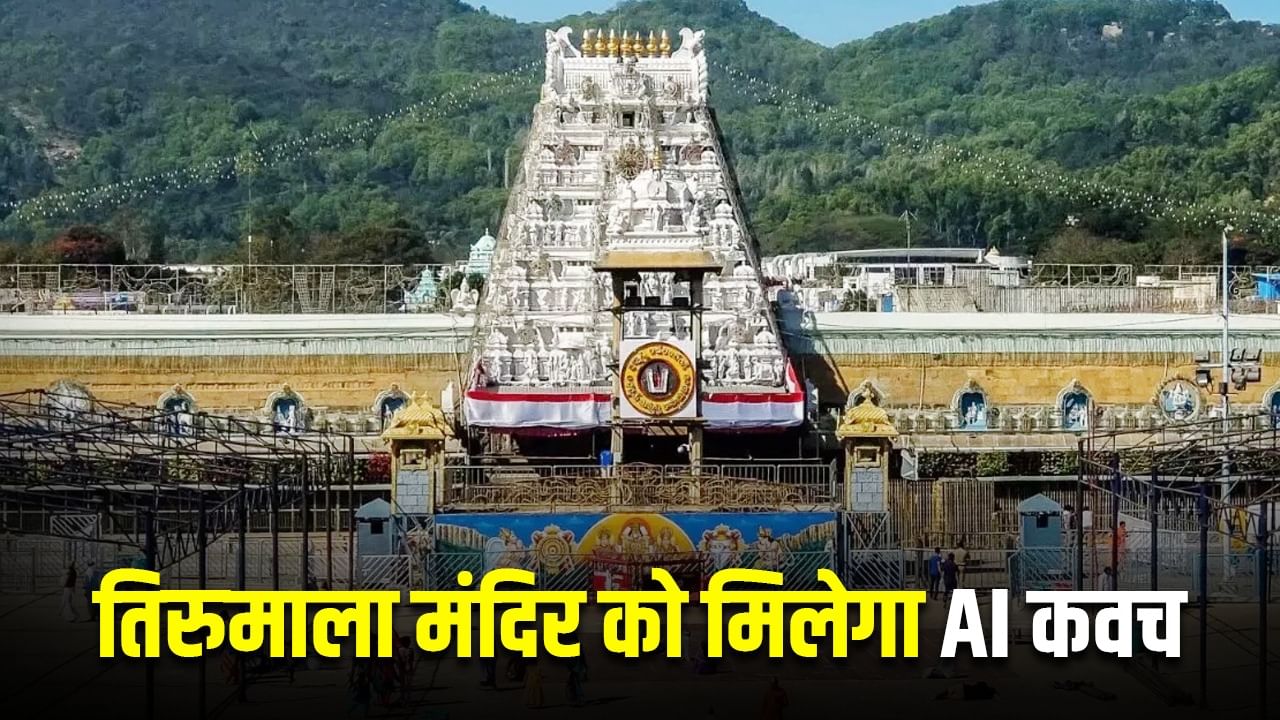

Artificial Intelligence (AI) is transforming various sectors, and its application within temple management is a significant development. The Tirumala temple in Andhra Pradesh, a prominent pilgrimage destination, has launched an AI-powered Integrated Command Control Center (ICCC) to enhance crowd management and security.
The Sri Venkateswara Swamy Temple, located in Tirumala, Andhra Pradesh, is dedicated to Lord Venkateswara, an avatar of Vishnu. As one of the most visited Hindu temples in India, it attracts a vast number of devotees throughout the year. Managing the large crowds and ensuring a smooth darshan experience is a complex task, and the ICCC aims to address these challenges.
The Tirumala Tirupati Devasthanam (TTD), the governing body, introduced the ICCC in Tirumala, which was inaugurated by Andhra Pradesh Chief Minister Chandrababu Naidu.
The system is designed to improve the experience for millions of pilgrims. It features real-time crowd prediction, efficient queue management, enhanced security measures, and robust cyber threat monitoring.
Located within the Vaikuntham Queue Complex-I, the ICCC is equipped with advanced cameras, 3D situational maps, and a dedicated technical team that continuously monitors the environment. This advanced setup is expected to serve as a national benchmark for technology-driven pilgrimage management, providing seamless services to devotees and facilitating efficient coordination among temple administrators.
The control room incorporates over 6,000 AI-based cameras, high-performance computing systems, and real-time dashboards. This infrastructure can monitor 518 million daily events and generate over 2.5 billion predictive insights daily. The system’s ability to process 3.6 lakh payloads per minute ensures rapid responses to evolving situations.
The ICCC will provide key functionalities, including predicting wait times for ‘Sarva Darshanam’ and visualizing crowd density in 3D, thus improving safety at the site. Additionally, the system will focus on cybersecurity, protecting temple systems and digital assets from various threats like misinformation and cyberattacks.
Key features of the system include drone-assisted emergency response, tablet-based employee verification, and facial recognition for missing persons identification. The system’s integration of these advanced tools demonstrates the commitment to providing a safe and streamlined experience for all.
The ICCC employs over two dozen trained professionals, who work around the clock to monitor integrated dashboards and coordinate with temple departments. This enables rapid decision-making and real-time response capabilities.
Beyond crowd control, the system aims to protect the TTD’s reputation and ensure the smooth operation of the temple. Its cyber monitoring capabilities include protection from misinformation campaigns and digital asset attacks. This represents a significant step in integrating digital solutions for modern pilgrimage management.
The implementation of the ICCC is expected to set a new precedent for temple administration throughout India. The model established at Tirumala could serve as a blueprint for other major temples and religious gatherings, helping them to manage large crowds, improve security, and address digital threats.
With its blend of AI, machine learning, digital twins, and cloud-based resilience, the Tirumala ICCC is a transformative step for India’s spiritual tourism infrastructure. The system ensures better service to devotees while also improving security, transparency, and efficiency.
The idea for the ICCC was initiated by Andhra Pradesh’s Information Technology Minister Nara Lokesh during his visit to Silicon Valley in October 2024. He engaged with startups focused on smart cities, digital twins, AI, and cybersecurity, gaining inspiration for the project.
Drawing from global best practices, Lokesh partnered with Non-Resident Indians (NRIs) to bring scalable, secure, and service-oriented technologies to Tirumala. This project was developed under a public-private partnership (PPP) model.