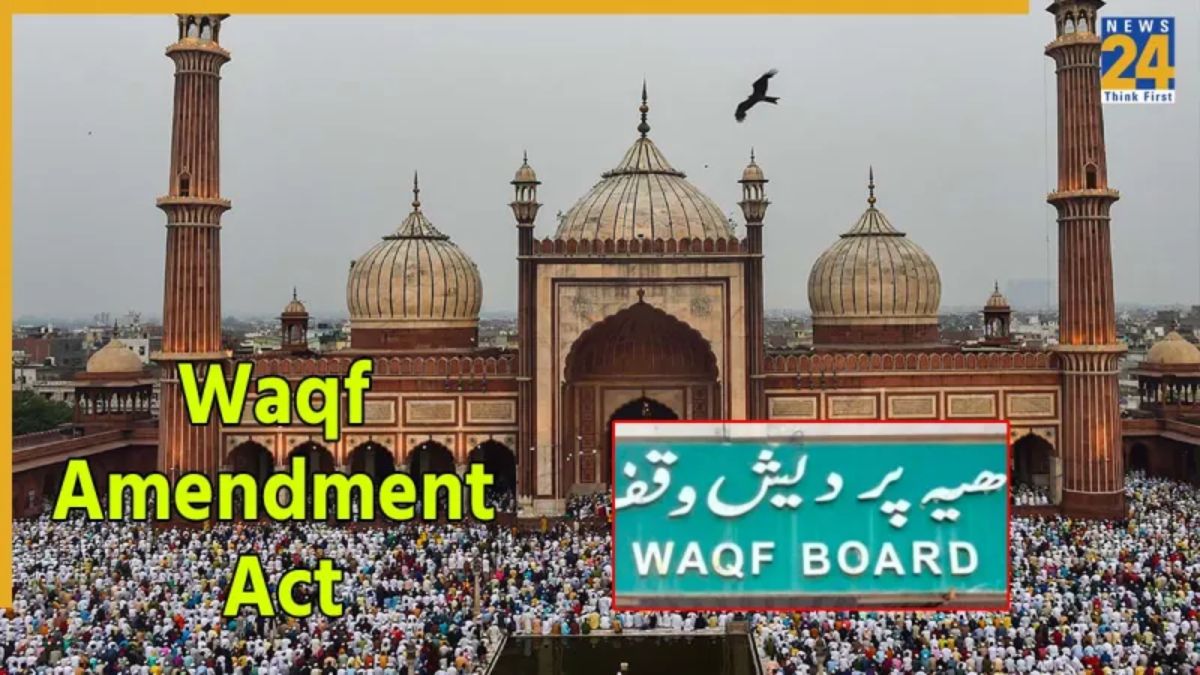

The Supreme Court has issued a partial stay on the Waqf Amendment Act 2025, impacting certain provisions. The court stayed the provision that mandates a five-year practice of Islam for individuals creating a Waqf. Furthermore, the court limited the presence of non-Muslim members on the Waqf board to a maximum of three, with a total not exceeding four. The stay related to the practice of Islam requirement will remain in place until specific rules are established to determine who qualifies as a practicing Muslim. Additionally, the court has also stayed the provision that gave authority to the Collector to determine if a property declared as Waqf is government property, ruling this as a violation of the separation of powers. The Supreme Court stated that third-party rights cannot be created until the tribunal adjudicates, and the provision delegating power to the collector will be stayed.
The Waqf (Amendment) Bill, 2025 aims to refine the Waqf Act of 1995 to address issues in the management of Waqf properties. These amendments focus on enhancing the effectiveness of Waqf boards, updating definitions, improving the registration process, and leveraging technology in managing Waqf records. Problems identified in the 1995 Act include the irrevocability of Waqf properties, ongoing legal disputes, instances of mismanagement and illegal occupation, and delays in property registration and surveys. The Waqf (Amendment) Bill, 2025 seeks to eliminate waqf by user and permit its formation only through declaration or endowment. It specifies that donors must be practicing Muslims for a minimum of five years and must own the property. The bill includes a clause ensuring that Waqf-alal-aulad cannot deny inheritance rights to female heirs. Any government property identified as Waqf will no longer be classified as Waqf. The Collector will have authority to resolve ownership disputes and conduct surveys under state revenue laws. The Central Waqf council composition requires that two members must be non-Muslims; however, MPs, former judges, and eminent persons need not be Muslims. Representatives of Muslim organizations, Scholars in Islamic law, Chairpersons of Waqf Boards must be Muslims. Of the Muslim members, two must be women. The bill empowers the state government to nominate one person from each background to the Waqf Board and they need not be Muslims. The Board must have: two non-Muslim members, at least one member each from Shias, Sunnis, and Backward classes of Muslims, one member each from Bohra and Agakhani communities (if there is Waqf in the state) and two Muslim members must be women. The central government can make rules regarding registration, publication of accounts of waqf and publication of proceedings of Waqf Boards. The Bill further empowers the central government to get these audited by the CAG (Comptroller and Auditor General) or a designated officer. The Bill omits provisions deeming finality to Tribunal’s decisions and allows appeals to the High Court within 90 days. Separate Waqf boards have been allowed for Bohra and Agakhani sects, along with Shia and Sunni sects.