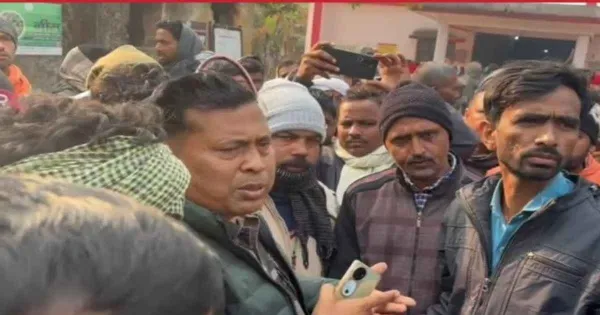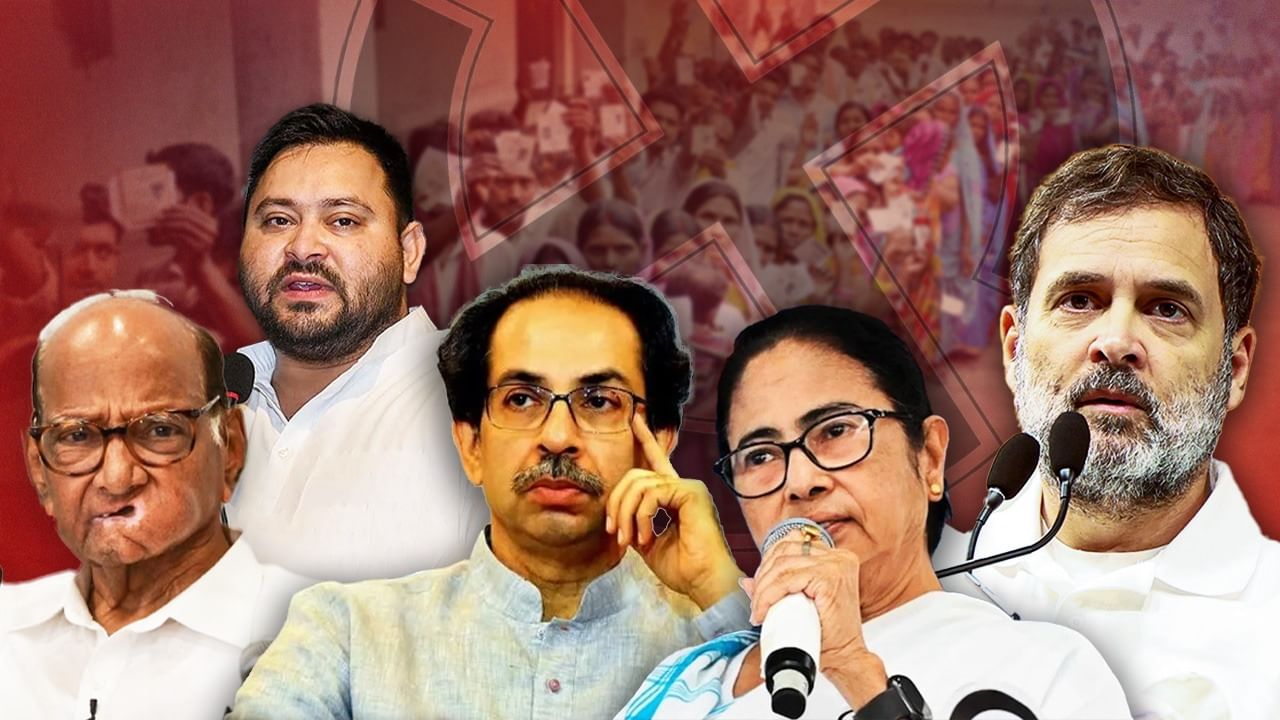

The Election Commission’s initiation of a Systematic Voters Education and Electoral Participation (SVEEP) program before the Bihar assembly elections has ignited a political controversy. Congress and RJD leaders, led by Tejashwi Yadav, have strongly criticized the Election Commission’s decision, calling for a Bihar bandh and even threatening to boycott the elections. They have accused the BJP and the Election Commission of manipulating voter rolls and engaging in fraudulent practices. This issue, which originated in Bihar, has rapidly gained national attention.
The INDIA bloc, the coalition of opposition parties, has seized upon this issue, framing it as a major point of contention against the BJP and the Election Commission in the lead-up to the Bihar elections. This has led to a renewed sense of unity among the alliance members, which had shown signs of strain after the Lok Sabha elections.
The show of solidarity isn’t limited to Bihar, West Bengal, and Maharashtra; it extends to the parliamentary proceedings of the monsoon session and at the national level. A dinner hosted by Rahul Gandhi, a senior Congress leader, saw the participation of around 50 leaders from 25 parties of the INDIA bloc, who collectively reaffirmed their opposition to the electoral roll revision.
In response to the situation, Rahul Gandhi will lead INDIA bloc MPs in a march from Parliament to the Election Commission on Monday. The purpose is to protest the alleged “vote theft” in the ongoing revision of electoral rolls. Alliance leaders intend to formally present their concerns to the election commissioners. This march will be attended by key opposition figures, including Rahul Gandhi, Mallikarjun Kharge, Akhilesh Yadav, and Abhishek Banerjee, alongside approximately 300 MPs.
The opposition’s protest has been prompted by Rahul Gandhi’s accusations, wherein he alleges collusion between the Election Commission and the BJP. He cited the Congress’s analysis of the Mahadevpura assembly seat in Karnataka, where he claimed that nearly one lakh votes had been “stolen.”
Rahul Gandhi has consistently raised the issue of “vote theft” during the 2024 Lok Sabha elections and has emphasized the need for a “clean” electoral roll to ensure fair and free elections. He made similar accusations during the Maharashtra assembly elections, which were echoed by NCP (SP) chief Sharad Pawar and Shiv Sena (UBT) chief Uddhav Thackeray.
Echoing Rahul Gandhi’s concerns, the Trinamool Congress in West Bengal has launched a campaign against the electoral roll revision. Mamata Banerjee has characterized the revision as a backdoor attempt to implement the NRC and has urged the state’s citizens not to fill out any forms. She has also requested a two-year extension from the Election Commission to conduct the electoral roll revision. The Trinamool Congress is preparing to confront the Election Commission on this matter.
The issue of electoral roll revision has given a common focus to the INDIA bloc, which had seen some fragmentation after the Lok Sabha elections. Alliance members are unifying to address this issue and presenting a united front. The Bihar elections have given further impetus to the movement against the electoral roll revision. The INDIA bloc has announced a voter awareness campaign to address election fraud and the electoral roll revision. The campaign will kick off in Sasaram and will extend across various parts of Bihar for 15 days.
The voter awareness campaign will include Rahul Gandhi, Tejashwi Yadav, and other prominent opposition leaders from the INDIA bloc and other states. The entire opposition is determined to challenge the BJP and Nitish Kumar during the Bihar elections. The electoral impact of the opposition’s narrative will become clear after the elections.
According to senior journalist and political analyst Om Prakash Ashk, the opposition has prioritized the electoral roll revision issue before the Bihar elections and is planning a movement. With the Bihar assembly elections approaching, the INDIA bloc is focusing on the state. All parties within the INDIA bloc have united in their efforts to transform this issue into a nationwide movement.
Ashk stated that the validity of the opposition’s allegations of election rigging and the electoral roll revision will be determined after investigation, but it is a pattern for the opposition to establish narratives during elections. These narratives have had mixed results. For instance, during the Lok Sabha elections, the opposition raised concerns about threats to reservations, the constitution, and democracy, but the election results favored the NDA government. Some analysts believe that the BJP’s inability to secure an absolute majority this time was influenced by the prominence of these issues. While the Congress saw an increase in its parliamentary representation, the INDIA bloc did not succeed in forming the government.
Drawing parallels with concerns about threats to reservation, the constitution, and democracy, the INDIA bloc is now using the electoral roll revision and alleged election rigging to question the Election Commission. The opposition aims to create a narrative against the BJP. This narrative suggests that the current government has undermined all constitutional institutions, thereby providing common ground for opposition parties.
This unity is evident in the Vice-Presidential election. Although the NDA candidate is expected to win, the INDIA bloc has decided to field a joint candidate against the NDA nominee. Political analysts point out that accusations of election rigging began during the Haryana and Maharashtra assembly elections. The issue has gained greater significance before the Bihar assembly elections and has taken on a national dimension. Assembly elections are scheduled in five states, including Bengal, Assam, and Tamil Nadu, in the upcoming year, where the opposition is likely to leverage these issues to challenge the BJP.