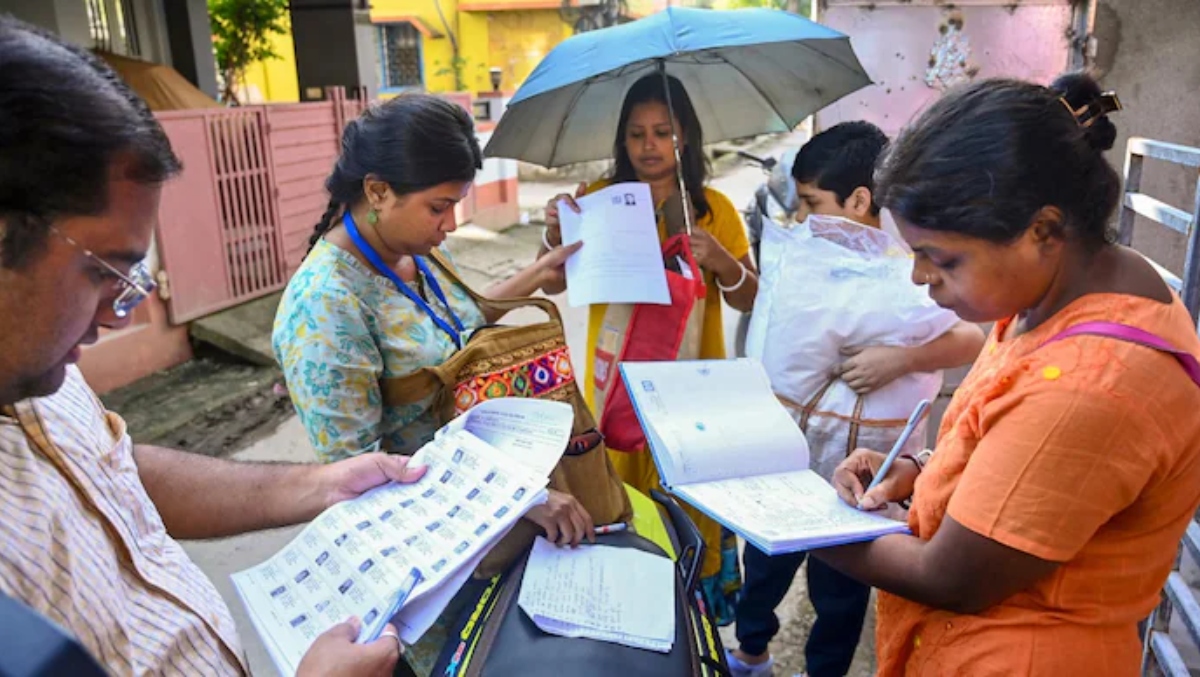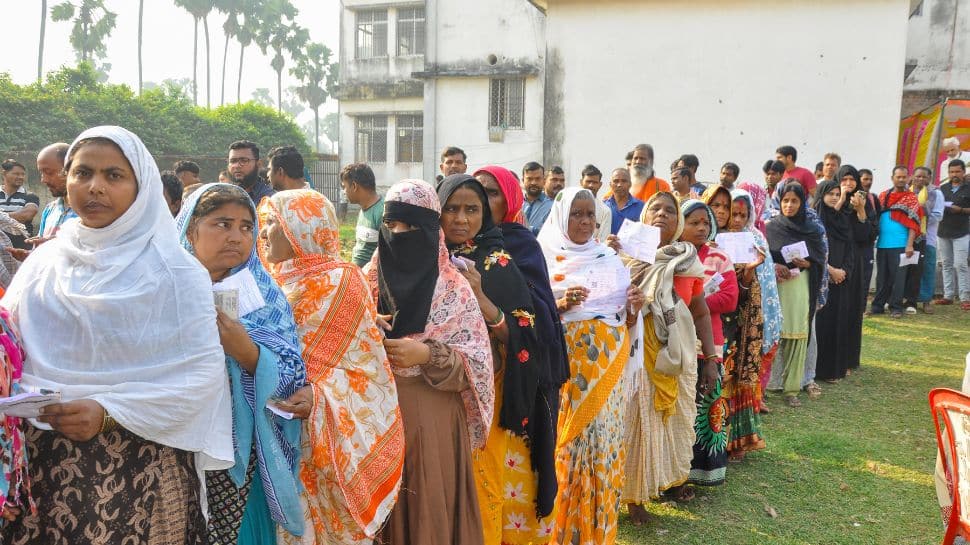

The Election Commission has reported that 7.24 crore forms were collected after the first phase of the Special Intensive Revision (SIR) of the voter list in Bihar. This number is 8% lower, representing a reduction of 65 lakh, compared to the registered voters on June 24, the day before the SIR process began. Moreover, it’s 6.2% less (48 lakh) than the voters registered during the recent Lok Sabha elections and 1.6% less (12 lakh) than the 2020 Assembly elections.
The decline in Bihar’s voter count is evident, marking the first instance of such a trend between two consecutive elections since 2005. The Election Commission will release the final voter list on September 30. This downward trend has been consistent across both Assembly elections and combined Assembly and Lok Sabha elections.
Historically, voter registration figures have generally increased for both Assembly and Lok Sabha elections. An analysis of voter numbers post-1977 (after excluding constituencies that became part of Jharkhand in 2000) and after the 2004 Lok Sabha elections (following Jharkhand’s formation) shows that the voter count typically grew between consecutive elections, except for the two Assembly elections in 2005. In 2005, voter numbers dropped from 5.27 crore to 5.13 crore (2.5%), suggesting that a decrease in registered voters isn’t impossible. However, it would be uncommon if the final voter list contains fewer voters than the 2020 Assembly elections (7.36 crore) or the 2024 Lok Sabha elections (7.73 crore).
The actual voter count dropped from 7.89 crore on June 24 to 7.24 crore on July 27, indicating an 8% decrease. This rate is proportionally higher than the 2.5% decrease observed between the February and October 2005 elections.
Surprisingly, even in 2005, the decline in registered voters in Bihar (a state with a high fertility rate) was unexpected, occurring two years after the last SIR in 2003 and following a Lok Sabha election. Bihar’s adult population grew by 28.5% between the 2001 and 2011 censuses, while migration from the state also increased.
Opportunities remain to improve the current decline. The Election Commission’s press note on July 27 stated that real voters can be added to the voter list through claims and objections from August 1 to September 1. Young voters reaching 18 by October 1 or earlier can also be included.
A potential cause for the 2005 voter decline was the Election Commission’s campaign to issue Electors Photo Identity Cards (EPIC) between the two Assembly elections that year. The Election Commission reported that permanent online EPIC centers were being established, and teams were formed to cover more rural voters. The aim was to maximize EPIC coverage, reducing the need for alternative identification at polling stations. Between the start of this campaign and the announcement of the election schedule on September 3, EPIC coverage rose from 57% to 67%.