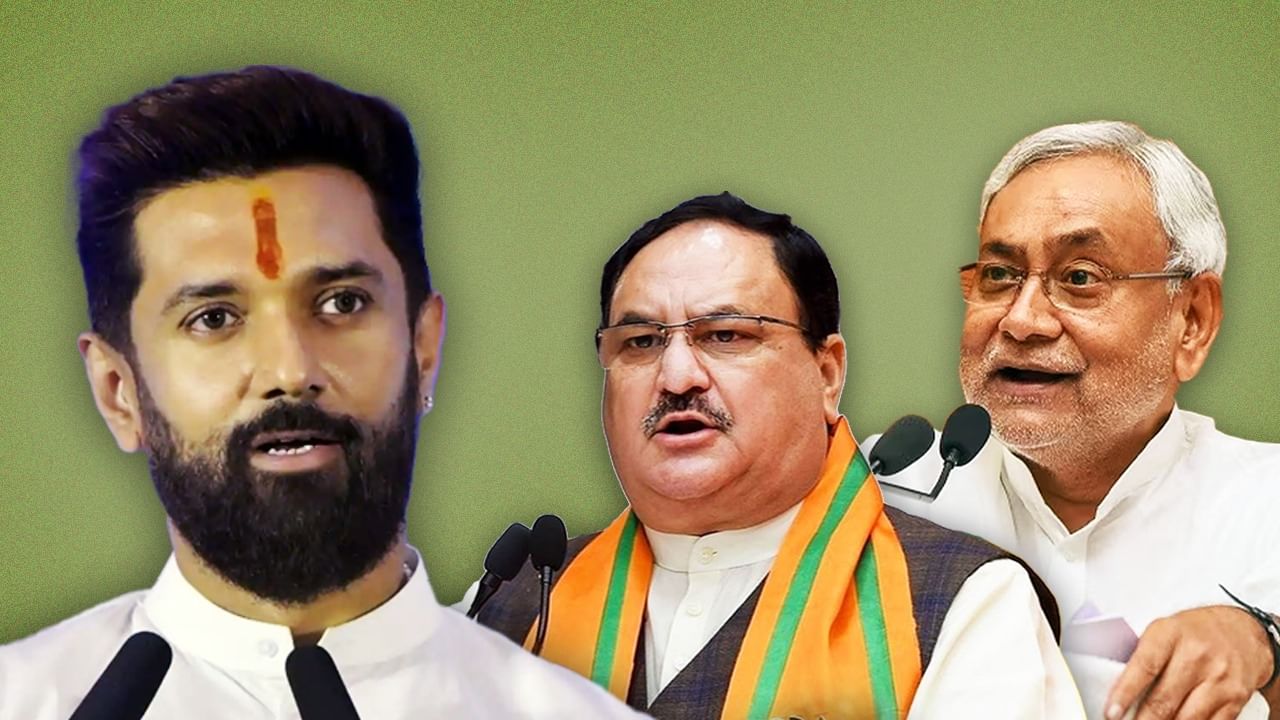

The upcoming Bihar Assembly elections have sparked discussions about seat-sharing among political parties. The NDA, in power, is currently engaged in negotiations, with Chirag Paswan’s LJP(RV) playing a pivotal role. The major parties within the NDA, JD(U), and BJP are likely to contest on approximately 100 and 105 seats respectively.
The 2020 elections saw JD(U) contest 115 seats and win 43, whereas BJP contested 110 seats, winning 74. Nitish Kumar maintained his leadership despite the differing strike rates. The present focus is on Chirag Paswan’s party’s strike rate, as their seat demands raise questions. This analysis reviews the LJP’s historical performance in Bihar’s elections.
In the previous Assembly election, Chirag Paswan’s party contested independently. It is expected to join the NDA this time. Reports indicate Chirag’s demand for 40 seats, which is unlikely. Sources suggest around 20 seats are a more probable outcome, considering the BJP and JD(U) are trying to balance their allocation among allies like the Hindustani Awam Morcha (Secular) and the Rashtriya Lok Morcha.
Ram Vilas Paswan founded the LJP in 2000, and it participated in the February 2005 Assembly elections. The party targeted the Extremely Backward Class (EBC) voters. The LJP allied with the Congress to oppose Lalu Prasad Yadav’s RJD, fielding 178 candidates and winning 29 seats. This resulted in 12.62% of the vote share. While the initial performance was strong, no coalition formed a majority. Subsequently, President’s rule was imposed, and the Assembly was dissolved.
Fresh elections were held in October 2005. The LJP contested 203 seats, securing only 10 wins, and its vote share fell to 11.10%. In 2010, the LJP allied with RJD, contesting 75 seats and winning only 3, with the vote share dropping to 6.74%.
In 2015, LJP contested 42 seats under the NDA. The party’s performance declined further, winning only 2 seats, and the vote share decreased to 4.83%. After the party split, Chirag Paswan established LJP(RV) and contested the 2020 elections independently, leaving the NDA. The party fielded candidates in 135 seats and won one, with the vote share increasing to 5.66%.
Chirag’s separation from the NDA in the 2020 elections affected JD(U). Political analysts suggest that Chirag’s decision to field candidates against JD(U) caused significant damage. In 64 seats, LJP candidates secured more votes than the winning candidates’ margin. Currently, LJP is citing its performance in the 2024 Lok Sabha elections, where it received a vote share of over 6%, to justify its demand for 40 seats, arguing that it shows growing support.