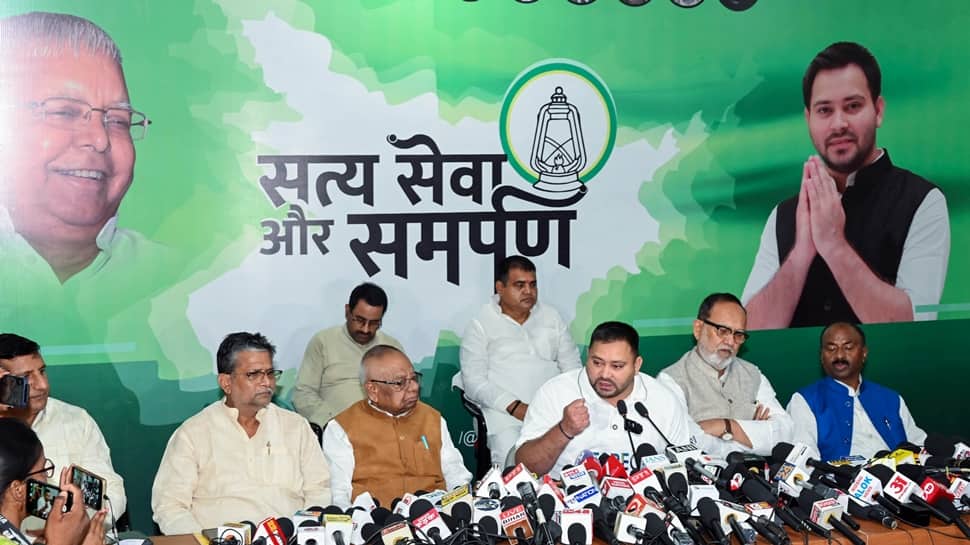

Amidst the political fervor of the Bihar assembly elections, RJD leader Tejashwi Yadav has put forth a compelling, albeit contentious, promise: to guarantee one government job for every family currently without state employment. This central plank of the Mahagathbandhan’s campaign, dubbed the ’20-20 formula,’ proposes swift action: a law within 20 days and job allocation within 20 months. The promise seeks to address the pressing issue of unemployment that plagues Bihar.
However, a closer look at the figures presents a stark reality. Bihar’s caste survey counts 2.76 crore families. If around 18 lakh families already have government employees, the pledge targets approximately 2.58 crore families. This would require creating over 2.5 crore new government posts. Current official data suggests only about 5 lakh vacancies exist in Bihar’s government sector, indicating an almost insurmountable gap. The financial strain would be catastrophic. An estimated annual salary bill of Rs 7.7 lakh crore, calculated on a minimum monthly wage of Rs 25,000 for the targeted number of employees, far exceeds Bihar’s total annual budget of Rs 3.17 lakh crore. Experts warn that such a commitment could lead to the state’s financial ruin, raising doubts about the government’s capacity to even generate enough meaningful work for such a massive influx of employees.
Reactions from political rivals have been dismissive, questioning the practicality of the promise. Yet, the allure of stable, respected government jobs remains a powerful aspiration for many in Bihar, particularly the youth. This potent desire could translate into significant electoral advantage for Yadav, shaping the election narrative. The incumbent government, meanwhile, points to its own track record of job creation. While the ‘one job per family’ promise has certainly galvanized political discourse, its transition from a potent election slogan to an economic reality appears highly improbable.