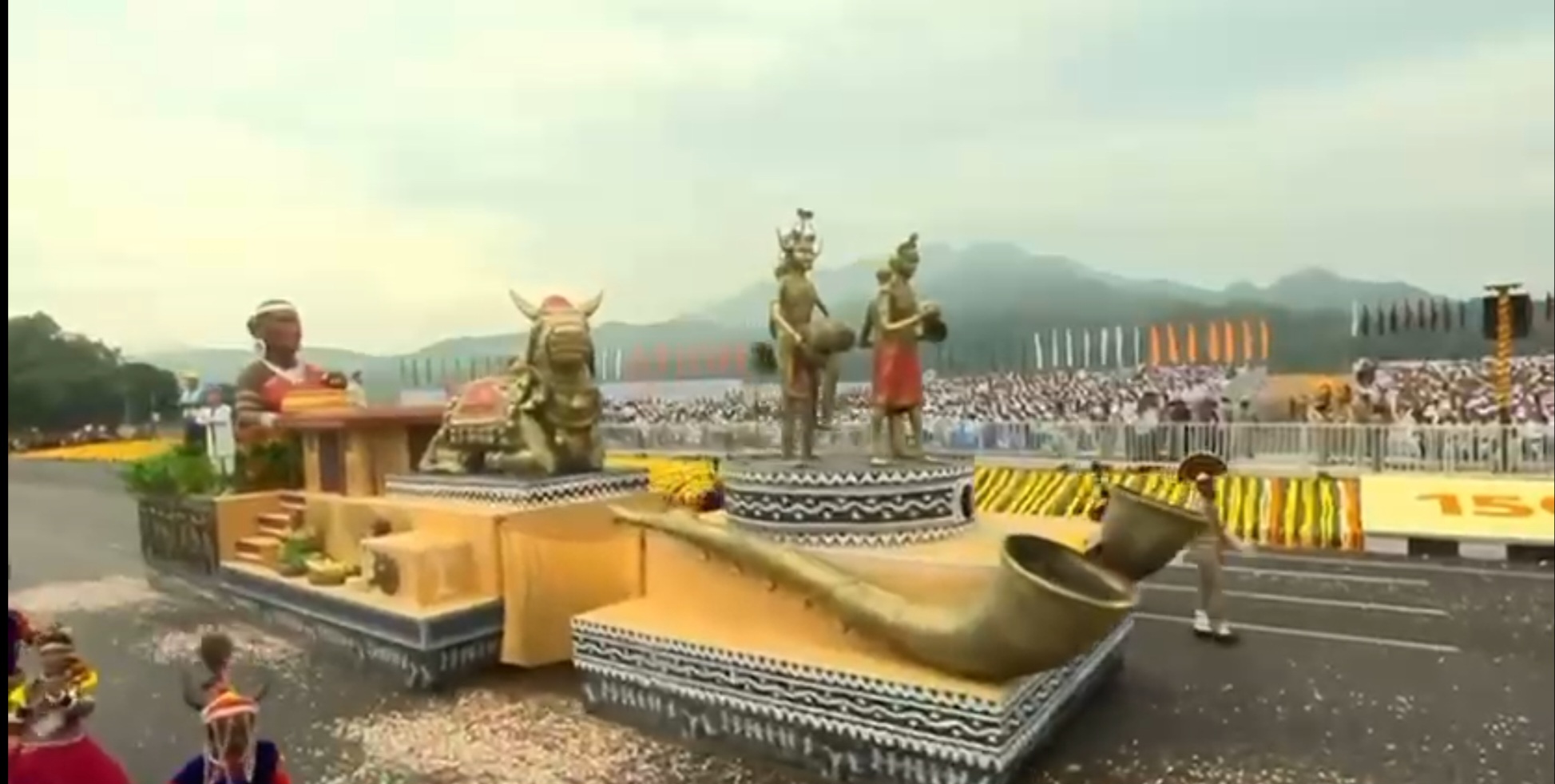

In the Ekta Parade held in Ekta Nagar, Gujarat, on the occasion of the 150th birth anniversary of Sardar Vallabhbhai Patel, Chhattisgarh’s tableau “Bastar’s Land – A Saga of Culture, Creation, and Progress” captivated everyone this year. This tableau emerged as a vibrant symbol of Chhattisgarh’s tribal life, traditions, and developmental journey.
On this occasion, Prime Minister Shri Narendra Modi reviewed all the participating tableaux in the parade and appreciated the cultural glimpses of various states. Chhattisgarh’s tableau, displayed in the presence of the Prime Minister, attracted everyone’s attention with its beauty, symbolism, and powerful message.
In the foreground of the tableau, the Gaur dance presented by artists of the Maria tribe, adorned in traditional attire, brought to life the pride, honor, and spirit of collective living of Bastar. The traditional Turhi kept near them symbolized the echo of Bastar’s festivals and the joy of folk celebrations. Meanwhile, the depiction of Nandi seemed to express the deep folk faith and the tradition of Shiv worship in Bastar.
The middle part of the tableau artistically depicted the journey of development and transformation in Bastar. This region, once affected by Naxalism, is now building a new identity in the fields of education, health, roads, and employment. Under the leadership of Prime Minister Shri Narendra Modi and with the guidance of Chief Minister Shri Vishnu Deo Sai, Bastar has become a symbol of a rapidly changing India. The echo heard here now is not of guns, but of development.
In the final part of the tableau, the statue of a woman holding a basket symbolized the women power, labor, and creativity of Bastar. The decoration of the entire tableau with Dhokra craft showcased the wonderful artistry and traditional skills of Bastar’s artisans.
This tableau from Chhattisgarh is not only rich in its culture and art but also tells the story of the positive changes happening in Bastar. The tableau showed that today’s new Bastar has become a beautiful confluence of tradition, nature, and development. Roads have now been built in areas that were once inaccessible, where the hustle and bustle of children going to school can be heard and school bells are ringing.
The light of electricity and internet access in villages have sparked new hopes. Enthusiasm to do something and move forward is visible among the youth. Women are becoming self-reliant—handicrafts, forest produce, and various development schemes have given a new direction to their lives. People are now beginning to trust development.
This tableau is a symbol of the belief that Bastar is now known not only for its folk culture and traditions but also for a new era of rapid progress in fields like education, roads, health, and employment.
The tableaux for the Ekta Parade were selected by a high-level committee headed by the Home Secretary and experts from various fields after observing presentations from states, union territories, and central organizations across the country. Each state presented its theme, model, and ideas to the committee. In this process, Chhattisgarh’s tableau was selected for its originality, cultural richness, and vivid depiction of development.
Along with Chhattisgarh, the tableaux of NSG, NDRF, Andaman and Nicobar Islands, Gujarat, Jammu and Kashmir, Maharashtra, Manipur, Puducherry, and Uttarakhand were included in the final list.