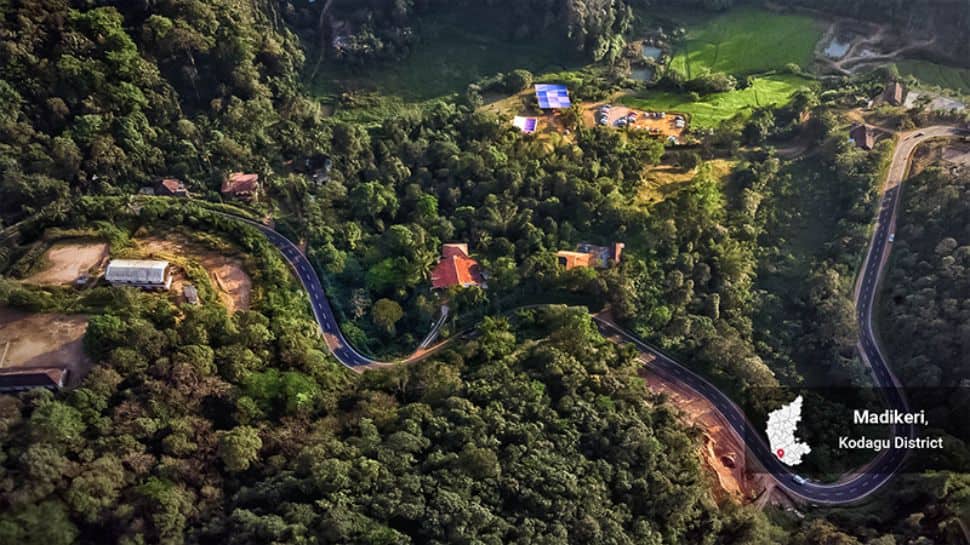

Explore Coorg, or Kodagu, a captivating hill station in Karnataka’s Western Ghats, celebrated globally as the “Scotland of India.” This enchanting locale earned its title from British settlers who were struck by its resemblance to the Scottish Highlands, with its rolling hills, verdant landscapes, and temperate climate. Coorg is not only visually stunning but also famous for its extensive coffee plantations, rich biodiversity, and the sacred River Kaveri, which originates here.
This destination offers a unique fusion of spectacular natural vistas and deep cultural roots. Madikeri, the heart of Coorg, is recognized as the “Coffee Bowl of India” due to its abundant cultivation of Robusta and Arabica coffee. The rolling hills, the cool, misty weather, and the lush green valleys are what inspired the evocative comparison to Scotland, solidifying its iconic nickname.
Coorg is a significant part of the Western Ghats, an area acknowledged worldwide as a biodiversity hotspot, teeming with thousands of unique plant and animal species. The Brahmagiri hills are the sacred source of River Kaveri, a vital water body for South India. The indigenous Kodava people are historically recognized for their bravery and martial spirit, with a strong tradition of service in the Indian armed forces. Notably, Kodava men in India are exempt from requiring a firearm license. The distinctive traditional attire, the Kupya for men and the rear-pleated saree for women, further enhances the region’s unique cultural identity.
As Karnataka’s premier coffee producer, Coorg significantly influences India’s overall coffee output. The altitude and shade-grown techniques contribute to the slow maturation of coffee beans, concentrating their rich flavor and aroma. The soil, a laterite type rich in iron and aluminum, is highly conducive to coffee and cardamom cultivation. Coorg experiences a tropical monsoon climate, with abundant summer rainfall sustaining its dense evergreen forests and thriving coffee estates. Historically, Virajpet was once one of Asia’s largest honey-producing centers.
The region is also home to Bylakuppe, the second-largest Tibetan settlement in India, featuring the awe-inspiring Namdroling Monastery, also known as the Golden Temple. For trekking enthusiasts, Tadiandamol, the district’s highest peak at 1,748 meters, and the adjacent Pushpagiri are popular destinations. The dominant forest types are Tropical Wet Evergreen and Semi-Evergreen, crucial for maintaining the area’s water cycles and climate regulation. Architectural gems like the Omkareshwara Temple in Madikeri, which showcases a blend of Gothic and Islamic styles, and the Dubare Elephant Camp, a conservation initiative on the Kaveri, add to the region’s appeal.
Located in seismic Zone II, Coorg and the Western Ghats necessitate geological monitoring. The Brahmagiri Wildlife Sanctuary plays a critical role in protecting the Kaveri’s watershed, ensuring clean water for downstream areas. The presence of abundant orchids is a strong indicator of excellent air quality, sustained by the humid environment. The characteristic morning mists are a result of cool, moist air ascending and cooling over the terrain, creating Coorg’s signature ethereal landscapes. The dense forest canopy helps moderate the local climate, keeping temperatures lower and humidity higher than in the plains. Coorg is more than just a beautiful vista; it’s a living ecosystem, a haven for coffee aficionados, and a keeper of ancient traditions, richly deserving its title as India’s own Scotland.