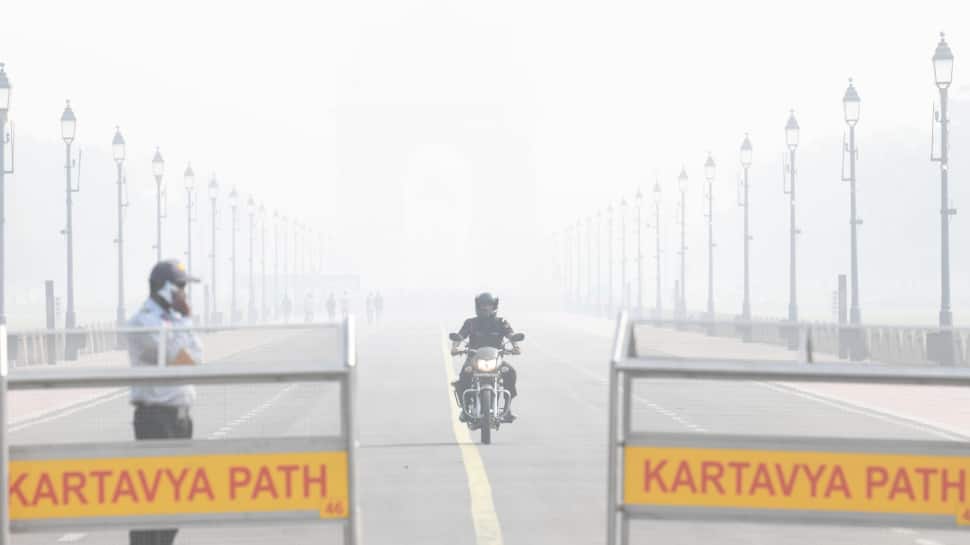

The morning after Diwali brought a thick blanket of smog to Delhi, as the city’s Air Quality Index (AQI) plunged into the ‘very poor’ category. Projections indicate a grim outlook, with air quality expected to deteriorate further into the ‘severe’ range over the next two days.
At 8 am on Tuesday, the AQI in the ITO region was measured at 259, classified as ‘poor’. Earlier on Diwali morning, the overall AQI for Delhi stood at 335, and by Monday evening, it had risen to 345. This significant increase is attributed to post-Diwali celebrations, including firecracker use.
Satellite cities are also heavily affected. Ghaziabad and Noida are experiencing ‘very poor’ air quality with AQIs of 316 and 325 respectively. Gurugram’s AQI is 295 (‘poor’), while Faridabad is at 182 (‘moderate’).
The rise in air pollution is triggering urgent health warnings. Experts are concerned about a surge in respiratory ailments, strokes, and heart attacks. Short-term exposure to polluted air can trigger asthma attacks and shortness of breath. Long-term consequences are even more severe, including chronic respiratory and cardiovascular diseases, stroke, and potential impacts on brain health and mental well-being. The most vulnerable populations, such as young children and the elderly, face the greatest risks.
Authorities have responded by invoking Stage-II of the Graded Response Action Plan (GRAP). The public is advised to prioritize public transport, use efficient routes, maintain vehicle air filters, suspend dust-generating construction work until January, and refrain from burning solid waste. A detailed 12-point action plan has been activated across the NCR, requiring daily mechanical sweeping, rigorous dust control at construction sites, and ensuring continuous power availability.