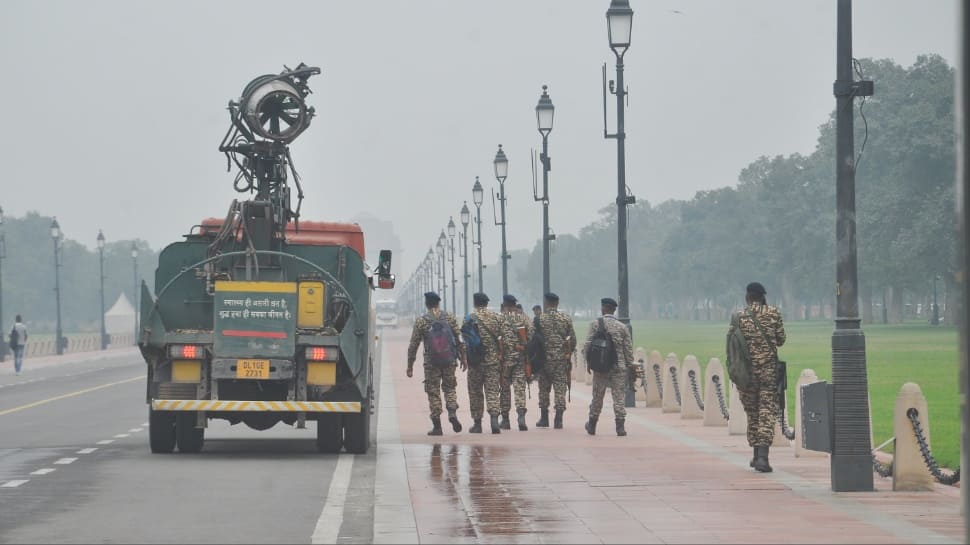

The air quality in India’s capital, Delhi, has plunged into the ‘very poor’ and ‘poor’ categories, prompting urgent action from environmental authorities. The Commission for Air Quality Management (CAQM) has now implemented Stage II of the Graded Response Action Plan (GRAP II) to combat the rising pollution. Morning readings on Wednesday showed alarming AQI levels, with Bawana recording a high of 322 in the ‘very poor’ zone (301-400). Other localities such as RK Puram (308), Anand Vihar (307), ITO (306), and Ashok Vihar (302) are also experiencing unhealthy air. Areas like Dwarka Sector 8 (298) and India Gate (282) are in the ‘poor’ category (201-300), signifying a significant public health concern. Authorities are actively deploying dust suppression measures, including water sprinklers on busy roads. A stringent vehicular emission control measure will be rolled out on November 1, 2025. This measure prohibits the entry of all commercial vehicles that do not meet BS-VI emission standards into Delhi. This directive applies to light, medium, and heavy goods vehicles, including electric and alternative fuel vehicles, registered outside the capital. Non-BS-VI vehicles registered within Delhi will be allowed until October 31, 2026. Adding a scientific dimension to the mitigation efforts, the Delhi government has conducted cloud seeding trials. These operations aim to artificially generate rain to help clear the polluted air, with ongoing scientific assessment to determine their effectiveness for long-term air management.